

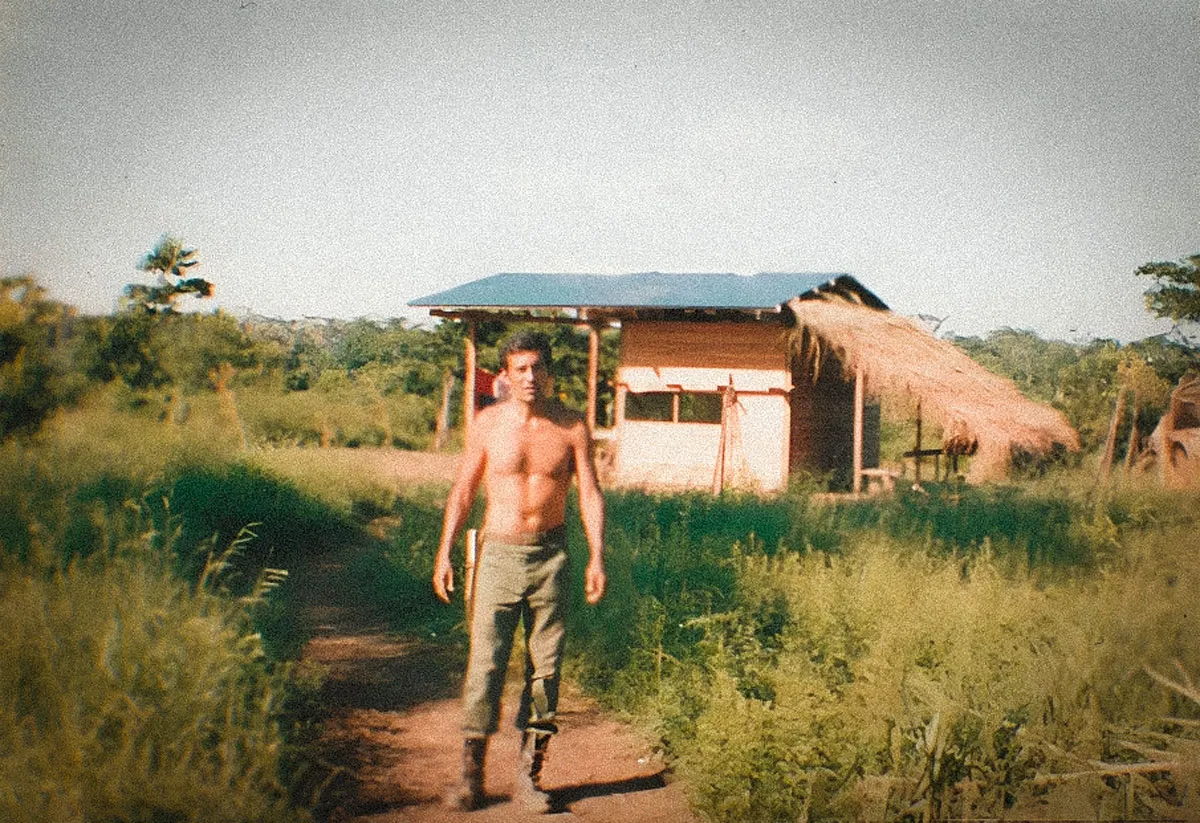
Víctor Zambrano was still very young when he first saw the Ese Eja people running through the forest. He learned to listen to the jungle alongside that native people of the Peruvian Amazon, who left a permanent mark on his memory and whom he still calls his brothers. After spending decades of his life far from Madre de Dios and building a long career in Peru’s Marine Infantry, he could never forget that forest that kept beating inside him.
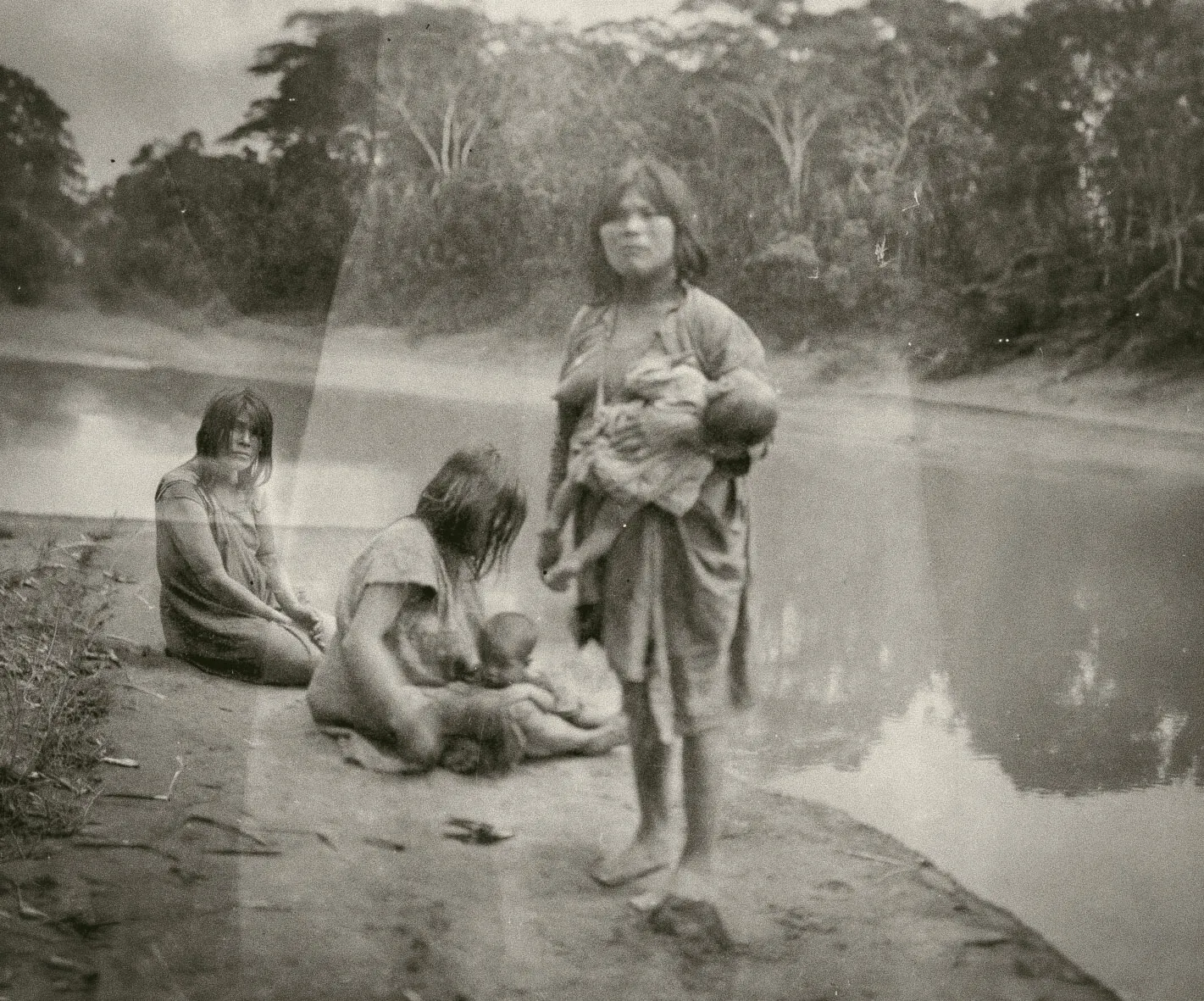
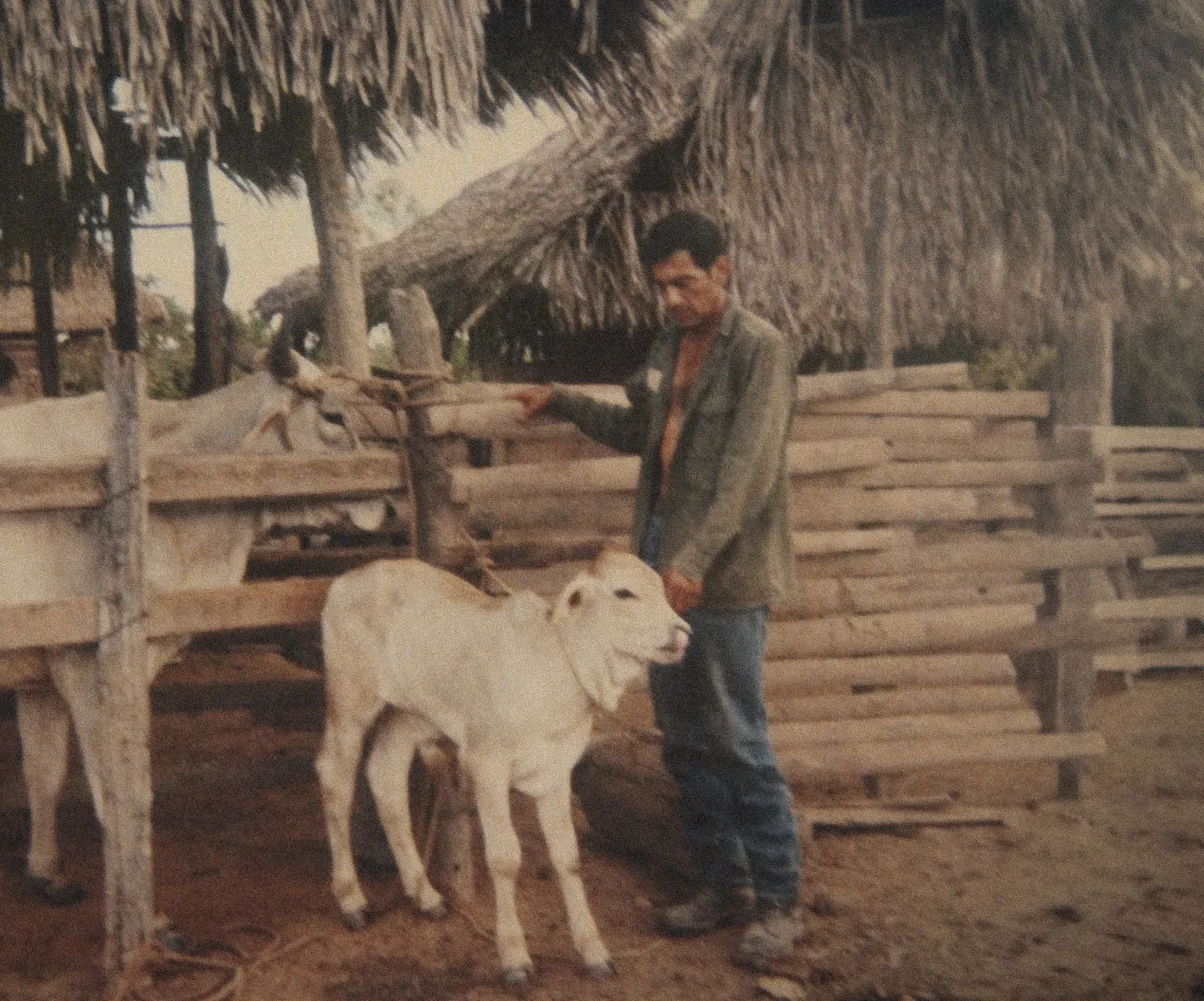
At seventy-nine, Víctor Zambrano has planted more than 40,000 trees in the K’erenda Homet Private Conservation Area (ACP), a space he founded himself, where he sets aside 35.40 hectares for protection, reforestation, and environmental education. He was also the driving force behind the creation of the Tambopata National Reserve, and today he chairs its Management Committee. The reserve stretches across another 274,690 hectares and safeguards some of the most astonishing flora and fauna on the planet. In a region where illegal mining mafias keep defenders in their sights, Zambrano found in the restoration of the Amazon the purpose of his life.
You’ve said that as a child you felt you didn’t quite fit in. Why was it hard for you to meet your family’s expectations?
I’ve felt it always, ever since I can remember. I would see the natives, even the little ones, calatitos (naked), barefoot, walking along happy, and I wanted to be just like them. My mother would send me off to school in full uniform, the little shoes, the khaki uniform, the cap, everything, so I’d make a good impression. But I’d leave the house and, at the first little patch of woods that appeared, I’d sit down on the grass. I’d take off my shoes, tie the laces together, and sling them over my shoulder. The native brothers, the country folk, didn’t wear shoes, you see. So I’d get to school in full uniform, with no shoes.
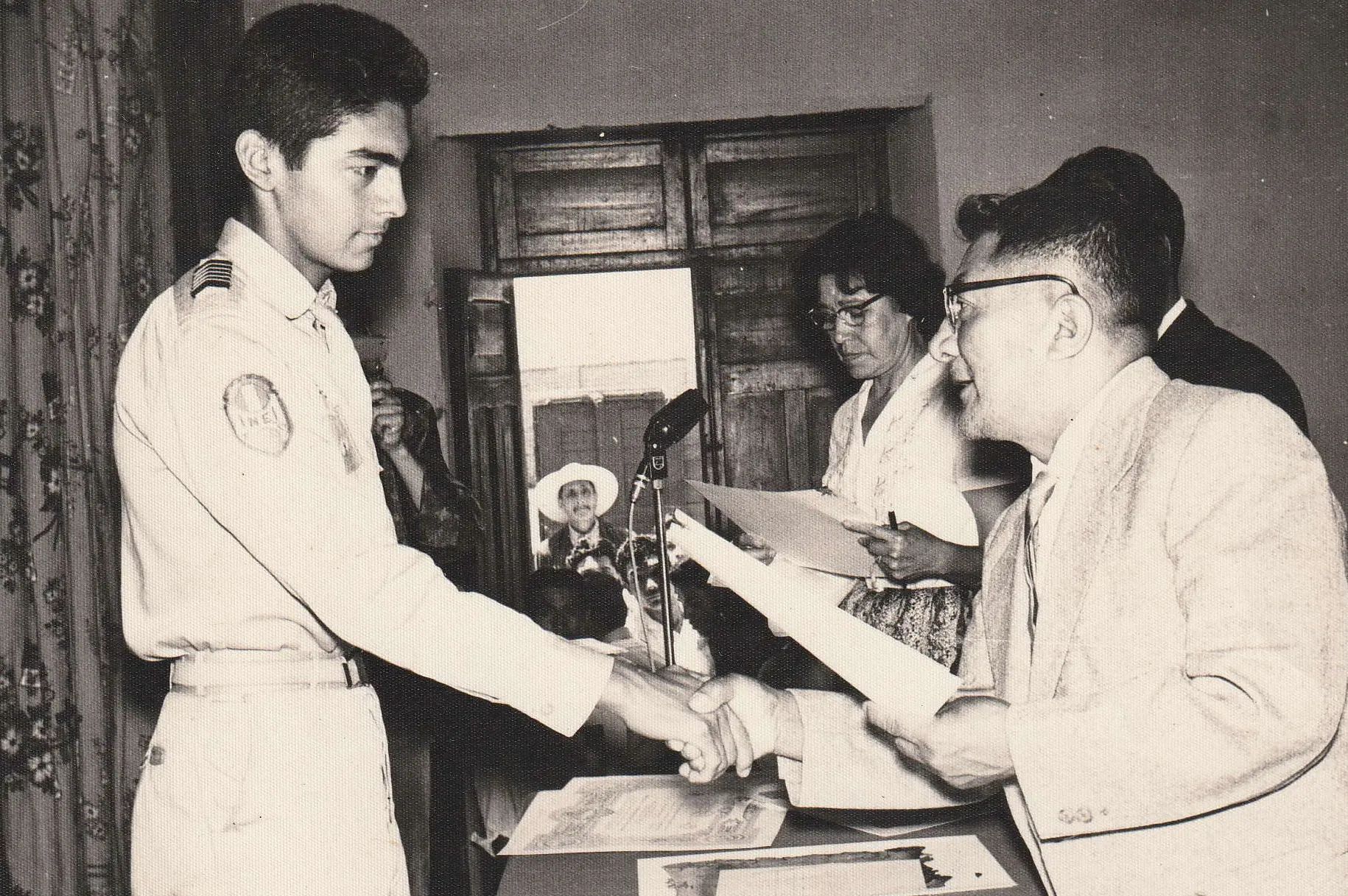
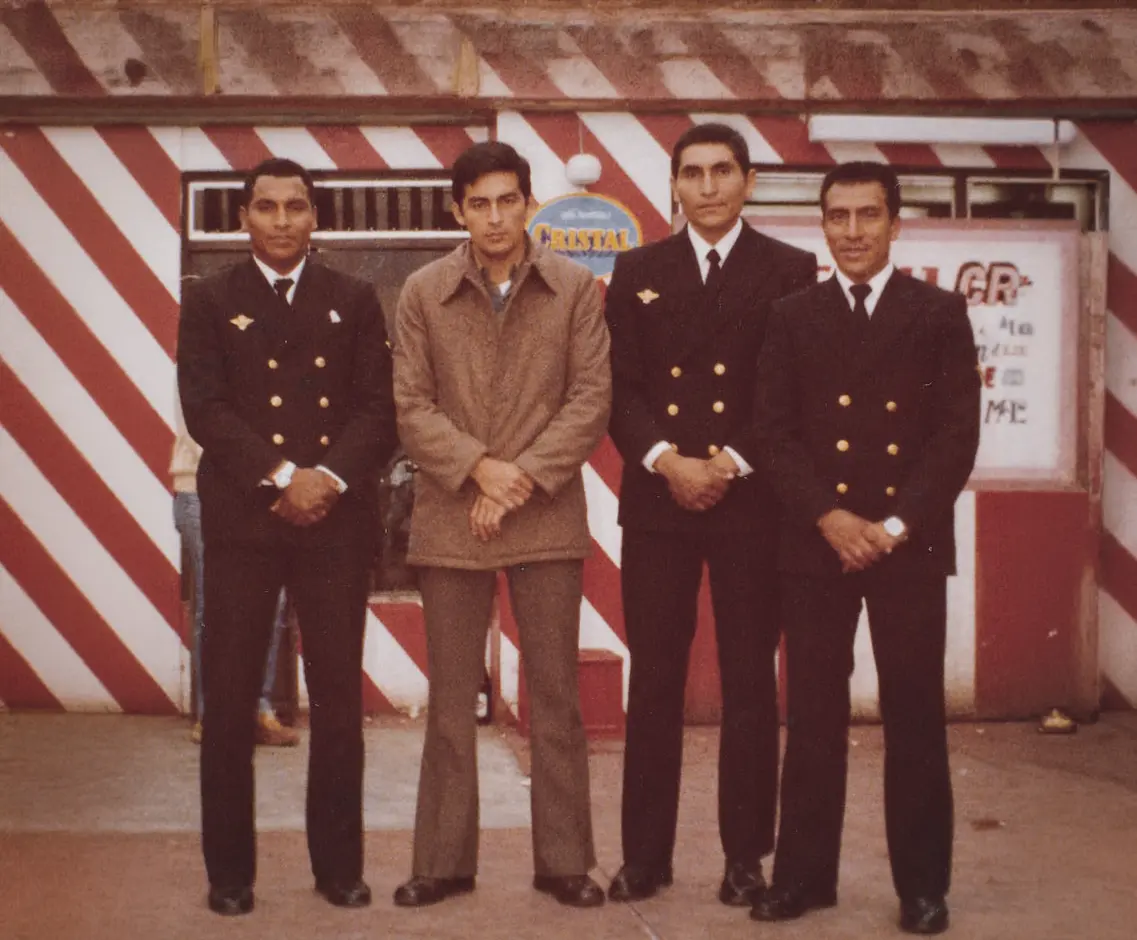
But someone tipped off my father and, one time when we were rehearsing for a July 28 parade, Peru’s Independence Day, on León Velarde Avenue, he came looking for me. The moment I spotted the old man, I’d vanish from the line. I knew that if he caught me, they’d give it to me, and hard, for not wearing the shoes.
You migrate to Lima to study, to work. In a way you end up following that ideal of progress that your family saw as the right path. But at a certain point you decide to leave it all behind. What did the forest give you that you couldn’t find in the city?
When I was young I had to leave here, my homeland, to forge a better education. I forged a future the military way, in the Navy, in the Marine Infantry. I forged men, soldiers, to face what happened from 1980 onward. And at my barracks in Ancón, I promoted restoring spaces where there wasn’t a single tree, it was pure sand. Even on the highest hills of Ancón I planted trees. Always trying to bring back that natural life I’ve had here. I wanted to make little oases in the deserts.
I had the chance to compete for scholarships abroad. I spent almost three years in Argentina. I was at the Panama Canal with the marines, the green berets. But wherever I was, I sought out people who lived in jungle areas. There I missed my homeland even more.
I had everything a human being normally longs to have. I worked six years in Lima, in things completely unlike military life, work that practically made me, as the saying goes, a lawyer without a degree. I acted as a solicitor for titles and contracts. But in my mind I always had my land. I have to go back to my land. After twenty-four years I returned to it, and what I found was the greatest misfortune. The forest I so longed for was no longer there. I returned determined to retire from work and plan my exit.
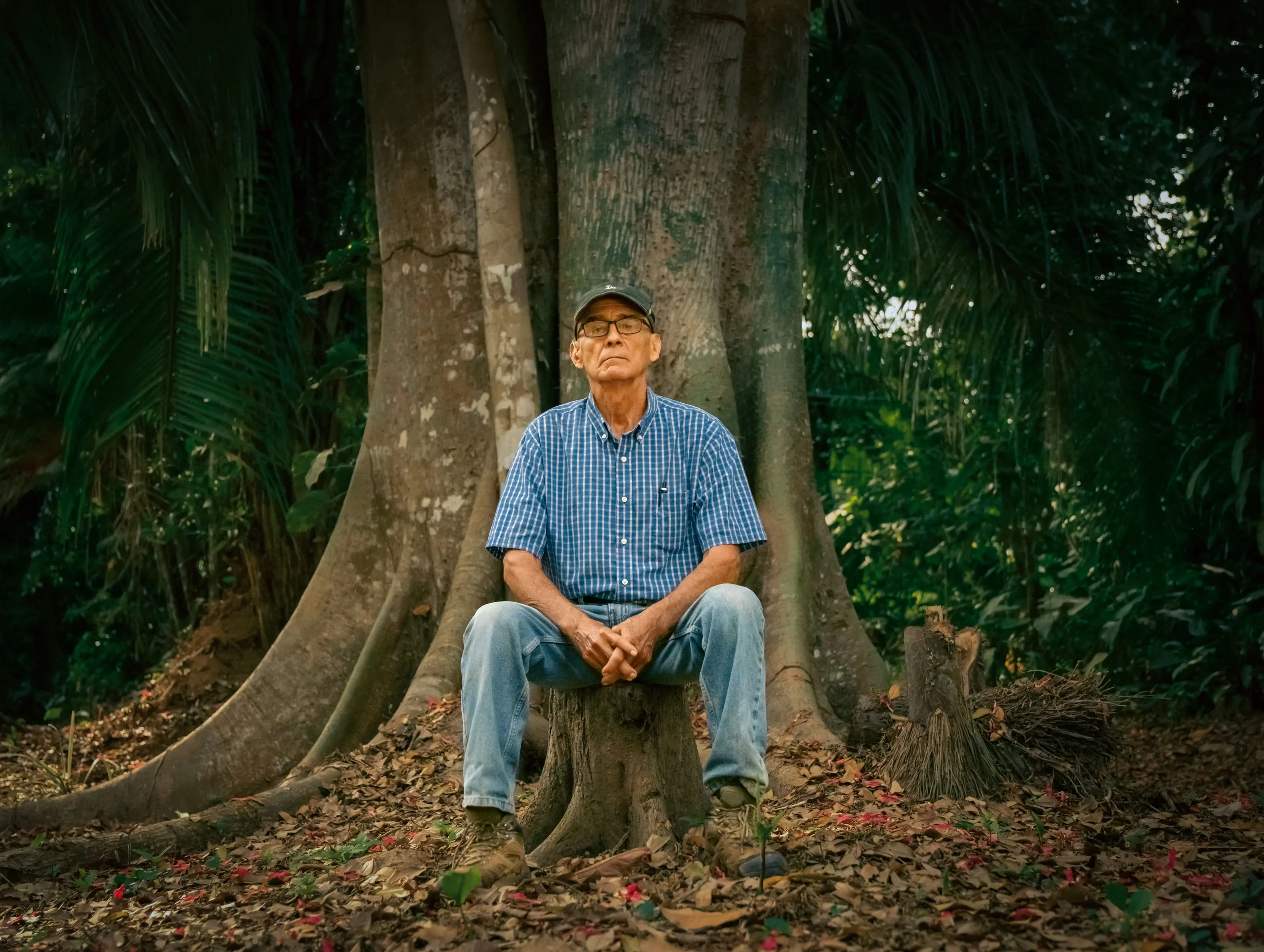
The Return
Víctor Zambrano came back to a Madre de Dios in the middle of a transformation. It was 1986, and that territory, once cut off from the rest of the country, was receiving a massive wave of migration driven by the gold rush. The plot his parents left him in inheritance, which he remembered as a forest teeming with wildlife and vegetation, had been deforested and replaced by a blanket of brachiaria, an aggressive grass of African origin introduced for cattle ranching.
Although he knew the law inside out, he was certain that recovering possession of his land the “civilized” way wouldn’t work. Determined, he set out on a strategy worthy of a military commando. He tore his shirt, made a shallow cut on his chest with a knife, and began to run and shout across the plot, “like a madman,” as he recalls. Only that way did he manage to regain possession of the land.
After driving out the invaders, how did you manage to recover a destroyed forest?
I took on the challenge of planting an average of forty thousand trees, and I did it with resolve, with courage, and with hope. Back when I began, no one believed it was possible to recover degraded areas through this innovation. What I was trying to create was that dream I’d had as a child, to be surrounded by wild animals. My first test was this space where we live.
The normal thing for an ordinary farmer is that, if you have a plot, you have to knock down all the trees to plant, to raise cattle. They, the neighbors, would pass along this road, look, and the grass was still there. That meant Mr. Zambrano was an idler, that he didn’t work the land the way you’re supposed to.
And yet I would build my enrichment strips, and that allowed the initial conditioning of a completely degraded plot. The main thing was to cover it with certain bean varieties called kudzu, gray velvet bean, and black velvet bean. They’re legumes brought from Brazil and introduced here to enrich the soil.
A second stage began with planting trees that fix nitrogen in the soil, the guabas, as we call them, a variety of pacay. After almost a year, patches of shade started to form where the grass, the brachiaria, began to wither.
To inspire your agroforestry model, you draw on observing nature and also on observing indigenous knowledge. What do the forestry engineers say, and what did you do?
The tragedy we live is following the examples or recommendations of technicians who come from other places, other realities. The famous agroforestry, which is precisely the restoration of a degraded space, but always with the aim of planting in order to cut later. I didn’t want to follow that line of agroforestry, but the one of restoring the wild resource and also drawing in wildlife.
I firmly opposed the forestry, agrarian, and agronomy engineers, who always favor, as on the coast, laying out defined rows, one behind another, spacings, an east-to-west orientation.
There I go back again to that world of the native brothers, to that world of nature itself, the full forest. What does the full forest, the natural forest, say? Are there rows? Are there set distances? No, of course not. The ‘disorder’ of the forest is the order I followed.
And that was the harshest criticism the top officials from the Ministry of Agriculture in Lima made when they came especially to review this model. The first criticism was, “And where are the rows? I don’t see rows, I don’t see spacing. It’s all bush. I don’t see a system.”
Obsolete, unreal criteria for this ecosystem itself. In time, I proved to them they were completely wrong.
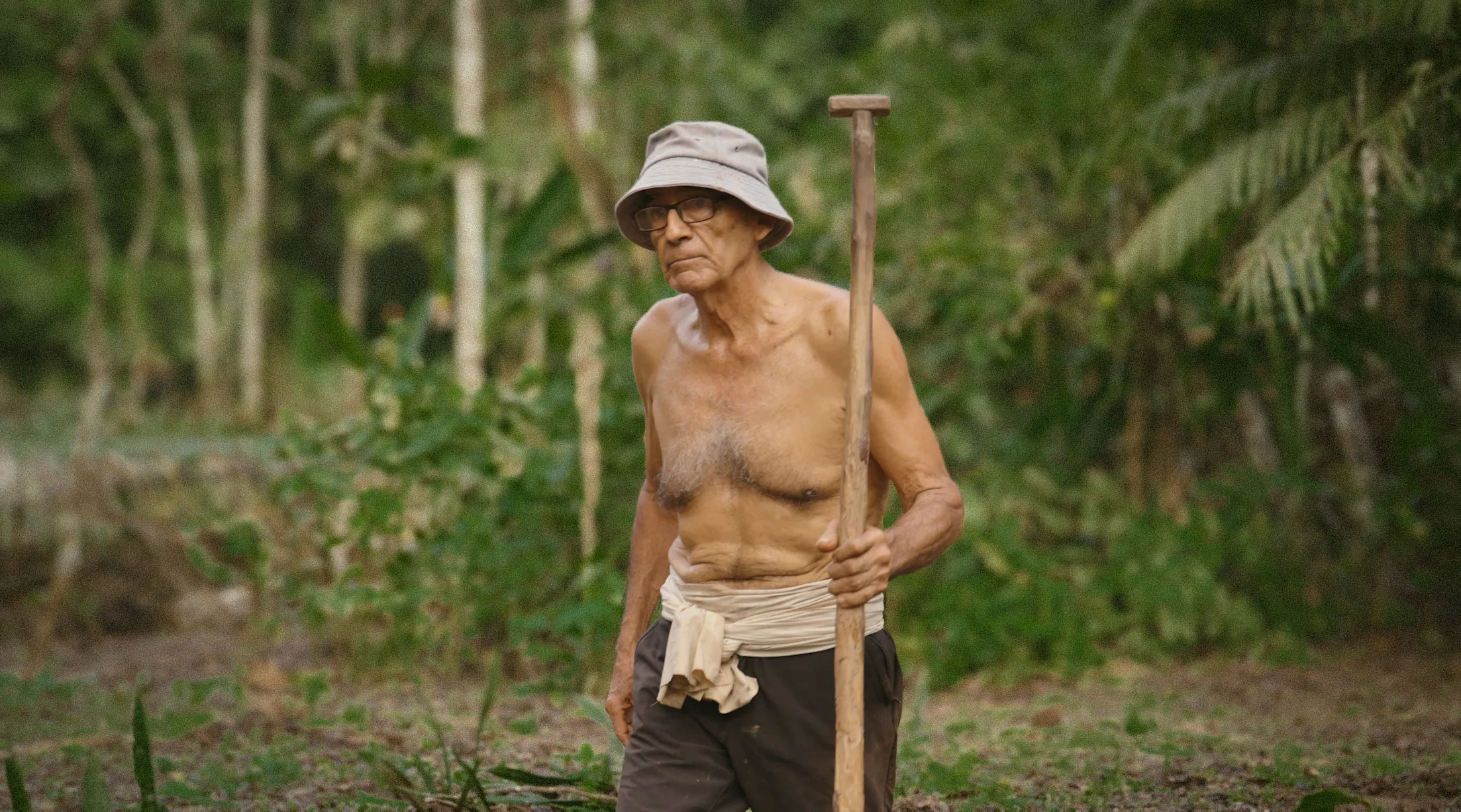
Because of the work you’ve done, people have asked whether you’re a forestry engineer, but you answer, “No, sir, I’m a farmer.” Could you tell us why you consider yourself a farmer?
I say it with pride, because I’ve practiced it, I’ve taken it on in its full extent. I am a campesino, a farmer. The dynamic of our forest has let us learn many concepts that, perhaps, most people don’t understand. The mindset a farmer has for doing his work with care, with love, because from that he’ll get a result, which is the product of his harvests and what feeds the people.
Fate also willed that I represent all the farmers of Madre de Dios through the Departmental Agrarian Federation of Madre de Dios. We’ve been the voice, and we’ve pushed for action before the authorities.
Farmers, men and women alike, have always been treated in the worst way when they walk into an office. They’ve been belittled and treated as ignorant. And that wisdom they’ve always had, even if they can’t read or write, has never been valued.
The technician with his technique and the farmer with his experience should come together, should join in a single effort. And that’s what we’ve preached, because the value they hold is immeasurable. So the title of campesino, for me, is the greatest I could have in my life.
The Gold War
Just a couple of hours from Víctor Zambrano’s refuge, the Amazon begins to blur. There, La Pampa advances, a desert opening its way through the heart of the Amazon rainforest, laying bare the devastating impact of gold mining in Madre de Dios. According to the MAAP satellite monitoring system, as of mid-2025 this activity was responsible for 97.5% of all the deforestation recorded in the country. In the hardest-hit areas, the Madre de Dios River carries up to twelve tons of mercury each year.
What’s the difference between the wealth that gold promises and the wealth the forest gives us?
Entering an area without any authorization, eroding the soil, contaminating it with mercury, leaving waste, exploiting people… Taking the resource out of nature and profiting from that activity you’ve carried out so badly, leaving behind debris, contamination, and deaths.
Gold, as its very structure says, shines for just a moment. Today’s man wants to escape poverty overnight. He doesn’t care how, destroying everything, because it’s easy to do that and no one is going to say anything to him.
How would you explain to someone who has never been in the jungle what illegal mining does to the forest, the rivers, and the people of Madre de Dios?
It’s a malignant phenomenon that is destroying us completely. There’s a law to formalize mining, small-scale and artisanal mining, that doesn’t work. A mechanism called REINFO. It’s a criminal front that our famous Congress of the Republic has approved. It’s giving legality to what is illegal.
We are eyewitnesses. Yesterday we flew over the area so the new authorities could see, so they could see the state of that famous Pampa. And it’s a complete disgrace. There’s no order there, no law that counts.
Do you feel we’re in a war against extractivism?
It’s a war. It’s an unequal war, because even the authorities’ detection systems are already known to the enemy, right? Because they have better equipment, more sophisticated. They get ahead by a day or two. They already know the patrols are coming. They have their drones, and they have devices to disable drones and bring them down. In other words, they have better technology than we do.
But as long as I can move, as long as I can get around, as long as I can push, nationally and internationally, for concrete action to help keep Madre de Dios from being devastated the way they’re doing right now, I’m going to do it, because that’s the legacy I’m leaving behind.
And I don’t like being in the media or in public actions and so on. That’s not my style. My style is to go straight to whoever holds the responsibility to take on challenges and also duties as the State. If I have to solve a problem, I don’t go to the regional governor, because he’s not going to solve anything at all for me. I have to go to Lima, I have to go bother the ministers, right? That’s their job.
We are not going to back down. We are not going to lose our nerve. What’s at stake is the health and the future of my land, which I love so much. I fear no one. I was born on this land, I lived alongside my native brothers, and I interpreted the essence of what nature is. And that’s why I’ll wager to the very end. To defend it even with my life, if need be.
The Threat
Since 2015, three people linked to the Management Committee of the Tambopata National Reserve have been murdered. They came for him in March 2022. Two men on a motorbike lay in wait for him with a silenced weapon as he was returning home. Víctor is certain it’s the forest that watches over his steps.
Was there an exact moment when you decided you would devote your entire existence to the forest? When was that moment?
Nature is not an unreal being. It’s there, and it rewards you, it backs you. I feel it every day, even in my worst moments, when my own life has been on the line. The enemies who wanted to make me disappear came all the way here. After the murder of one of my coordinators, they came for me too. But, thank God, it wasn’t possible, because I had my protection, my children, whom I planted, my trees, my beings that accompany me, and an Almighty who sees in this flawed man something of value.
My nature helps me, it gives me strength, it gives me spirit. As the doctors say, it’s my hyperbaric chamber. This is my source of energy, not only bodily but cosmic, that draws me in. And I feel it every day. I feel it at night. The universe is setting the conditions for me. I no longer decide my destiny, and haven’t for a long time. I once said, “Never again will I define in my head what I’m going to do in the future. Destiny, guide me wherever you wish, I’ll follow.” And I’m still with that to this day.
The Legacy
At the door of his house rises a lupuna more than thirty meters tall. Víctor Zambrano planted it the same day his youngest daughter was born, exactly thirty years ago. It was the nineties, and choosing an indigenous name still meant defying prejudice. He chose two, one in Harakbut and one in Ese Eja. K’erenda Homet, “brilliant dawn.” Decades later, that same name would christen the forest he restored and would become one of the first private conservation areas in the Peruvian Amazon.
What has that transfer of a life vision at K’erenda meant for you?
The name K’erenda Homet is no coincidence. It’s the enduring memory of those living beings who inspired in me a new way of looking at life, of enriching our nature and improving the environment where we all live. We live in peace, in harmony with everything there is, because we managed to recover a degraded area. That has been the greatest dream I’ve had since childhood, to be surrounded by extraordinary beings, wild animals, and vegetation.
Twenty-five years ago I practically forced the structure of the State to change some concepts. I transferred ownership of this territory to my youngest daughter when she was five. At the time it seemed like madness. “How can the whole property go to a five-year-old girl?” On top of that, there was no rule that allowed anything like it.
Ten years later, in 2010, with the support of the Peruvian Society for Environmental Law (SPDA), we took the case to the courts to find a mechanism that would let a minor own land. And we got it. Until then there was no case law on ownership by a minor. The judge also had to rack his brains, but in the end he ruled that we, the parents, could represent her to sign the necessary documents and so turn the plot into a Private Conservation Area.
All of that had a purpose. What do we do when we grow old, when we’re about to leave? How do we make sure that everything I’ve built with so much effort and sacrifice carries on? The idea was to raise K’erenda for this from the day she was born. I have other children, but she showed interest from very young. We began guiding her so she’d continue down this path.
We’ve called that process generational relay, or generational change. It’s how we old ones hand over, little by little, the baton to those who come after, giving them every element so they can carry on in better conditions. If I had no higher education, well, let her have it, let her have the power to decide so she can move this task forward.
That’s what I’ve thought since she was five. She always followed me everywhere. When I was giving a tour and forgot a little plant, she’d tell me, “Well, you forgot this little plant.” So I felt that, because until then I saw no one behind me to cast a shadow for me. The only little shadow I saw was from here down. She was still tiny.
What would you say to a young person who has never left the city?
As permanent custodians of the legacy the supreme being has given us, which is this immense nature, we ask these new generations to take on the role that belongs to them, because if we have continuity in this, that nature will always give us back good things for the benefit of our family, our people, and also the generations that come after us. So, young people, men, women, take on this role, take on this challenge of having not only theoretical knowledge but practical knowledge in the places where it’s meant to be had. Don’t be afraid to leave your surroundings, to leave your comfort, and go to those places where you truly can see and breathe nature in all its splendor.
Mr. Víctor, do you think we’ll make it? That we’ll win this unequal war?
Hope has never been lost, my friend. I’m here because I have hope. Not because of age, like, well, it’s all over now. We have to forge a new youth, new people who can carry this on.
There’s an example. There’s the girl, K’erenda, who isn’t so little anymore. She’s the continuation of me, of what I’m leaving here. Because how else would we do it? Do I sell my plot? Do I grid it off? Do I parcel it out? Sure, then: money, money, money. What good does it do me? While I’m alive, I’ll use it for trivial things half the time. But afterward come the consequences. We have to carry on, there’s no room to say, “This far and no further.”
Mr. Víctor, as a species we call ourselves Homo sapiens, the “wise man.” After everything you’ve lived through, do you think the human being is good or bad by nature?
I think… It’s a deep reflection, my friend.
We’re human beings, we can make mistakes. As a now-departed leader, Santos Kawai, said, you have to make mistakes by doing, not by failing to do. If you do nothing, then obviously, what mistake are you going to make? So, do something.