
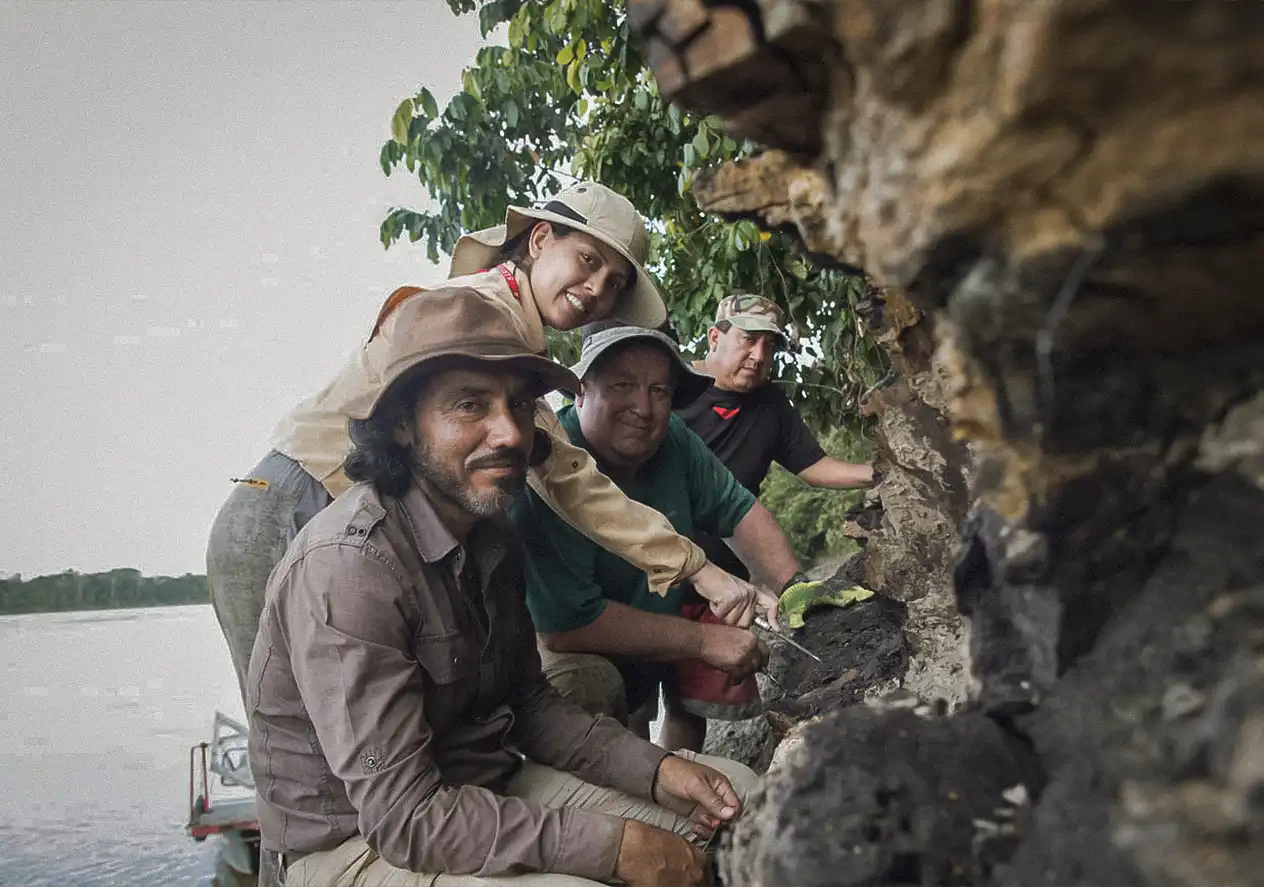
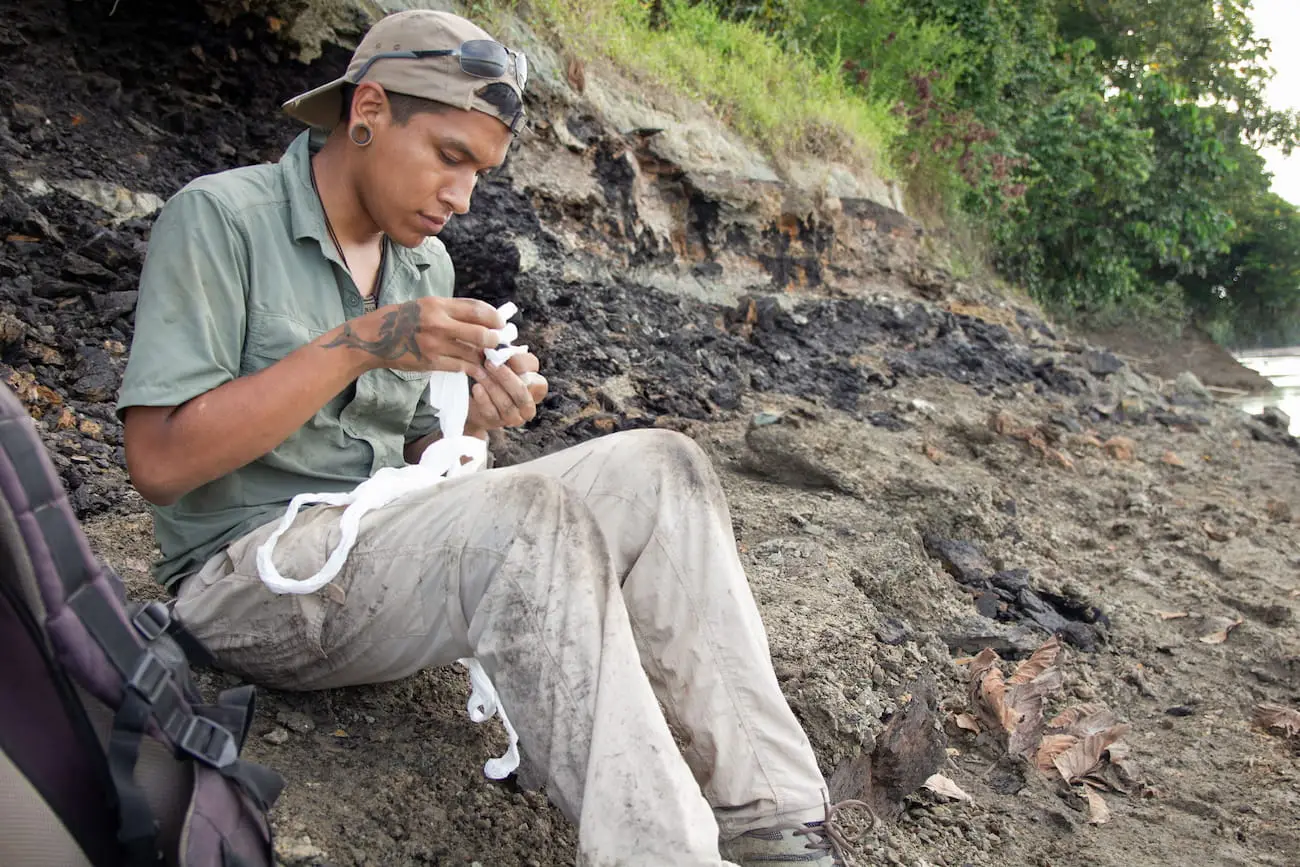
This team of paleontologists was searching for crocodile bones on the banks of the Napo River in Loreto when one of the researchers noticed something unusual in a dirt wall. It was 2018, the final days of the expedition, and they had spent weeks covering more than 300 kilometers of jungle. Without knowing it yet, they had just found the largest river dolphin ever to have existed on Earth.
A discovery that wasn’t in the plan
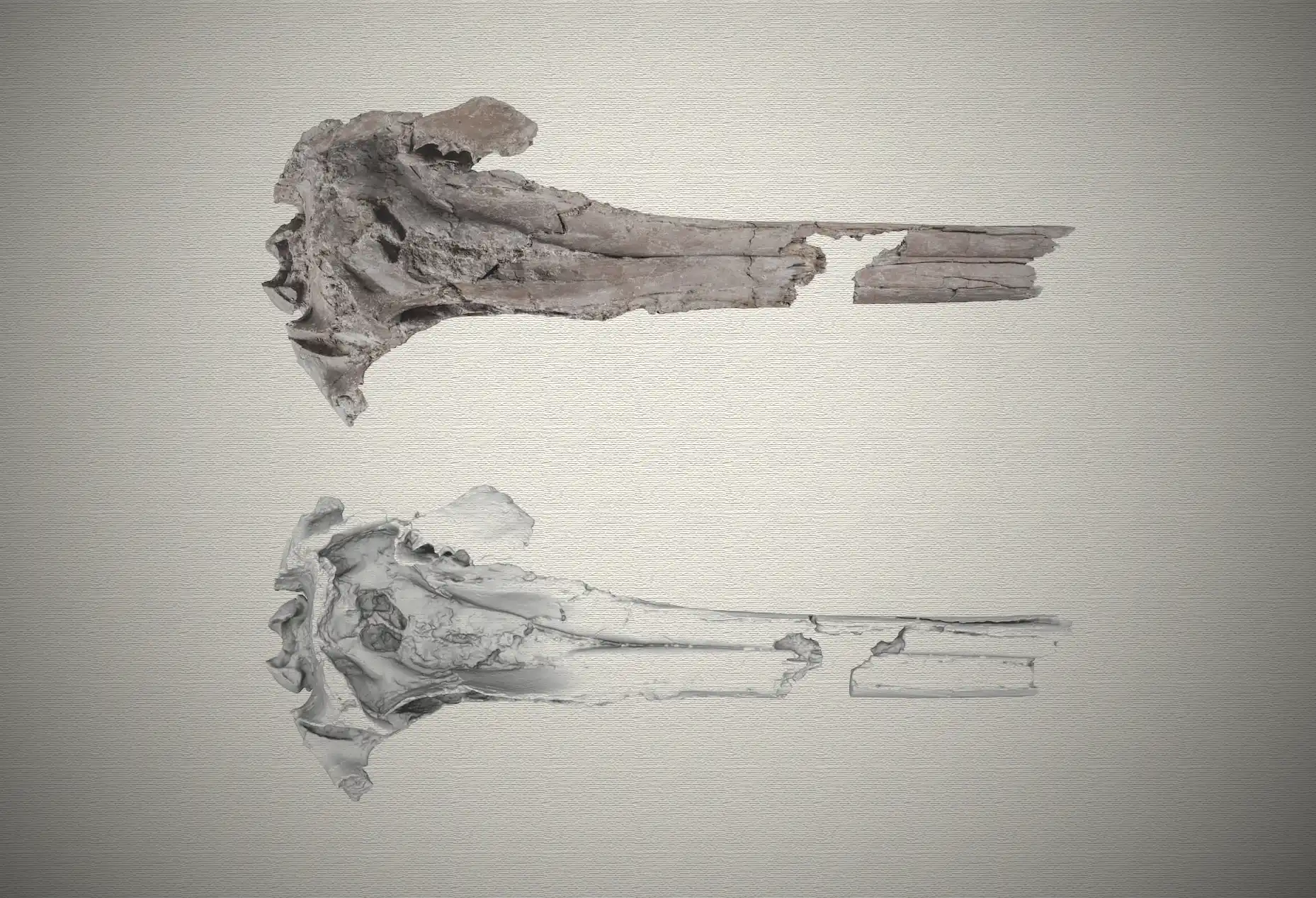
The skull emerging from that wall measured nearly 80 centimeters. Six years of analysis later, in March 2024, the journal Science Advances published the findings: a species completely new to science. They named it Pebanista yacuruna, and shortly after, it earned recognition in the Guinness World Records for its impressive size. It measured between 2.8 and 3.5 meters long and lived approximately 16 million years ago. No known freshwater dolphin comes close.
A relative on the other side of the world
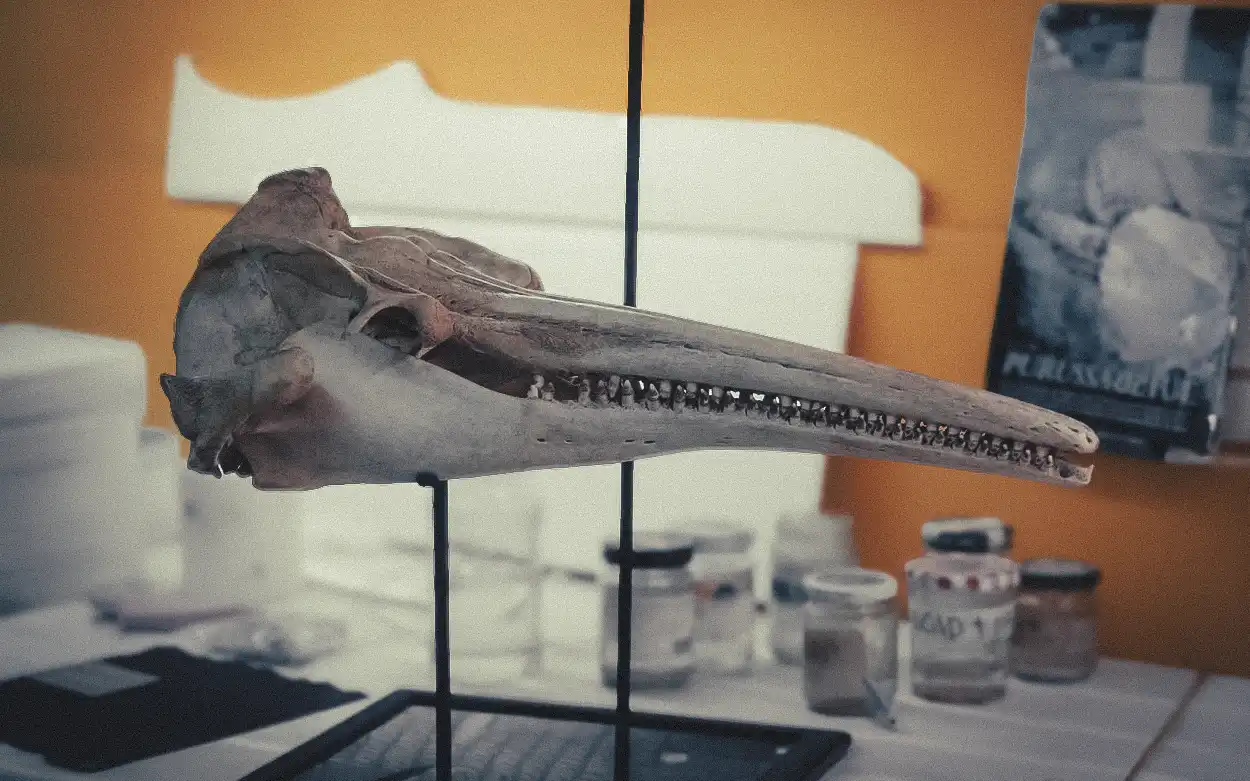
The obvious assumption would be that this Amazonian giant was related to the pink dolphin, the bufeo, which still swims the Amazon today. But no. Pebanista yacuruna is more closely related to the Platanista, a dolphin that inhabits rivers in South Asia, more than 10,000 kilometers away. So how did two animals separated by oceans and continents end up sharing the same evolutionary history?
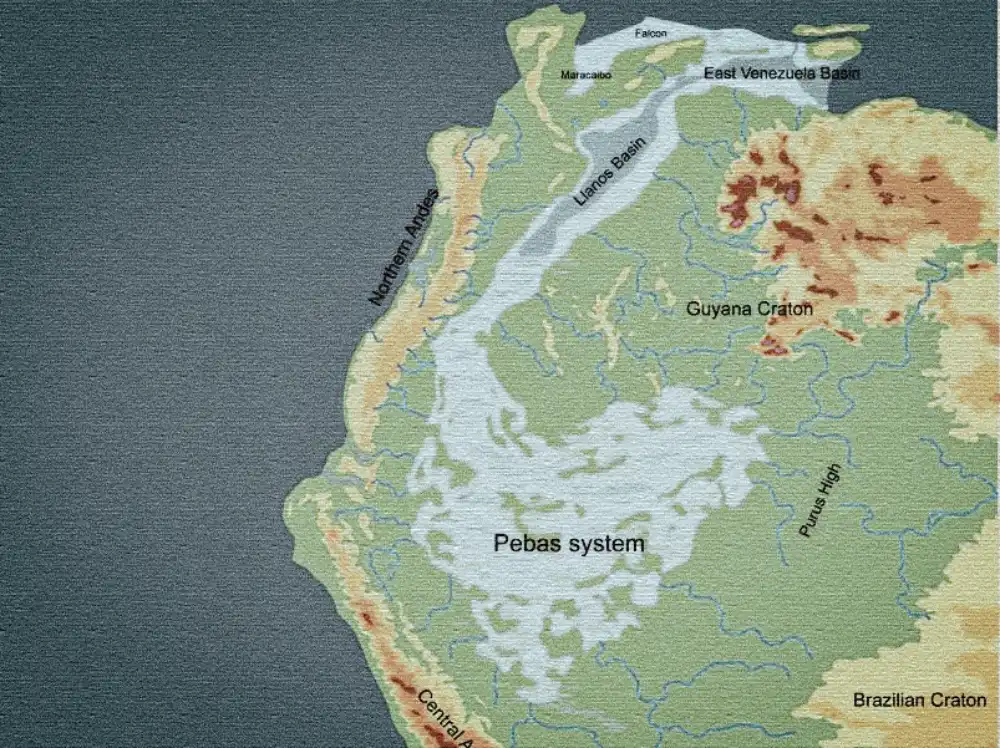
To understand how this animal got here, you have to set aside the map of the Amazon we carry in our heads. This species lived in a very different Amazon from the one we know.
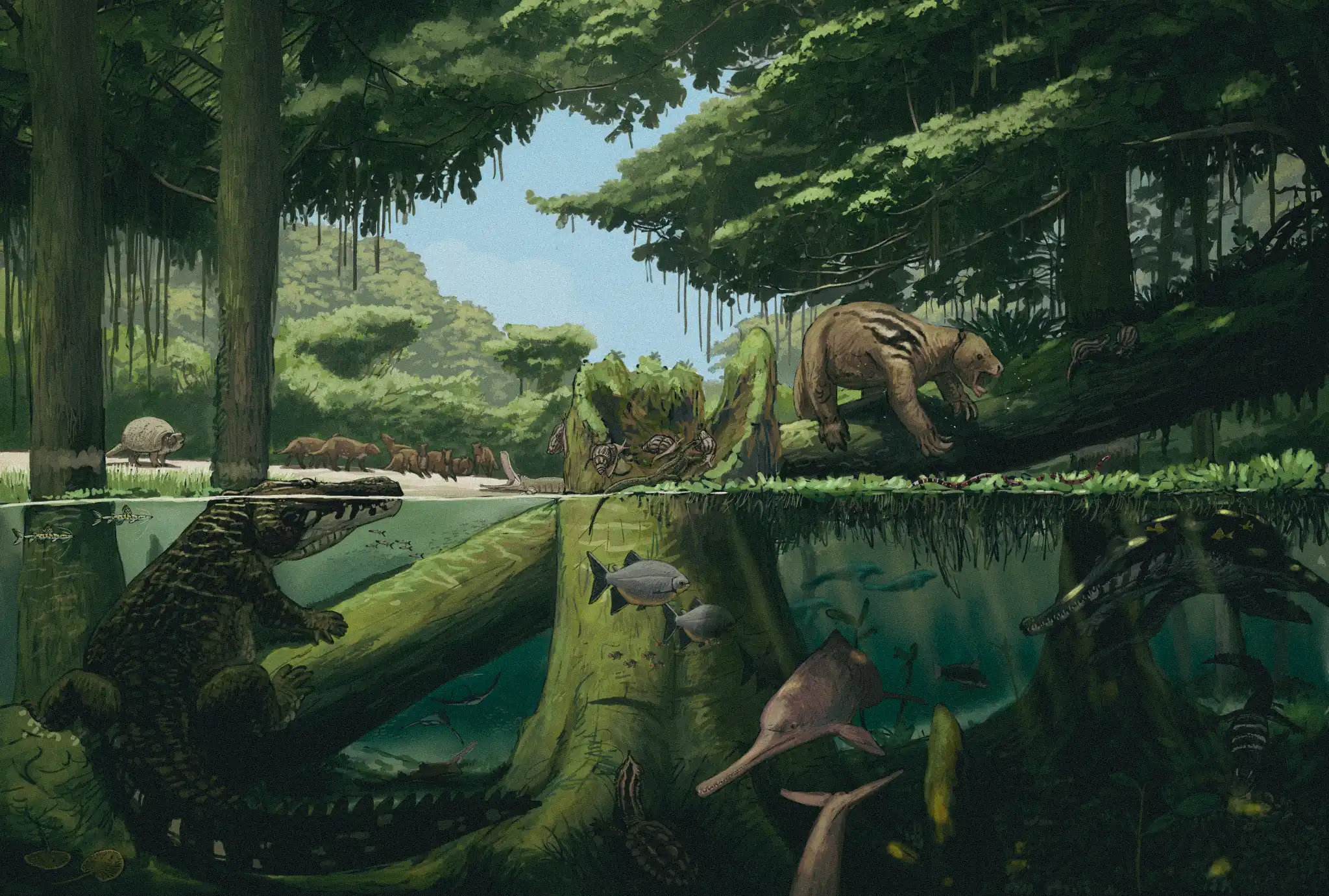
During the Miocene, between 23 and 8 million years ago, western South America was unrecognizable. There was no Amazon River. In its place, an enormous system of lakes, swamps and channels covered what is now Peru, Colombia, Ecuador and part of Brazil. That was the Pebas system.
Everything changed with the formation of the Andes. As the mountain range rose, it blocked the flow of water toward the Pacific and trapped it to the east. Water accumulated, and according to the research, the biodiversity of that era would have surpassed even the Amazon of today. Giant aquatic turtles the size of a car and colossal crocodiles swam in those same waters.
That world lasted millions of years. But the Andes kept rising and the Pebas system began to dry out and fragment. Large bodies of water became rivers. The jungle replaced the swamps. And with that shift, much of that extraordinary fauna disappeared, including Pebanista. What survived, and adapted, gave rise to the modern Amazon. What we see today as dense, impenetrable rainforest was, for millions of years, a vast inland sea.
Naming an Amazonian species
Naming a new species is always an intentional act. Yacuruna is a Quechua word. Yaku means water, runa means man or people. In the mythology of peoples such as the Shipibo-Konibo, Yagua and Asháninka, among others, the Yacuruna is one of the most powerful and feared figures of the lowland jungle: a being that dwells in the depths of rivers, rules over aquatic animals and travels at night riding a black crocodile with a boa coiled around its neck.
The fact that a term from indigenous languages made it into Science Advances is not a minor detail. Scientific taxonomy has a long history of ignoring the names that local peoples had already given to their surroundings. This new generation of Peruvian researchers chose to anchor their discovery in the oral memory of the communities still living along those same rivers today.
The skull of Pebanista yacuruna is now on display at the Natural History Museum of UNMSM in Lima. Beyond a paleontological milestone, it stands as confirmation that the Amazon holds stories we have not yet finished uncovering.
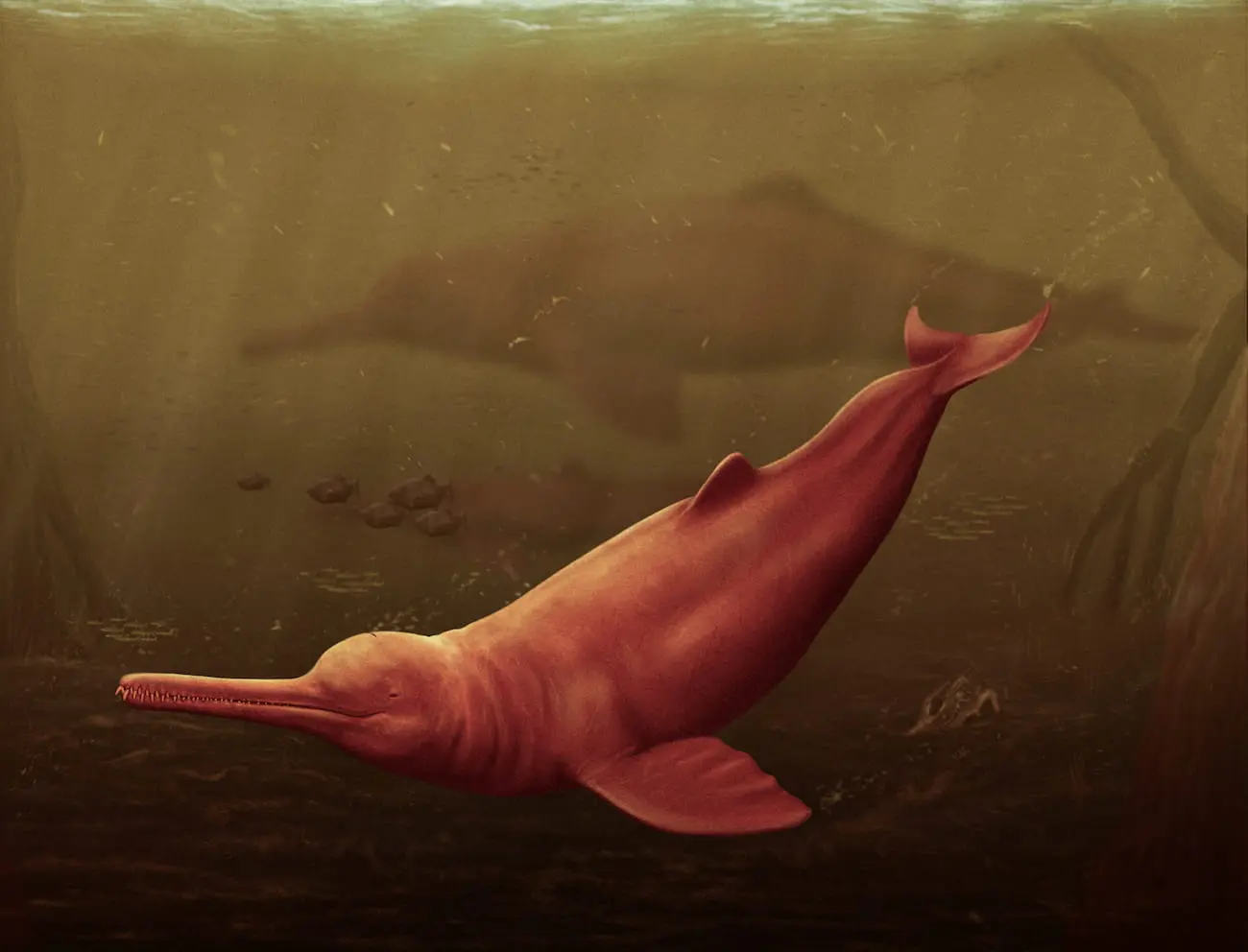
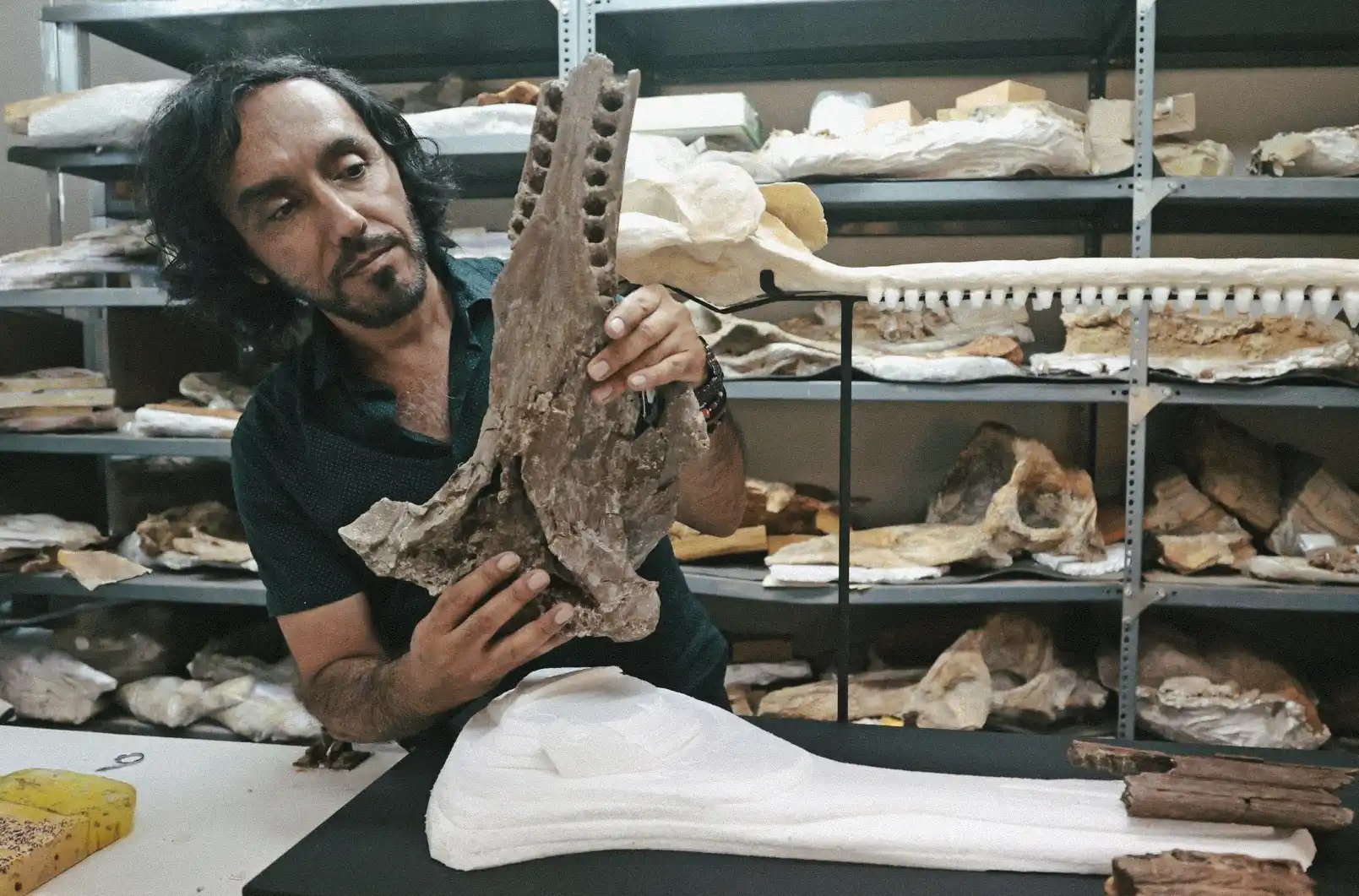
For Aldo Benites-Palomino, paleontologist at the University of Zurich and lead author of the study, Peruvian fossils are rewriting the evolutionary history of animals whose past we thought we understood.
Paleontologist Rodolfo Salas-Gismondi, a crocodile specialist and researcher at the UNMSM Natural History Museum, led the 2018 Napo River expedition with support from the National Geographic Society. In 2024, he published the first book on vertebrate paleontology in Peru: Fossil Vertebrates of Peru: Records on the Origin of Biodiversity.