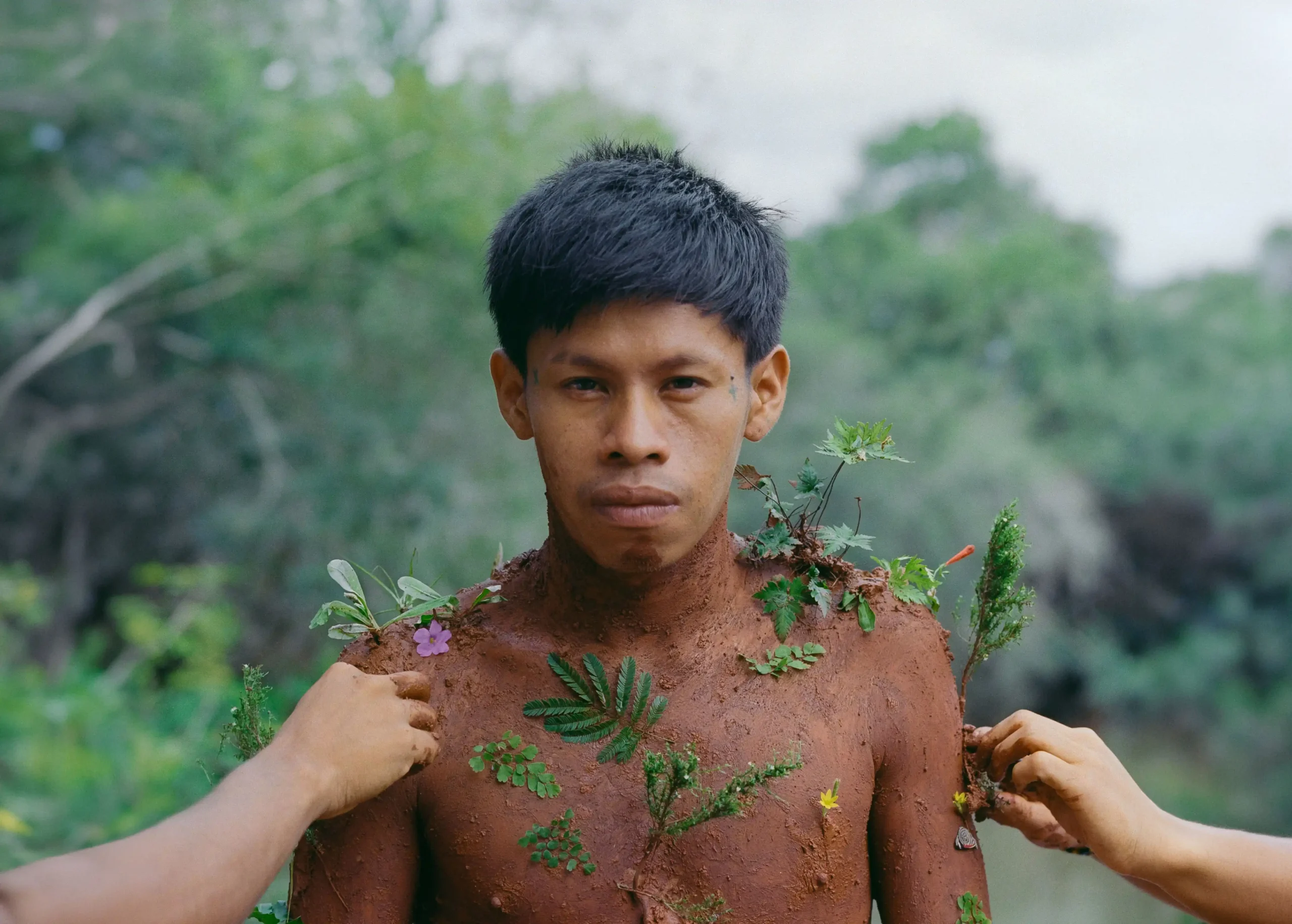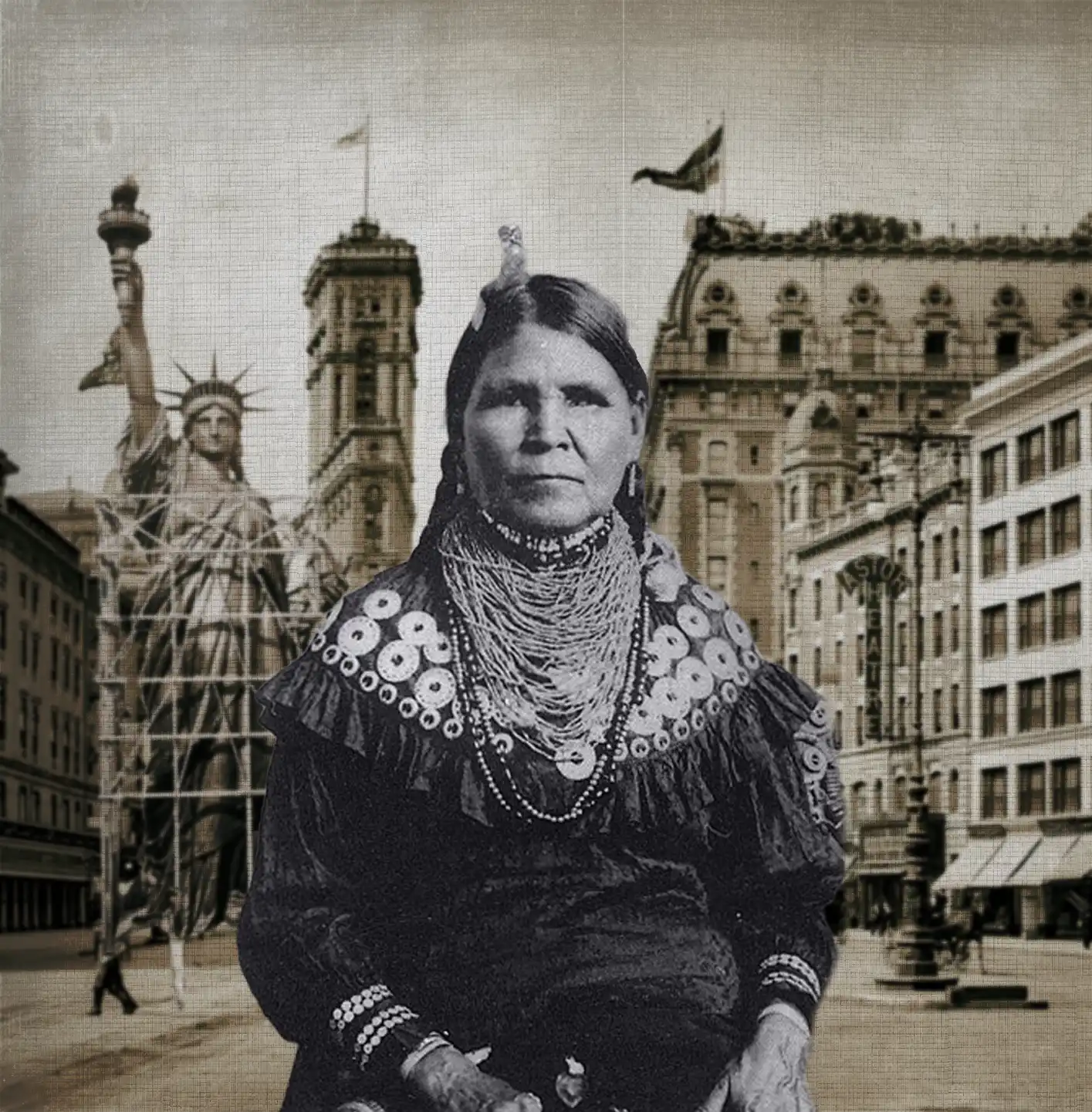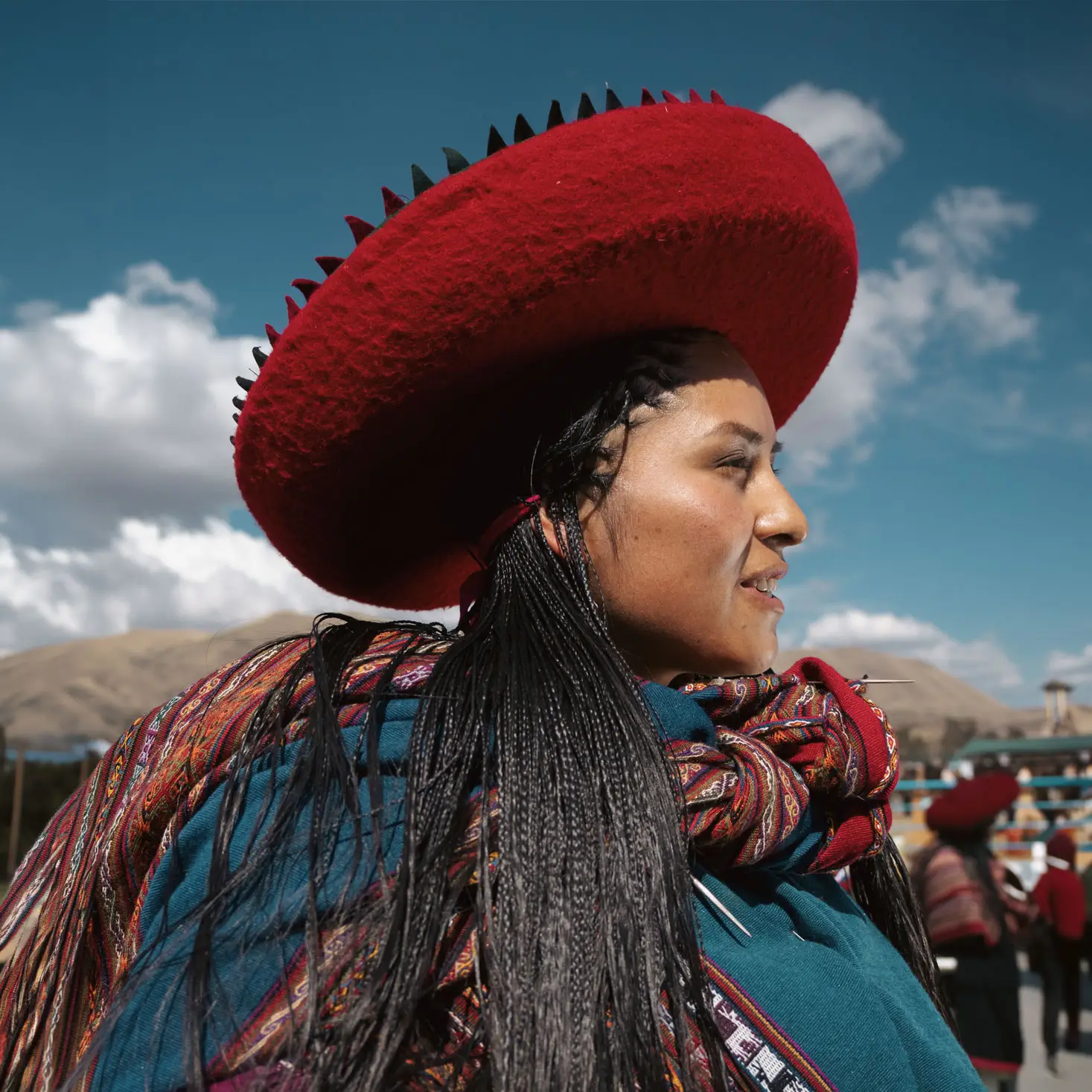

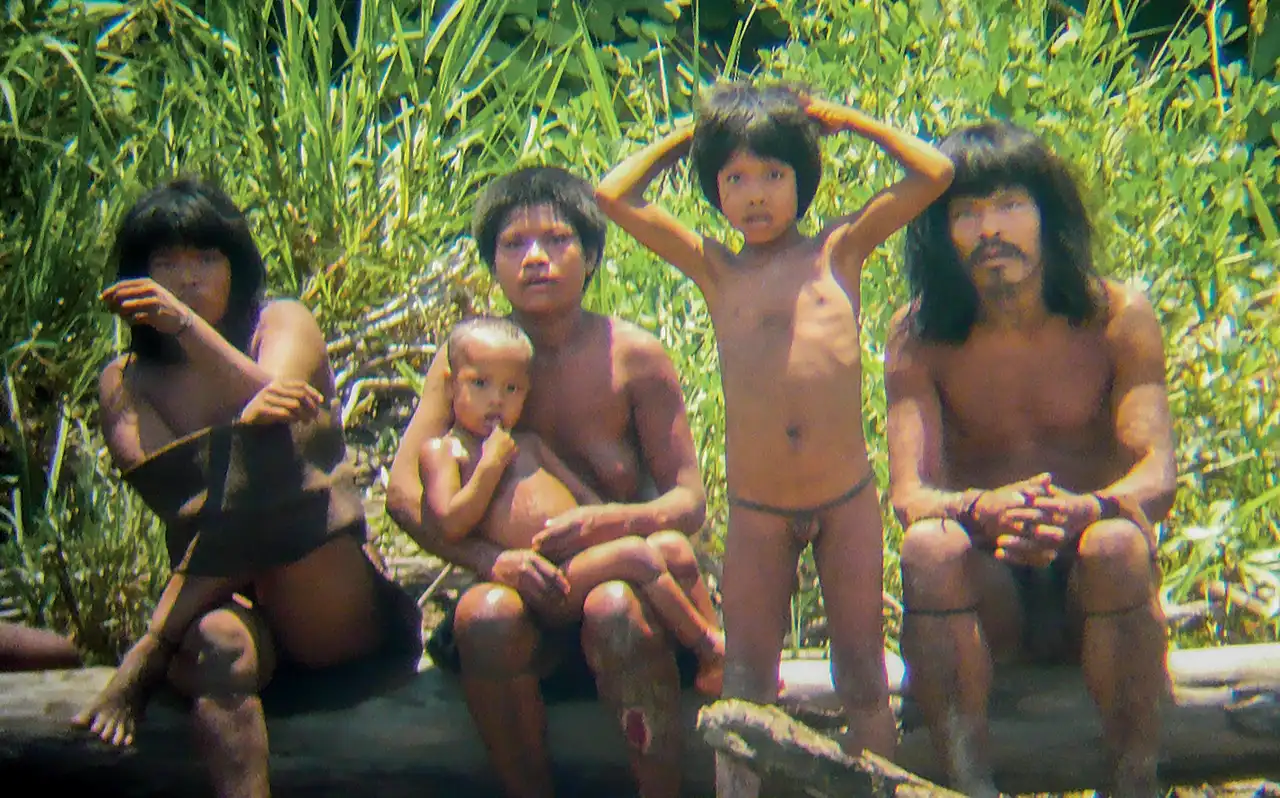
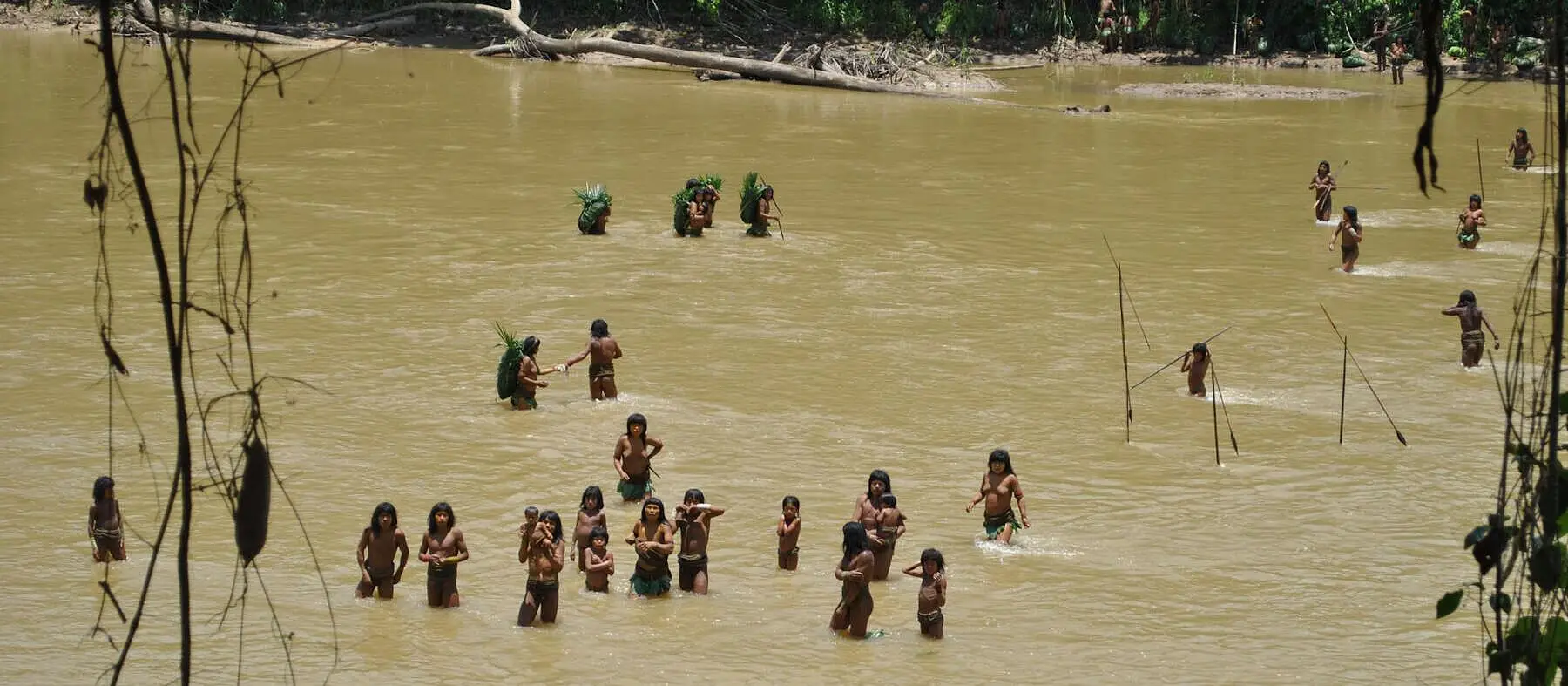
En el Perú existen aproximadamente 7.500 personas que eligieron no tener contacto con el mundo exterior o que apenas han iniciado su relación con el resto de la sociedad. El Ministerio de Cultura los reconoce formalmente como PIACI (Pueblos Indígenas en Situación de Aislamiento y Contacto Inicial). Sus territorios se concentran en regiones donde la minería ilegal, la tala y el narcotráfico han avanzado sin pausa.
¿Aislados de qué?
Era inicios del siglo XX, la invención del neumático y la masificación del automóvil en las ciudades del Norte Global habían disparado una demanda sin precedentes de látex natural. Esa fiebre convirtió a los bosques amazónicos en el centro de un negocio descomunal y dio inicio a una de las páginas más oscuras de la historia del continente.
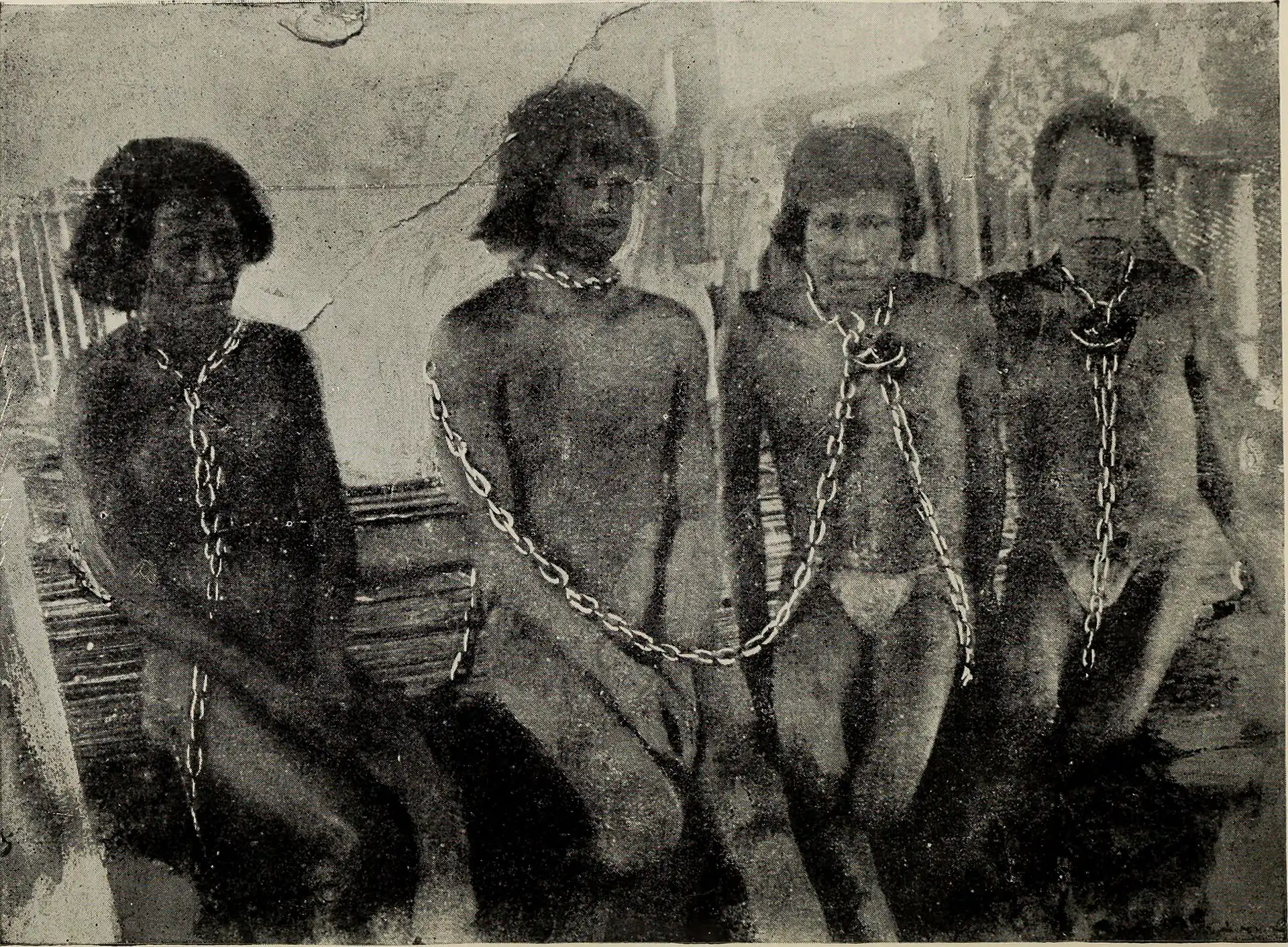
Entre 1900 y 1930 las poblaciones Bora, Muinane, Ocaina, Andoque y otros pueblos del Putumayo, quienes conocían el bosque en su inmensidad, sabían leerlo y desplazarse ágilmente por él, fueron sometidos al trabajo esclavo, torturas, masacres y mutilaciones. Todas estas atrocidades fueron documentadas por el cónsul Roger Casement en 1910, en lo que se conoce como el Libro Azul Británico. Para cuando se reportaron, tres cuartos de la población nativa del Putumayo ya habían desaparecido.
La brutalidad de la fiebre del caucho empujó a miles de indígenas amazónicos a huir de la esclavitud impuesta por empresas como la Peruvian Amazon Company. Muchos de los actuales PIACI son descendientes de aquellos pueblos que sobrevivieron, se internaron en lo profundo del bosque y optaron por rechazar cualquier contacto con el mundo exterior.

Los nuevos reyes del extractivismo
La lógica extractivista no ha cambiado desde su fundación. Cambian los actores y los productos; y donde antes operaba la Peruvian Amazon Company en busca de látex, hoy avanzan petroleras, madereras y mineras sobre los mismos territorios amazónicos.
Para proteger a los PIACI de esa presión, las organizaciones indígenas y sus aliados libraron una batalla burocrática que culminó en 2006 con la promulgación de la Ley N.º 28736, conocida como Ley PIACI. La norma establece la creación de reservas indígenas como territorios delimitados e intangibles, donde ninguna actividad extractiva puede operar y cuyo único propósito es garantizar que estos pueblos puedan seguir viviendo en autonomía. En la práctica, sin embargo, esa intangibilidad ha resultado porosa.
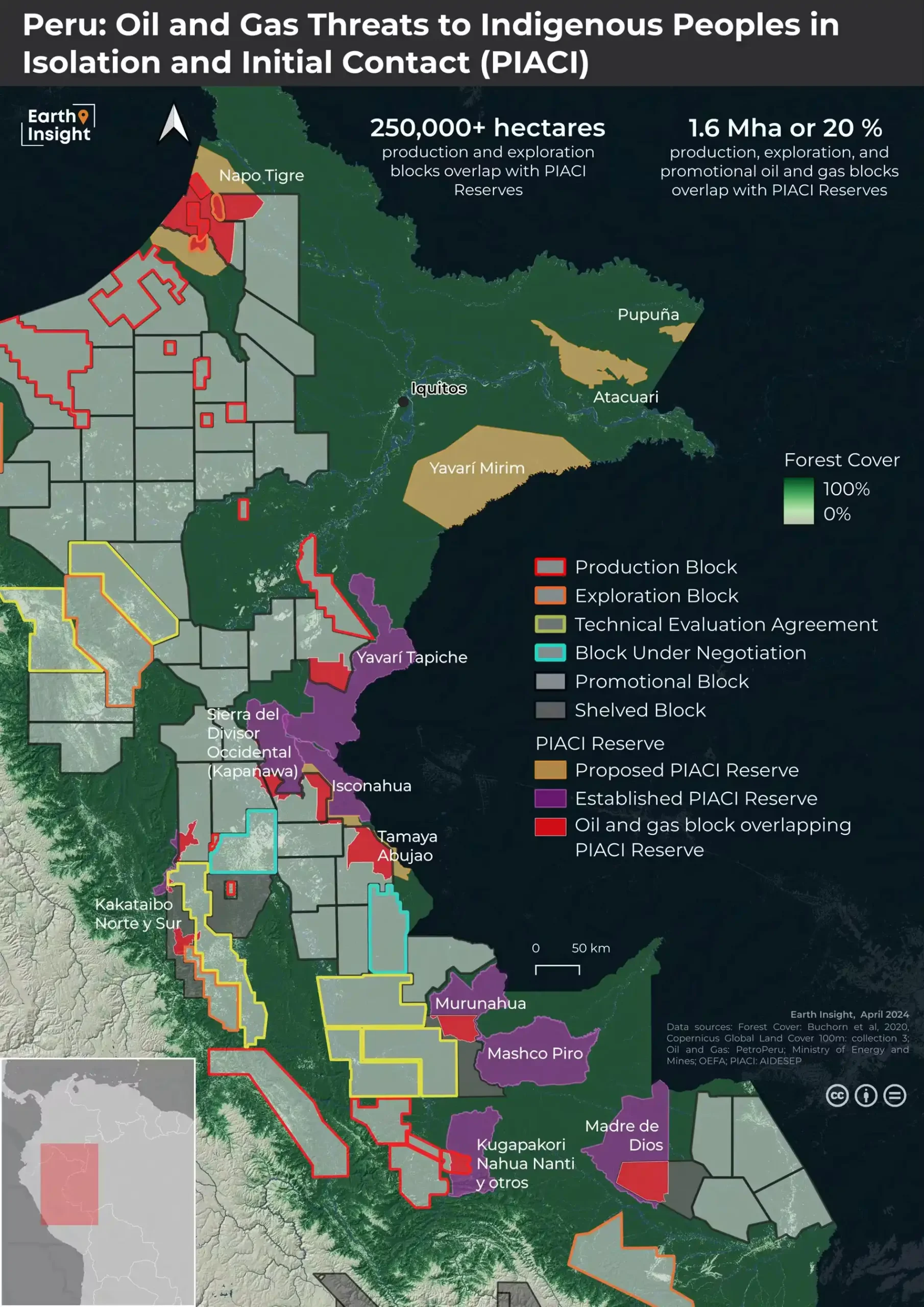
Un análisis de Earth Insight revela que los bloques de petróleo y gas vigentes y propuestos se superponen con el 20% de las reservas PIACI, equivalente a 1,6 millones de hectáreas. Además, en el corredor Yavarí-Tapiche, una franja de 16 millones de hectáreas que sirve de refugio a pueblos en aislamiento, los proyectos de petróleo, gas, minería, tala y carreteras van penetrando en el bosque. Mientras tanto, en Loreto el Gobierno Regional ha otorgado al menos 47 concesiones forestales que invaden territorios de condición intangible.
Aunque la discusión política sobre qué debe hacerse con estos espacios suele plantearse en términos de «aprovechamiento productivo», la Amazonía opera en una productividad inmensurable; regula el clima de la región, sostiene las reservas de agua dulce del continente y alberga una décima parte de la biodiversidad del planeta. El valor de esos bosques está en los sistemas vivos que mantienen en funcionamiento, y en los pueblos que los han administrado durante siglos y los siguen protegiendo. Sin embargo, un artículo publicado en Science Advances advierte que nos acercamos a un punto de no retorno, pues la deforestación y degradación combinadas de la Amazonía ya superan el 20% de su superficie total, acercándose peligrosamente al umbral a partir del cual el ecosistema podría transformarse de forma irreversible.
Una ignorancia calculada
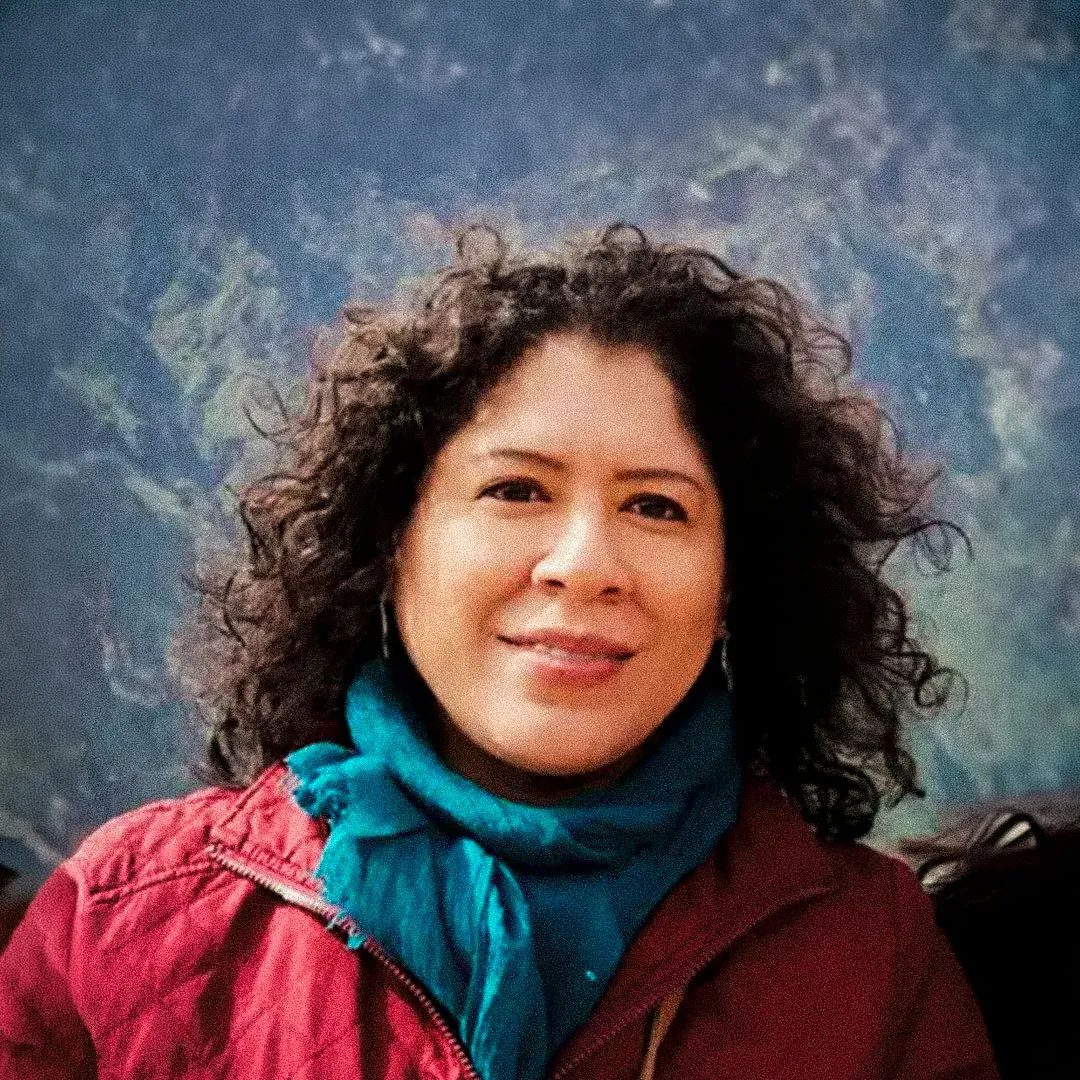
Que esto ocurra no es una sorpresa. La antropóloga Beatriz Huertas Castillo ha dedicado su carrera a registrar lo que sucede cuando los intereses económicos encuentran a estos pueblos en su camino. Como ella explica, los PIACI no han desarrollado defensas inmunológicas frente a enfermedades comunes para el resto de la población, lo que convierte cualquier contacto forzado en una sentencia de muerte. En su libro documenta varios de esos episodios. En 1984, el 50% del pueblo Kugapakori-Nahua murió por enfermedades introducidas por madereros y operadores de Royal Dutch Shell durante exploraciones en Urubamba y Manu. En 1995, otro grupo de madereros forzó contacto con los Chitonahuas, el ataque resultó en cinco muertes indígenas.
También, el antropólogo Stefano Varese denunció públicamente en 1967 al gobierno del Presidente Belaúnde Terry por haber ordenado a la Fuerza Aérea peruana bombardear con napalm las aldeas Matsés del río Yaquerana, con apoyo logístico de la International Petroleum Company. La prensa de entonces lo presentó como un acto heroico contra la ‘barbarie’.
Todavía hoy, quienes más activamente niegan la existencia de los PIACI tienen, casi siempre, intereses económicos en sus territorios. El congresista Jorge Morante, de Fuerza Popular, quien en más de una ocasión ha rechazado abiertamente la existencia de los pueblos en aislamiento, presentó en 2022 el Proyecto de Ley 12215/2025-CR, para que una “comisión especial revisora” del Congreso pudiera anular o extinguir las reservas indígenas existentes y evitar la creación de nuevas, así como anular el reconocimiento oficial de los PIACI. Y en 2025, el congresista Juan Carlos Celis Mori, de Acción Popular, también negacionista PIACI, impulsó una iniciativa con el mismo objetivo. Ambos contaron con el respaldo de la Coordinadora por el Desarrollo Sostenible de Loreto, una asociación vinculada a empresas petroleras, madereras y constructoras.
Veinte años de espera por Yavarí Mirim
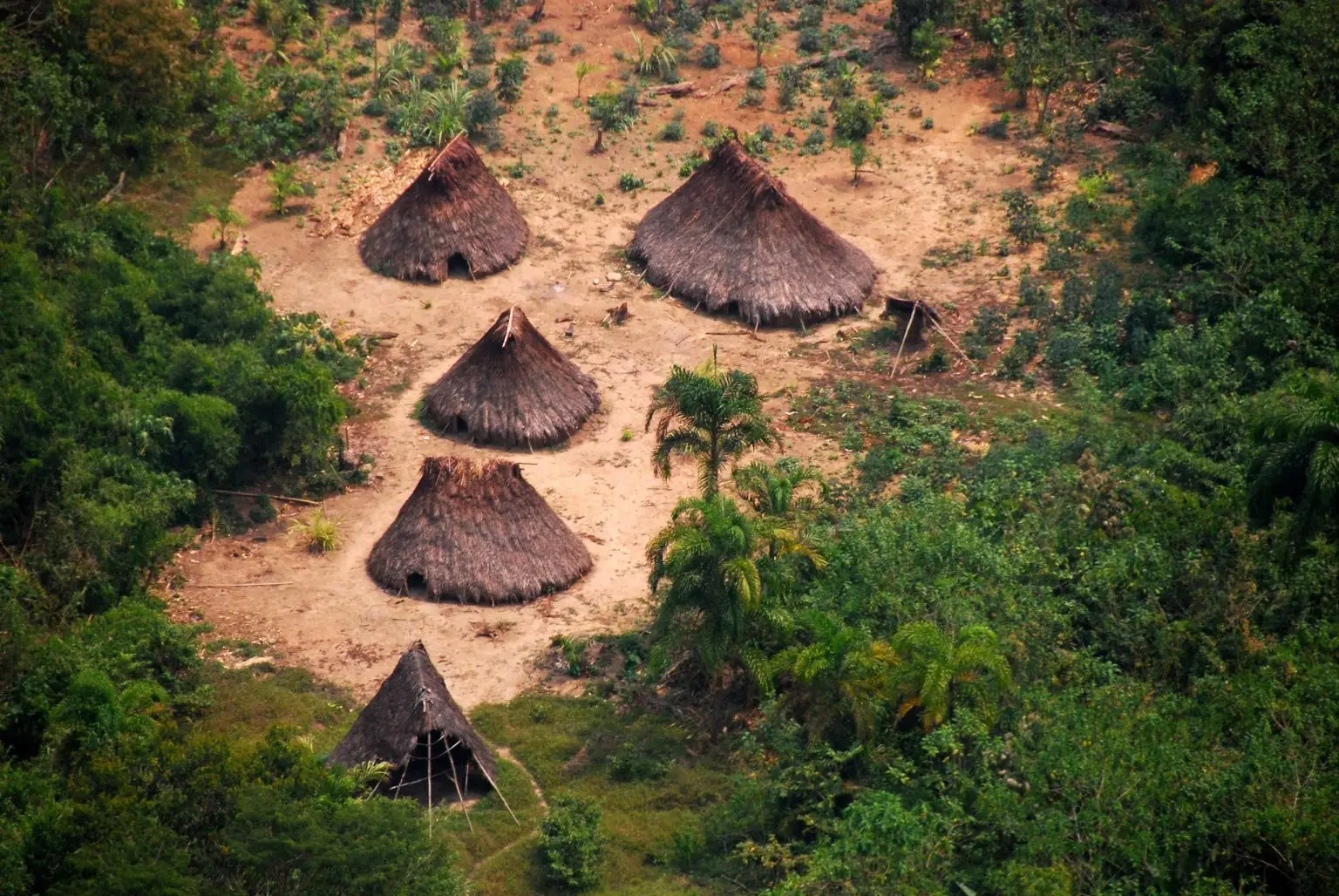
El 5 de septiembre de 2025, la Comisión Multisectorial PIACI votó con ocho votos en contra y cinco a favor de la creación de la Reserva Indígena Yavarí Mirim, ignorando más de 20 años de lucha y 113 nuevas evidencias antropológicas, entre ellas 25 asentamientos, malocas y purmas (terrenos agrícolas en desuso) confirmadas por imágenes satelitales que demuestran la presencia de pueblos Matsés, Matis, Korubo, Kulina-Pano y Flecheiro en la zona.
Los ministerios de Energía y Minas y de Agricultura fueron los primeros en oponerse, junto al Gobierno Regional de Loreto. «El día de ayer la Comisión Multisectorial tenía la obligación legal y moral de aprobar los estudios adicionales de categorización para establecer la reserva indígena Yavarí Mirim, sin embargo primaron los intereses económicos», dijo Maritza Quispe, abogada del IDL. Detrás de esta decisión hay también un desacato judicial. En 2023, una sentencia del Cuarto Juzgado Constitucional de Lima ordenó la creación de cinco reservas indígenas para proteger a los PIACI, pero solo tres han sido establecidas.
La existencia de la ley PIACI no ha sido suficiente para concretar Yavarí Mirim. Su creación es vital porque permitiría a los PIACI continuar viviendo en autonomía, sosteniendo un modo de vida que utiliza los recursos del bosque sin romper los ciclos naturales del ecosistema que los rodea.
La Amazonía no distingue entre quienes la protegen y quienes la ignoran. Los mega incendios, las sequías y las inundaciones que se vuelven más frecuentes cada año no preguntan por cargos ni ministerios. En Sapiens creemos que no es posible hablar de sostenibilidad mientras los pueblos que sostienen este ecosistema siguen esperando que el Estado cumpla su propia ley. La Reserva Yavarí Mirim no es una concesión, es una deuda pendiente.
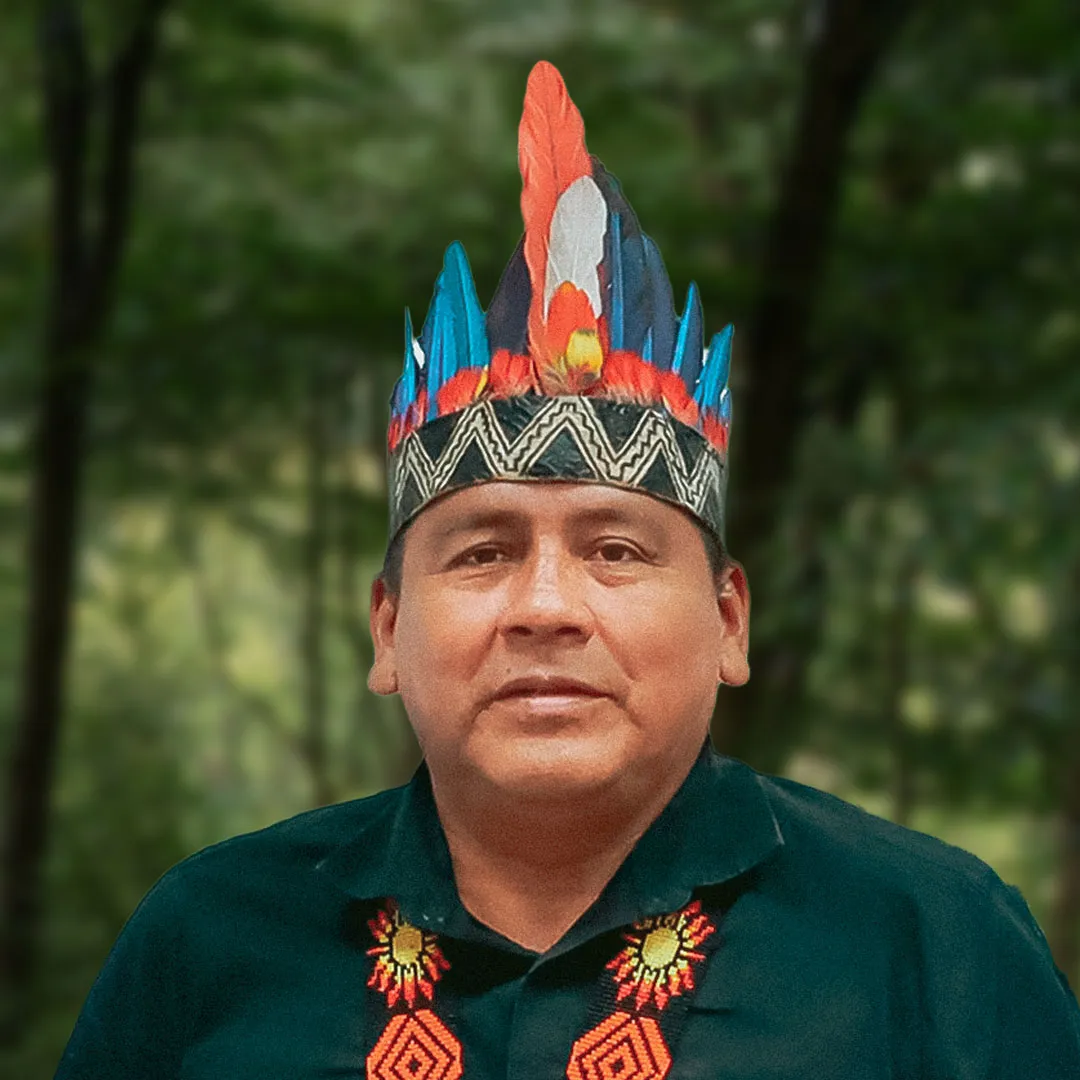
El video que acompaña la nota fue realizado como parte de una campaña impulsada por la Organización Regional de los Pueblos Indígenas del Oriente (ORPIO), en colaboración con su equipo técnico y bajo la supervisión del Apu kichwa Beltrán Sandi Tuituy, presidente de ORPIO. En el video participa también Zaira Rodríguez, responsable del Programa Mujer de ORPIO. Agradecemos especialmente a la investigadora Beatriz Huertas Castillo, autora del libro Los pueblos indígenas en aislamiento: su lucha por la sobrevivencia y la libertad, cuyo trabajo ha contribuido a comprender la situación de los pueblos en aislamiento en la Amazonía.