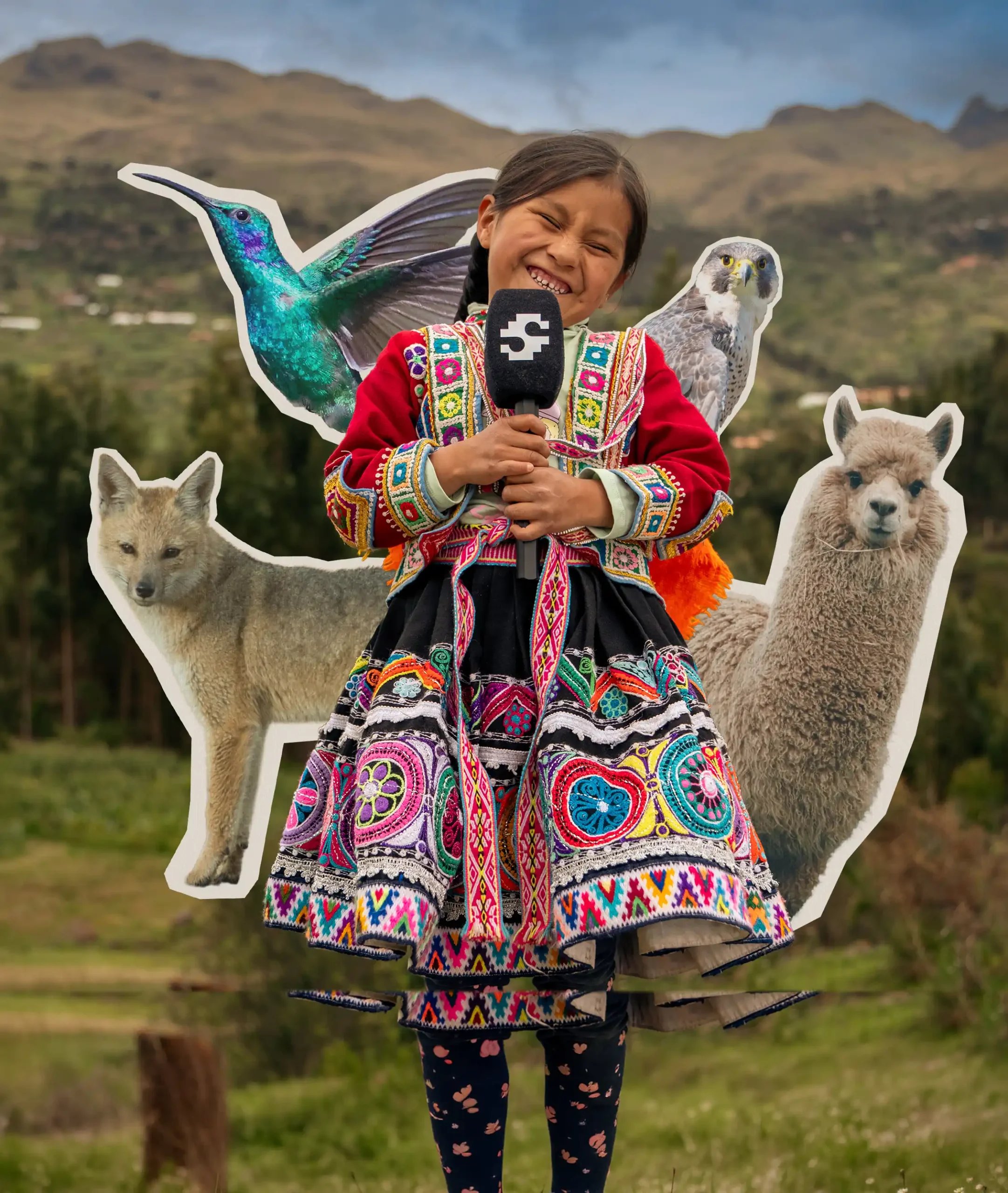
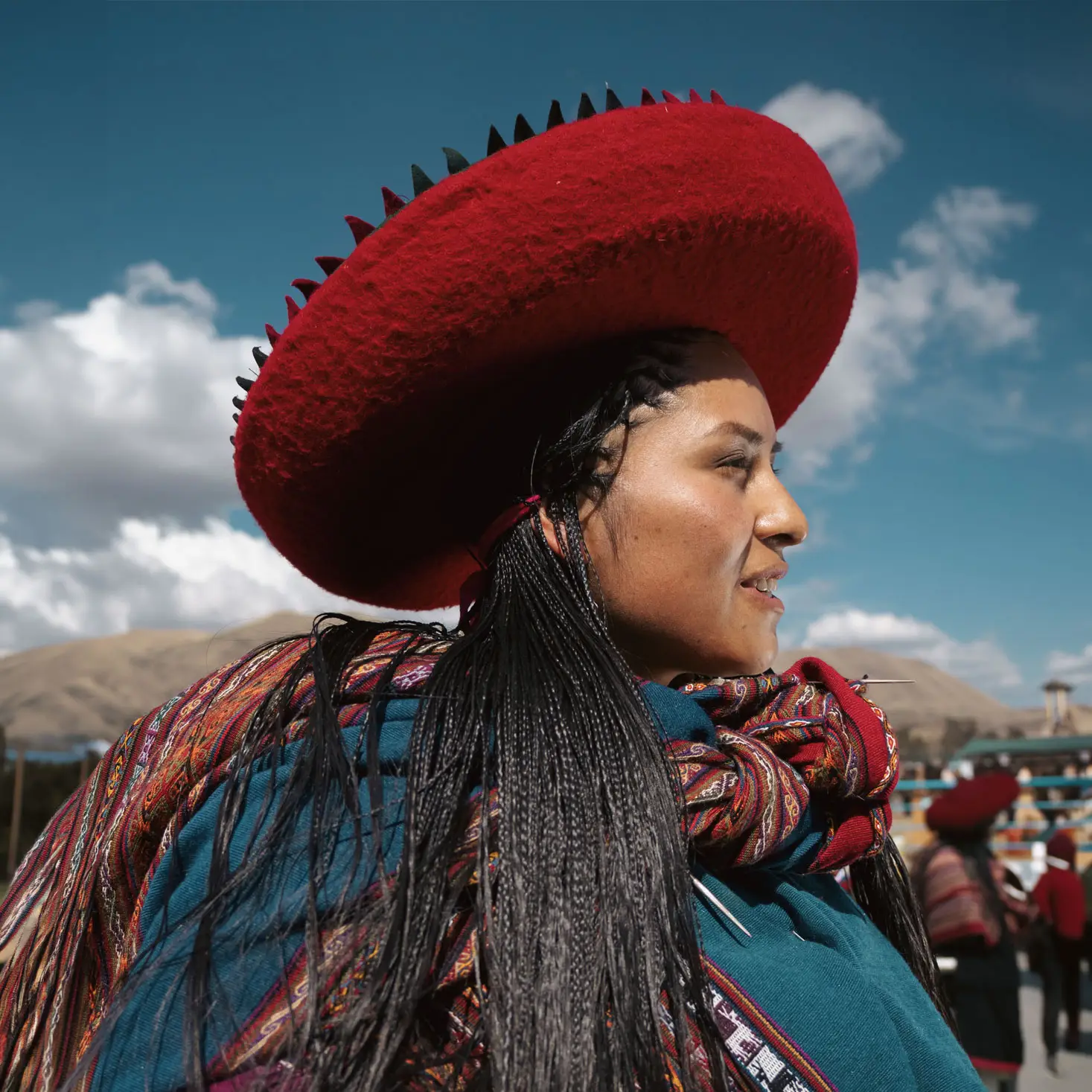
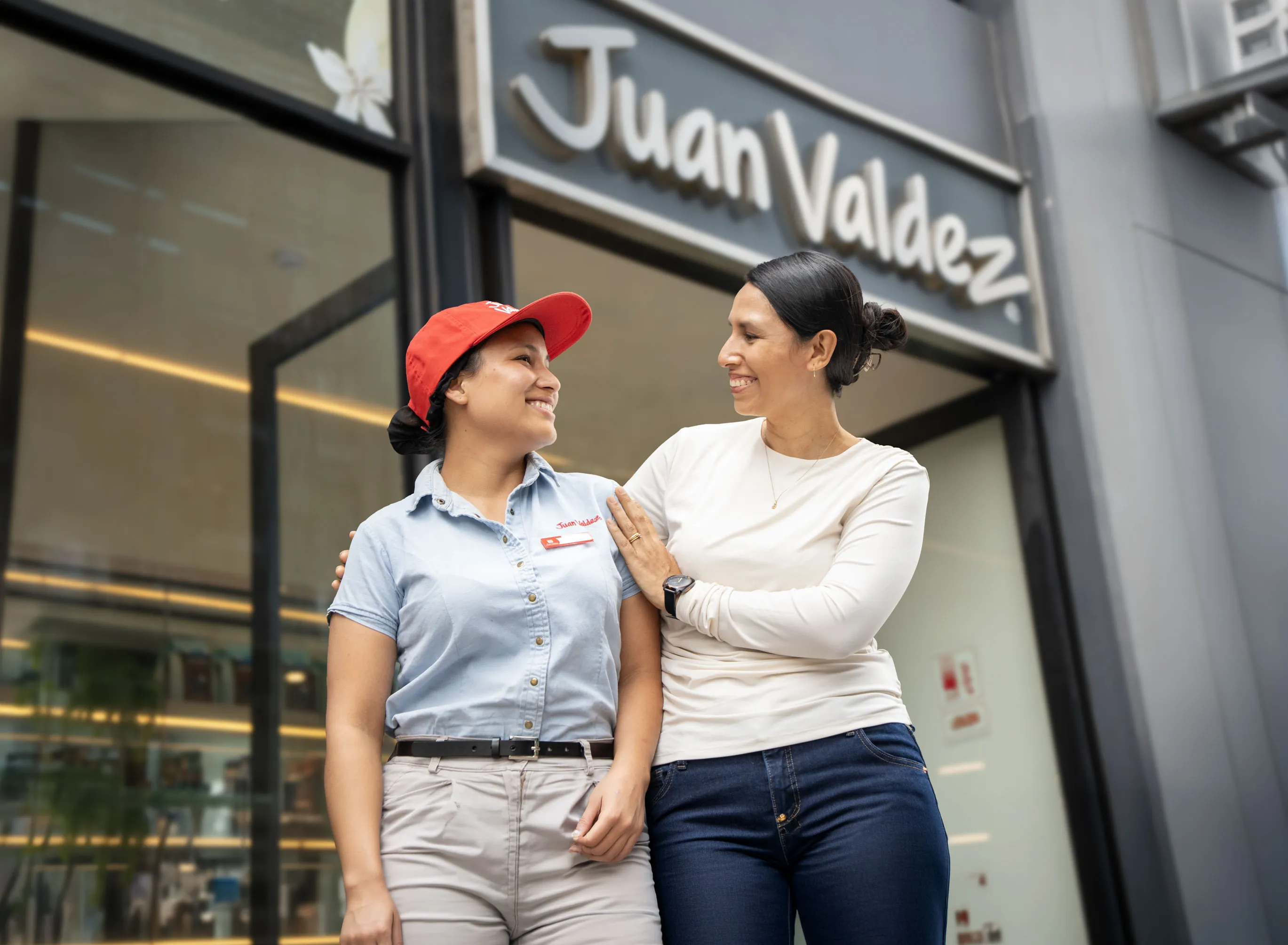
Quechua is the mother tongue of more than 3.8 million Peruvians, yet it rarely has a place in the country’s commercial and customer service spaces. That changed a few weeks ago at the Juan Valdez store in Real Plaza Cusco. Customers who order their coffee in Quechua can be served in their own language, and they also get a 10% discount for doing so. To find out what drives this campaign, we spoke with Mónica Cardeña, brand manager at Juan Valdez Peru.
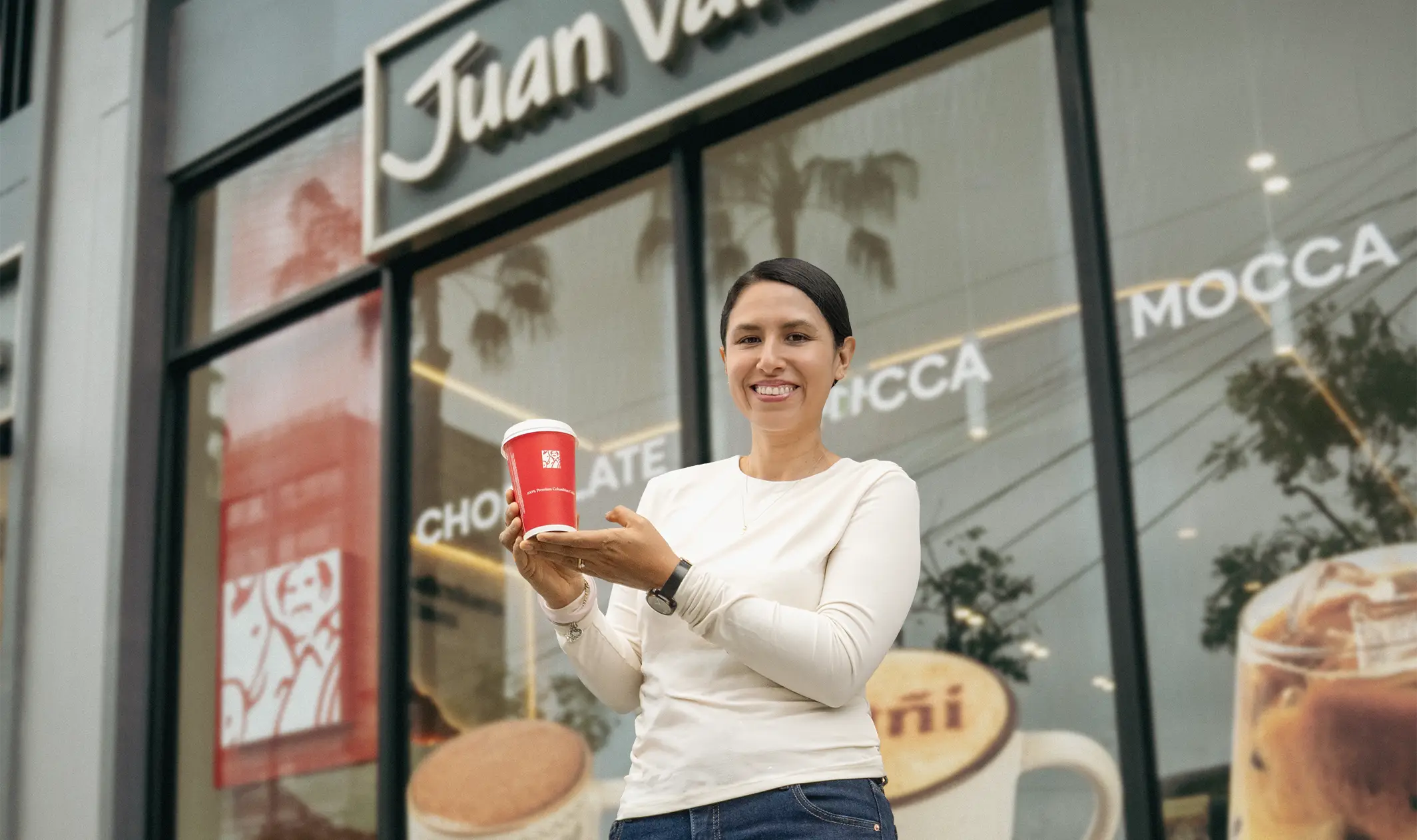
What is Juan Valdez’s “Dos orígenes” campaign about?
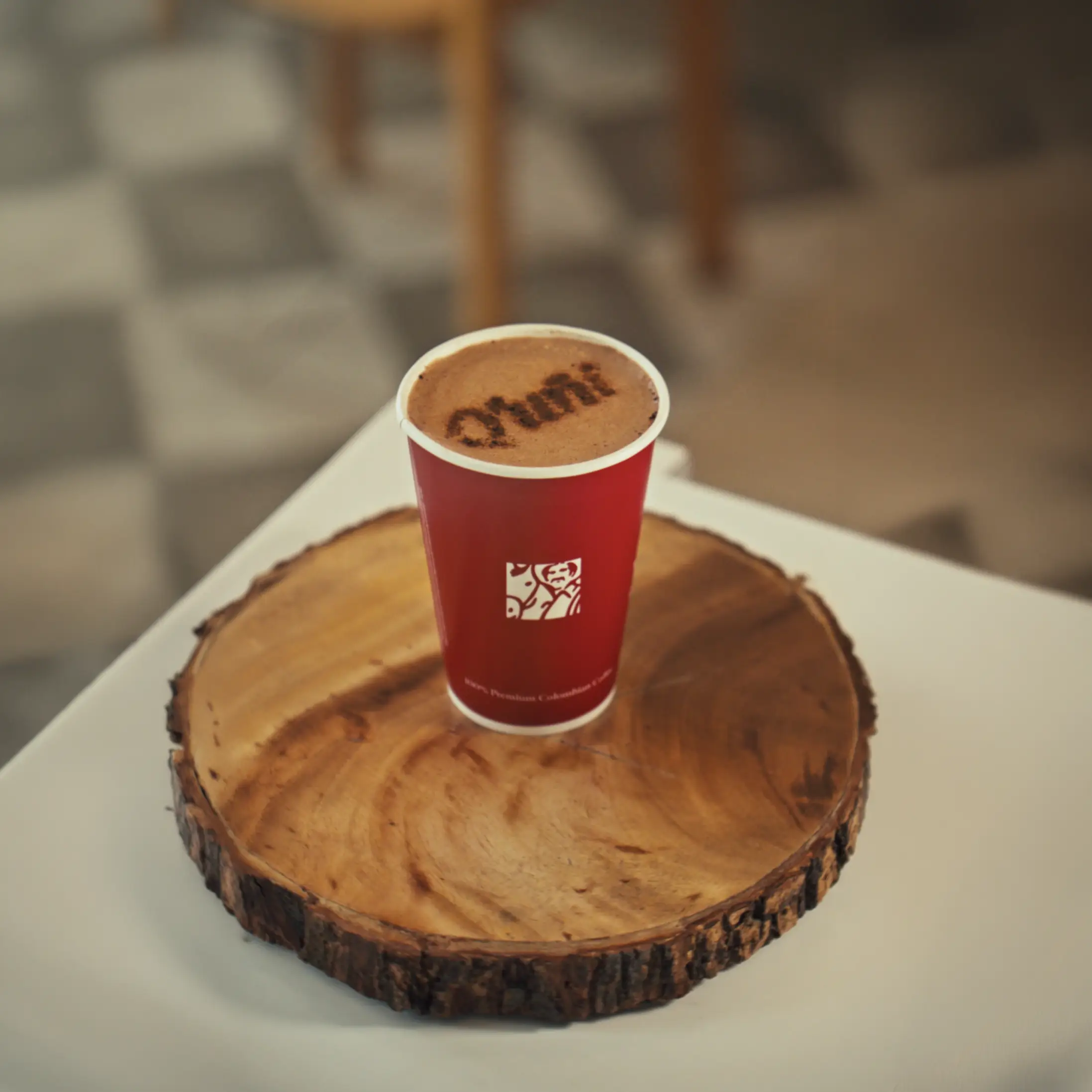
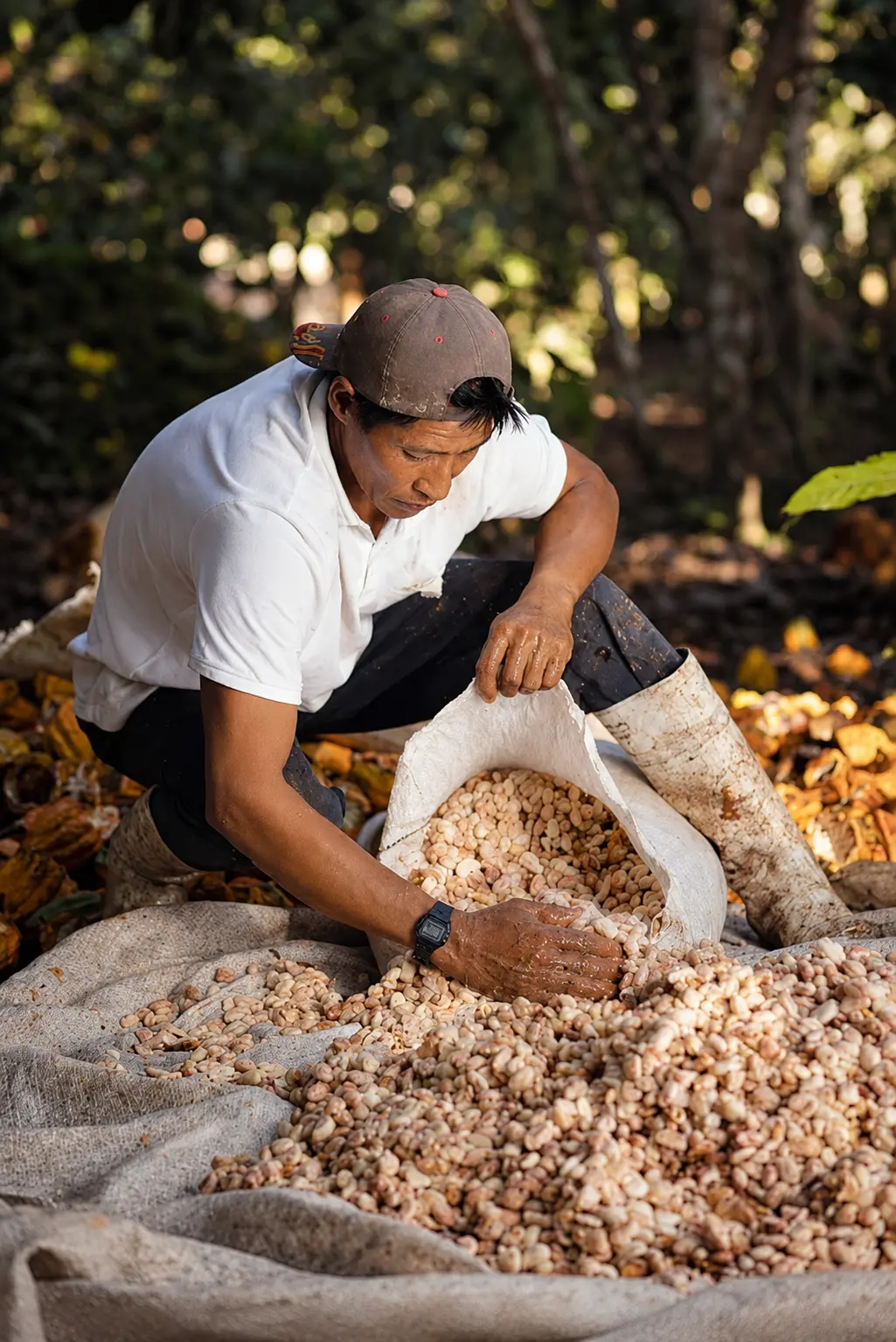
Juan Valdez was born as a brand closely tied to Colombian coffee and its growers. Since last year, however, it has been exploring a different formula in Peru by linking that origin with ingredients produced by local communities. This time it was the turn of ch’uncho cacao, a variety from Cusco that a study published in PLOS ONE identified as a lineage with its own distinct DNA. Its history goes back to the Upper Amazon, where cacao was domesticated more than 5,300 years ago.
Mónica Cardeña, brand manager at Juan Valdez Peru, says it was the cacao that led the brand to think about language. “We couldn’t talk about chocolate from Cusco, and about Cusco itself, without also talking about something as important as Quechua,” she says. “Quechua comes in because origin isn’t only something you taste. It’s also something you hear.”
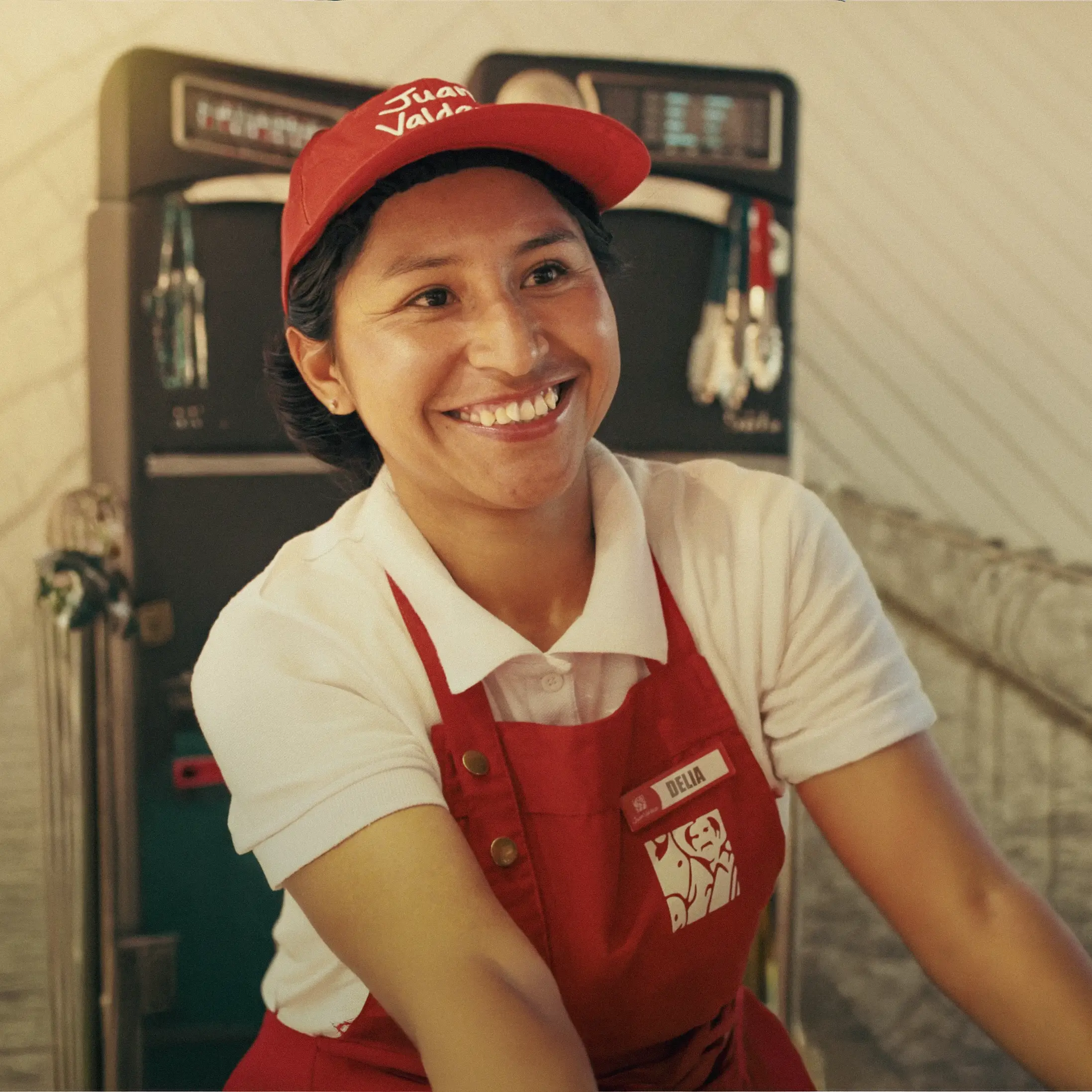
To bring the campaign into the in-store experience, Juan Valdez hired staff with oral fluency in Quechua to serve customers at its Real Plaza Cusco location and worked with interpreters to add the language to its signage. Customers who place their orders in Quechua receive a 10% discount, a benefit available only at this store.
Mónica Cardeña | Brand manager at Juan Valdez Peru
Thinking local
Cardeña is aware of the limits of what a brand can do in the face of this reality. “We don’t believe a campaign can solve a structural problem like linguistic or ethnic discrimination. It would be irresponsible to say that,” she says. “But we do believe brands can decide whether they reproduce invisibility or open up small spaces of recognition.”
For Cardeña, that recognition was also personal. Her grandmother, from Huancavelica, taught her to count in Quechua when she was a child. While developing the campaign, she and other team members began recalling words they had learned in their own Andean families. “What we wanted with this campaign was to recognize something alive in Peru, which is its people and its language,” Cardeña concludes.
The family behind the cacao
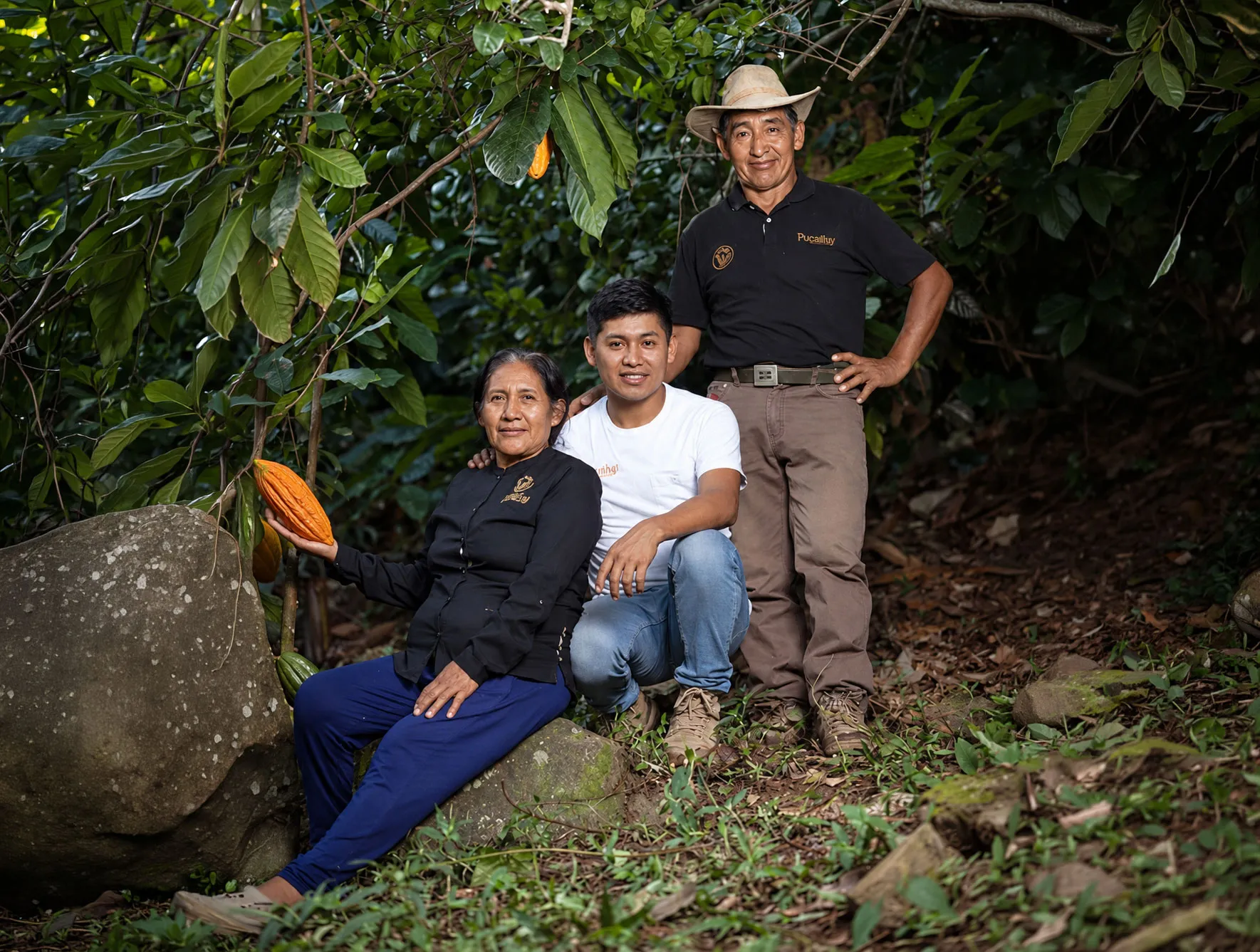
The ch’uncho cacao Juan Valdez works with comes from Pumatiy, a family business founded by Efraín Puma Chambi. In 1996, Puma believed in the potential of this variety and began growing and selling it in the community of Kapashiari, in Echarati, La Convención. Today his seven children carry on his work alongside more than 35 producer families in the area.
Their cacao has won the National Quality Cacao Competition two years in a row and has also earned international recognition, including a bronze for drinking chocolate and a gold for innovation at the International Chocolate Awards.
Cardeña says that ensuring the cacao came exclusively from that area was part of the groundwork before the campaign launched. The volume purchased from Pumatiy, she says, has grown alongside the campaign’s success, which in turn means more work for the producer families of Quillabamba.
The success of speaking to a market in its own language
The campaign reached more than 10 million people on social media and sparked a conversation that went beyond the discount. “Dear diary, I’m going to have to learn Quechua,” wrote user @rosasshirley. “I’ll bring my mom to get that discount,” commented @nani.sam. “Proud to be Peruvian and from Cusco,” wrote @jaz110199.
For Juan Valdez, impact is also measured by what happens off social media. “Something we care a lot about is customers feeling encouraged, learning a bit more about the origin, asking questions, asking us where the chocolate comes from,” says Cardeña.
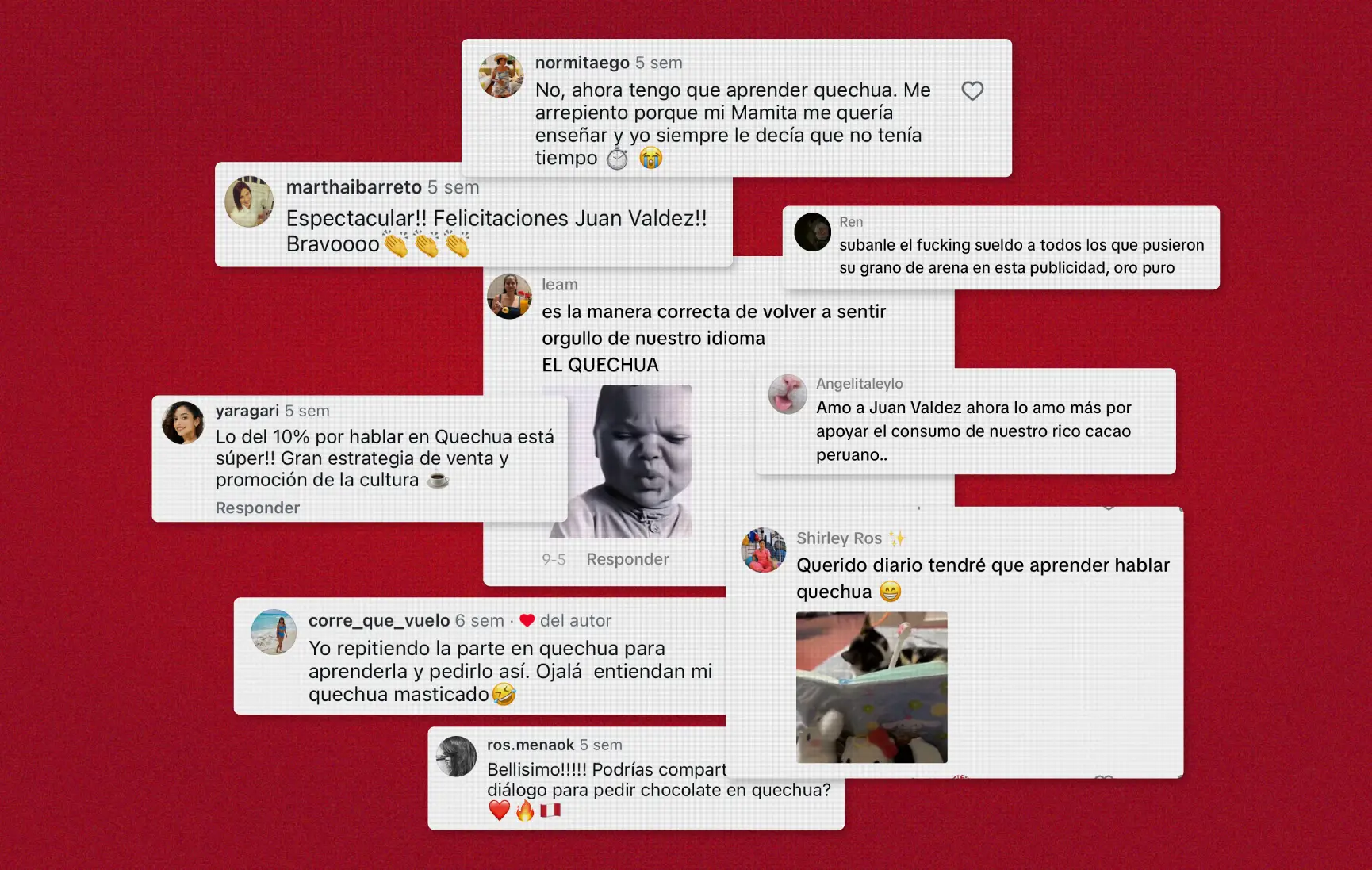
Still, the more than 10 million people reached also say something about the scale of the conversation. In a country where over 3.8 million people have Quechua as their mother tongue, speaking it in a coffee shop goes beyond a gesture of diversity. It means recognizing a population that is also a market with its own identity.