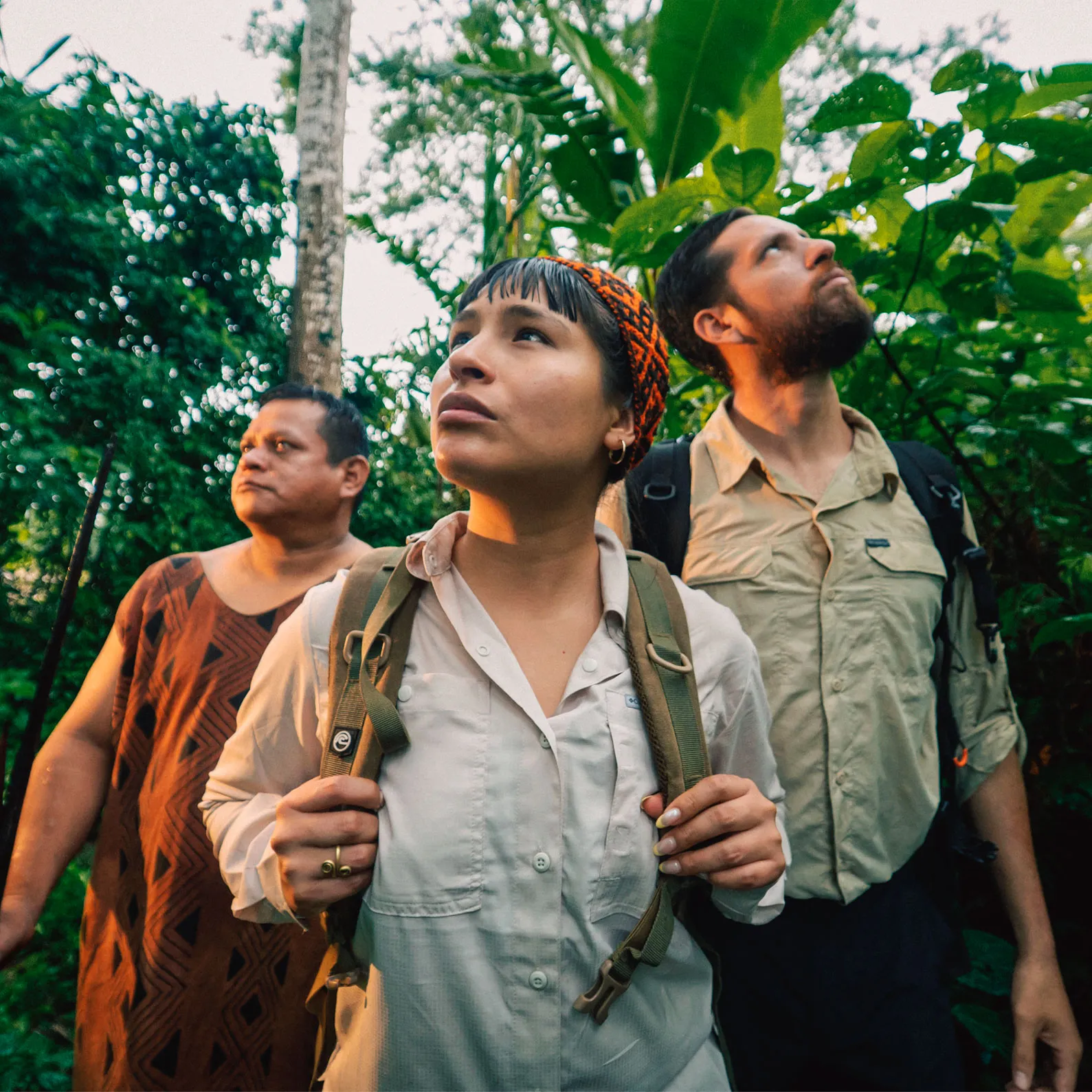
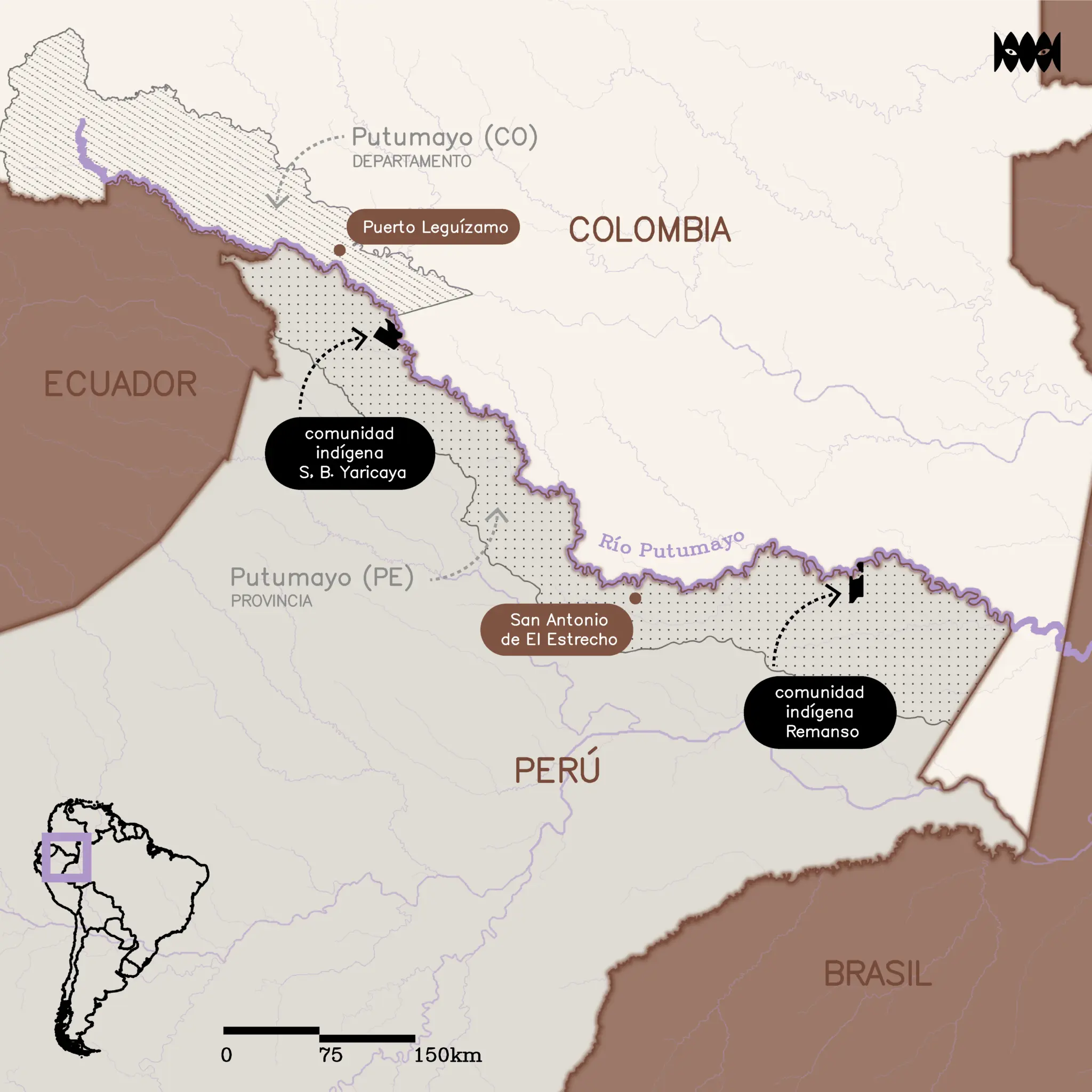
In San Antonio de El Estrecho, the capital of Peru’s Putumayo province, the river’s current formally marks the border between Peru and Colombia. Yet in the daily lives of the Indigenous and farming communities that inhabit the area, that dividing line has little meaning.
The territory is under the absolute control of Comandos de la Frontera (CdF), an armed group made up of former FARC combatants, former military personnel, former paramilitaries, and new recruits. For this criminal organization, borders do not exist. The Peruvian side serves as a strategic area for retreat and expansion, where the recruitment of local minors has become a common practice in its struggle for territorial control.
A Territory Without Opportunities
Here, the lack of educational and employment opportunities shapes the choices available to teenagers long before any criminal group comes along with an offer. Father Fernando Flórez, a Catholic missionary who has worked in the Putumayo River basin for more than 15 years, has witnessed this firsthand. In 2014, he established a youth group to promote the reception of the sacraments within the community. Over the years, its members were recruited.
In Putumayo, growing up also means having to choose between options that are rarely available. This border province faces severe social inequalities. According to the 2025 National Census, the structural illiteracy rate stands at 7.2%, above the national average of 5.1%. In addition, five out of every ten residents live with at least one unmet basic need.
Furthermore, Peru’s National Commission for Development and Life without Drugs (DEVIDA) ranked the province third in the country in 2025 for the area occupied by illicit crops, with 1,211 hectares of coca cultivation. Illegal gold mining has also gradually taken hold along the river, accelerating its expansion since the pandemic, according to testimonies gathered for this investigation.
Dropping out of school is a reality for hundreds of students in Putumayo. The dropout rate reaches 7.3% at the primary level alone, more than four times the national average of 1.73%, according to the Ministry of Education’s Educational Quality Statistics (ESCALE). The gap is also significant at the secondary level: while the national dropout rate stands at 2.54%, in Putumayo it reaches 6.7%. In other words, nearly seven out of every hundred students enrolled in the province leave school each year.
Recruitment
Comandos de la Frontera offers employment conditions that no other actor in the territory can match: around two million Colombian pesos a month (approximately US$600), days off, vacation time, uniforms, equipment, and weapons.
For a teenager without access to continuous education, living in a territory where illegal economies are part of everyday life, joining an armed group can seem like a job opportunity, a source of income, or even a way to build a future. In Colombia, young Comandos de la Frontera recruits interviewed in 2025 cited several reasons for joining: earning a monthly income, boredom at home, and access to a weapon and a world often portrayed as attractive because of the money and power it offers.
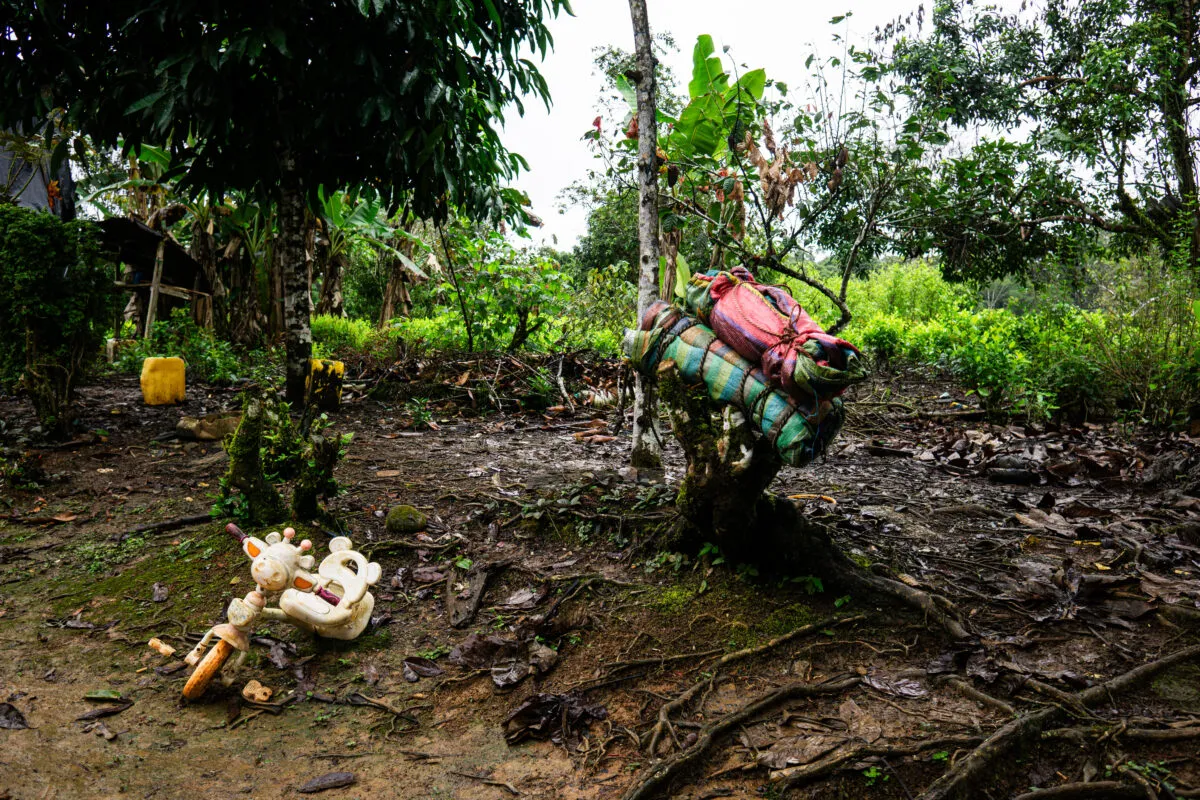
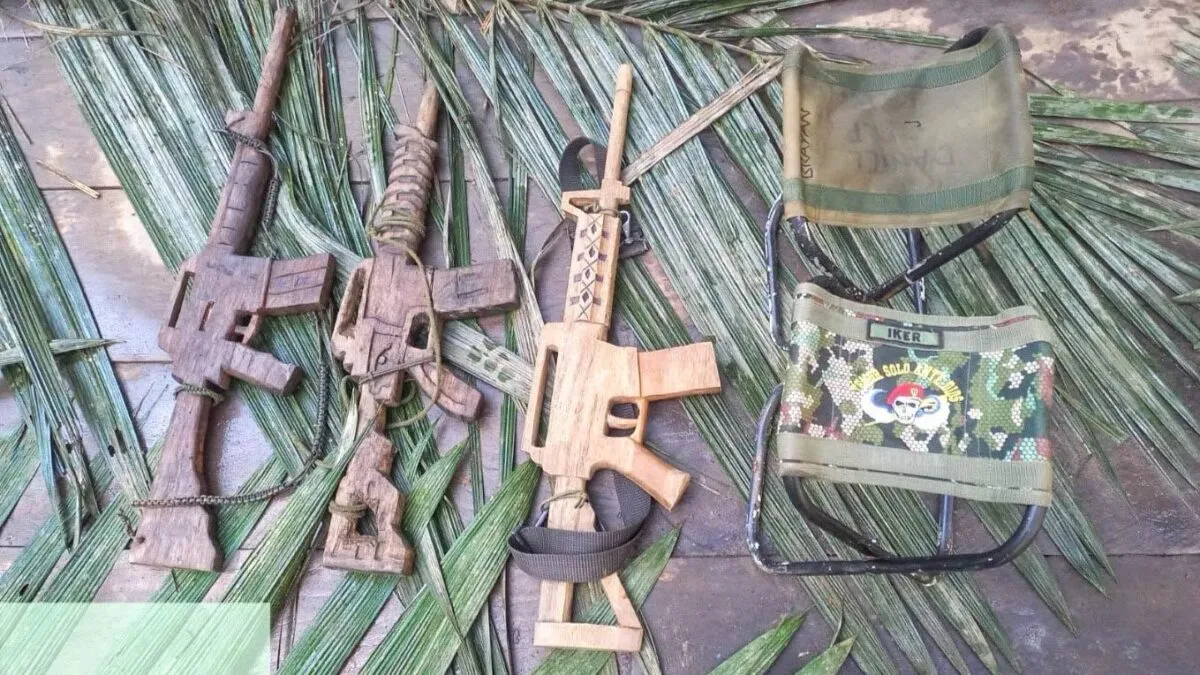
Once recruited, they are taken to remote training camps, where they undergo training periods that, according to the testimonies gathered, range from three to six months. After completing this process, recruits begin carrying out duties in various areas: guarding coca crops, monitoring cocaine-processing laboratories, protecting higher-ranking commanders, collecting *cupos* (the term used by the group to refer to extortion payments), performing forced community labor such as clearing roads, and gathering intelligence.
Missing from the Statistics
A source consulted at the Ombudsman’s Office in Colombia’s Putumayo department explains that families often remain silent about recruitment cases out of fear, concerns about confidentiality, and distrust of institutions. Even Colombia, which has been documenting this phenomenon for years, does not have a single, comprehensive figure for the number of minors recruited. According to data held by the Ombudsman’s Office, 257 cases were recorded in 2025, although the figures suffer from significant underreporting.
In Peru, this investigation contacted the Ombudsman’s Office, the Ministry of Women and Vulnerable Populations, and the Office of the President of the Council of Ministers to ask whether specific records existed of child recruitment in Putumayo. No response had been received by the time of publication.
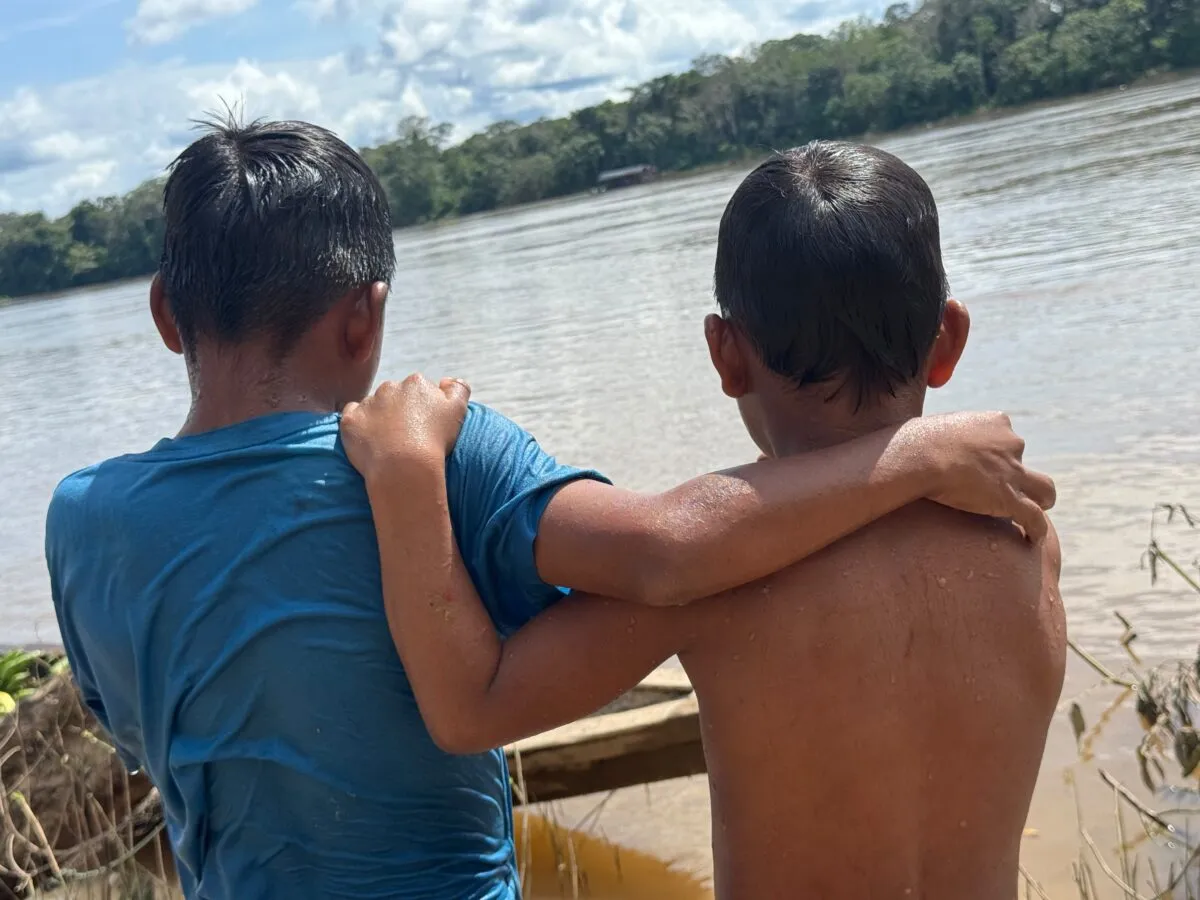
Cannon Fodder
Across the Putumayo River, the armed conflict is changing. Abelardo De la Espriella, Colombia’s new president, ended the peace talks and processes initiated by his predecessor, Gustavo Petro, with several armed groups, including the Coordinadora Nacional Ejército Bolivariano, which includes Comandos de la Frontera.
The new government announced plans for “more forceful” military operations against armed groups. Two such operations took place last August in the Amazonian department of Guaviare, targeting two FARC dissident factions fighting for control of the territory: the Estado Mayor Central (EMC) and the Estado Mayor de Bloques y Frentes (EMBF).
Through airstrikes, the Military Forces destroyed camps and reported at least 30 deaths, including three minors. Under the Petro administration, seven minors were also killed in airstrikes in the same region.
These types of operations have raised questions about the use of force when minors are involved. On this issue, Colombia’s judicial system recently lifted a temporary ban on such airstrikes but ruled that authorities must comply with strict conditions and apply the rules of International Humanitarian Law (IHL) to ensure that children and adolescents are not harmed.
For the Ombudsman’s Office in Colombia’s Putumayo department, the outlook is far from encouraging. “As long as the state’s response to unmet basic needs remains inadequate, these territories will continue to be at risk,” the source at the Ombudsman’s Office says. The source points to healthcare, education, roads, and access to services that still fail to adequately reach local communities.
That is why, the source warns, it is difficult to speak of prevention when the conditions that leave children and adolescents vulnerable to recruitment remain unchanged. “What is the state offering children?” the source asks.
In Putumayo, the answer to that question may determine whether a child stays in their community, crosses the river to join an armed group, or ends up trapped in a war being fought ever closer to home.
*The name has been changed for security reasons.*