
It’s almost impossible to get away from it. It’s in chewing gum, in your phone, in clothing, in toys, in pens, in soccer balls. Oil wraps itself around modern life and still goes almost unnoticed by most of us.
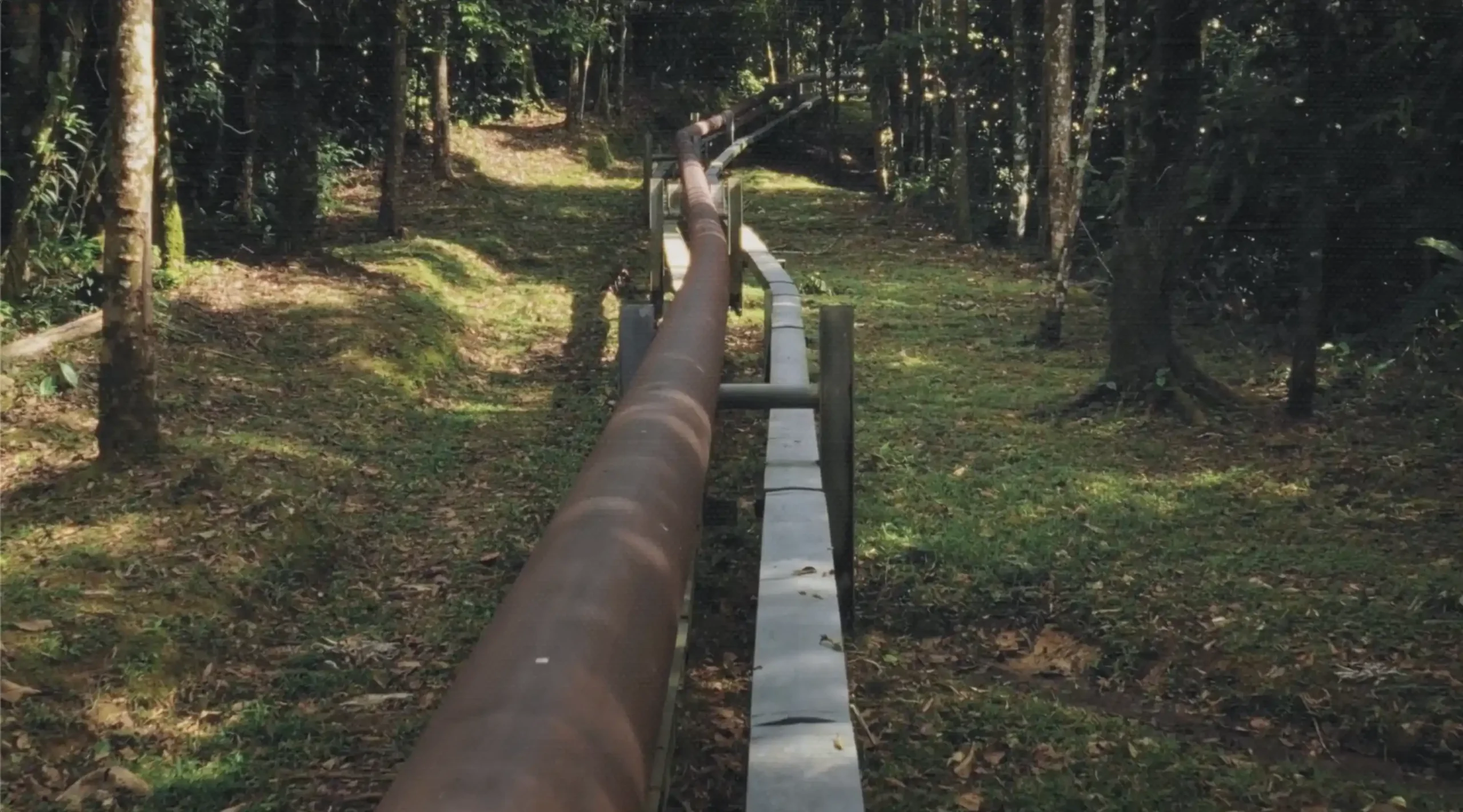
But in the Amazon, oil has very concrete ways of making itself known. The Norperuano Pipeline, the country’s main oil transport infrastructure, has logged 139 spills between 1997 and 2023, according to the report “The Shadows of Hydrocarbons.” A trail of thousands of barrels that has reached the Marañón, one of the most important rivers in the region, and that still affects more than 100 communities.
Oil in the Gills
In Block 8, in Loreto, home to the Indigenous communities of the Kukama Kukamiria people, oil has been pumped since 1971, first by Petroperú, then Pluspetrol, and today by the company Upland Oil.
You should know that oil doesn’t stay where it falls. It travels with the pulse of the river. When the water rises, it floods huge stretches of forest and wetland, and as it drops it carries off whatever it touched. That repeating cycle moves the crude and the heavy metals far from where they spilled. With every flood the spongy soil of the aguajales, the flooded palm swamps, releases a little of the oil it had been holding. Another share of the contaminants settles into the sediment at the bottom, where the fish feed.
The American ecotoxicologist Diana Papoulias and her team found it in those fish, the ones the communities living along the Marañón depend on. There was oil in their gills, in their guts, and when cooked they gave off the smell of diesel.
So an oil spill is more than a dark stain on the water. It works like a disease that spreads to every living thing in the food chain, from microorganisms to fish and birds, and of course to people. In us it causes skin irritation, dizziness, and headaches, and over the long term, genetic mutations, leukemia, neurological damage, cancer, even miscarriages.
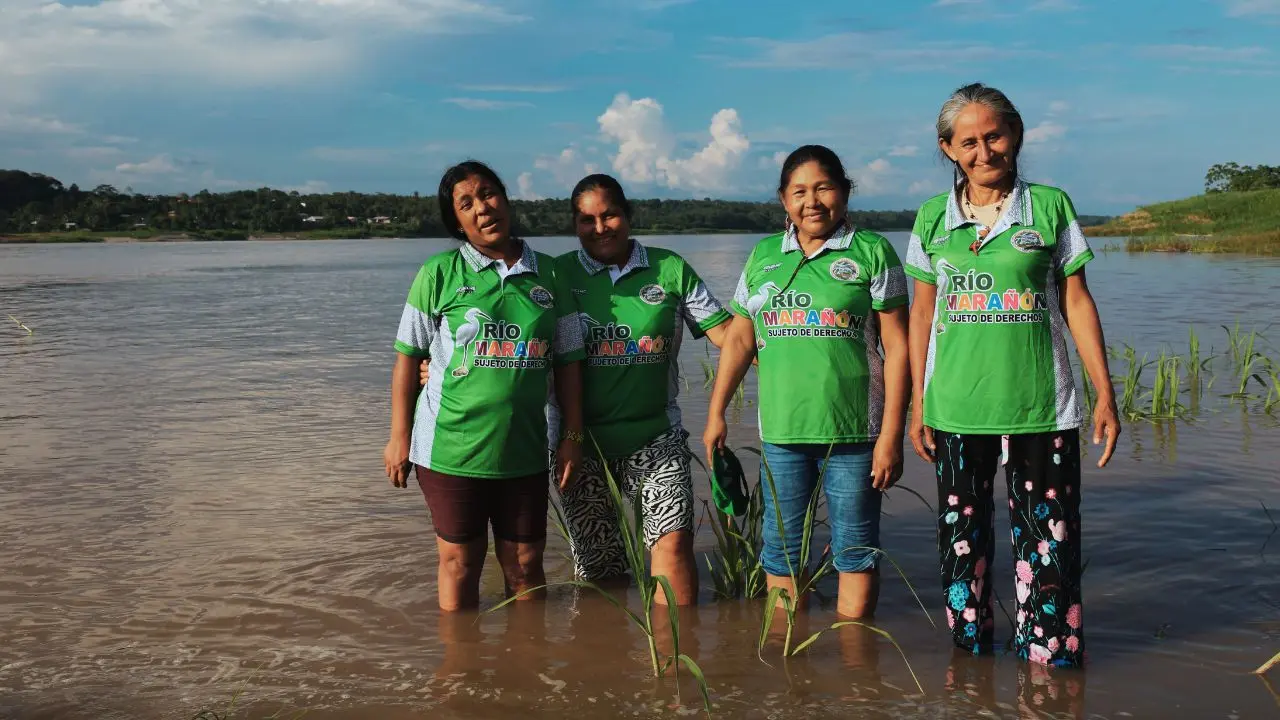
For the Kukama Kukamiria, one of the peoples who have lived in these territories since long before modern states existed, contaminating the Marañón also means contaminating the deepest part of their social fabric. To them the rivers are “liquid forests,” worlds inhabited by thousands of living beings, part of an intelligent web that ties together daily life, ancestral memory, and their spiritual world.
That understanding of nature is what led a court, for the first time in the country, to look at a river as something more than a resource.
The Lawsuit That Changed History
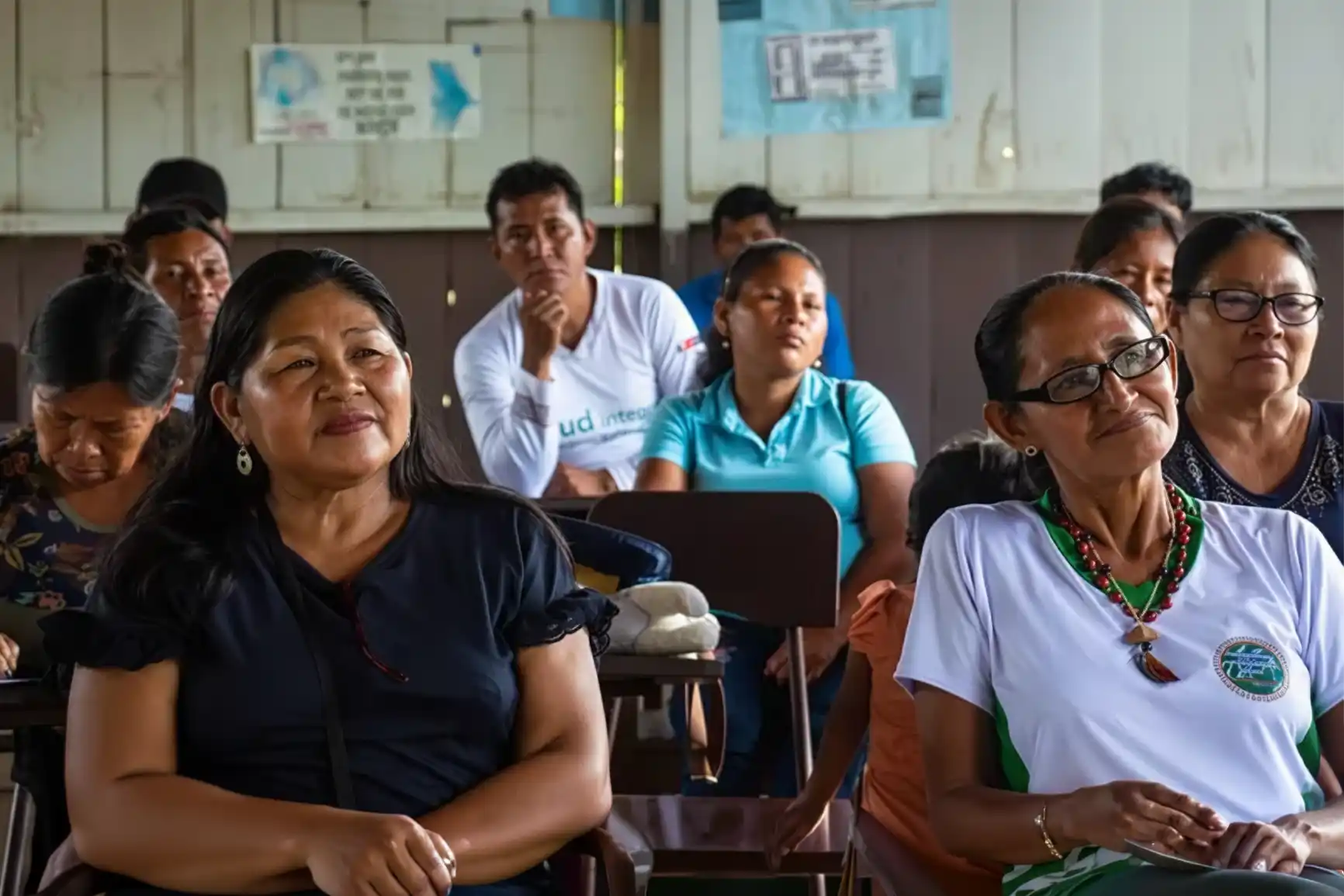
It was a group of Kukama women, organized in the Huaynakana Kamatahuara Kana Federation, who decided to take the river to court. In 2021 they asked that the Marañón be recognized as a subject of rights. They wanted it treated as a living being with basic rights rather than as human property, something that deserves to be defended under the law.
On March 8, 2024, three years later, the Nauta court in Loreto ruled in their favor, though not entirely on their terms. It stopped short of declaring the river a “subject of rights,” as the lawsuit had requested. It recognized it instead as a “holder of rights.”
The reasoning goes like this. For centuries, “subject of rights” has been a category reserved for people, and extending it to a river still stirs resistance. “Holder of rights” sidesteps that argument while still granting the Marañón what the Kukama women demanded, the highest protection against environmental harm and the standing to be defended in court. The Loreto Superior Court upheld the ruling in October of that year and went further, recognizing the river’s legal personhood.
The ruling was historic, and it granted the Marañón and its tributaries a set of rights. The right to flow and to stay free of contamination, the right to feed and be fed by its tributaries, the right to biodiversity, to be restored, and to the regeneration of its natural cycles, among others. It also left concrete tasks behind, some still unfinished and demanding constant battles. It ordered the creation of watershed councils with Indigenous participation, recognized the communities as guardians of the river, and required Petroperú to maintain the Norperuano Pipeline and update its environmental management.
But a right isn’t worth much simply because it’s been written down. The philosopher and Nobel laureate in economics Amartya Sen argues that rights are more than legal instruments, and that their real weight depends on their capacity to take in social realities and local cultures. A flawless law means nothing if the world it produces stays unjust. What matters is the justice that actually reaches people’s lives.
A Growing Movement
In 1972, the American law professor Christopher Stone published an article that scandalized academia. He argued that rivers and ecosystems should have legal standing. Three decades later, the South African lawyer Cormac Cullinan organized those ideas into what he called “Wild Law,” acknowledging that Indigenous peoples had already spent centuries practicing what Western law was only beginning to theorize. The idea that a river is alive and deserves protection.
And the Marañón isn’t the only river making the claim. The movement for the rights of nature has spent years laying down precedents. In Colombia, the Atrato River became one of the region’s first landmark cases when a court recognized it in 2016. A year later, in New Zealand, the Maori people won the same for the Whanganui. And in 2024, an Ecuadorian court recognized the rights of the Machángara, which runs through Quito, after a suit brought by the Kitu Kara people.
According to a study by the More Than Human Life (MOTH) project at New York University, by January 2024 some 493 initiatives to recognize the rights of nature had been launched across 44 jurisdictions and international forums such as the UN, and close to three quarters were approved. Still, the same study warns that a court ruling isn’t enough on its own. Enforcement tends to fall short, and the work of making these rights stick ends up resting on the communities themselves. That’s why it matters that recognizing the communities accompanies the state’s obligation rather than replacing it.
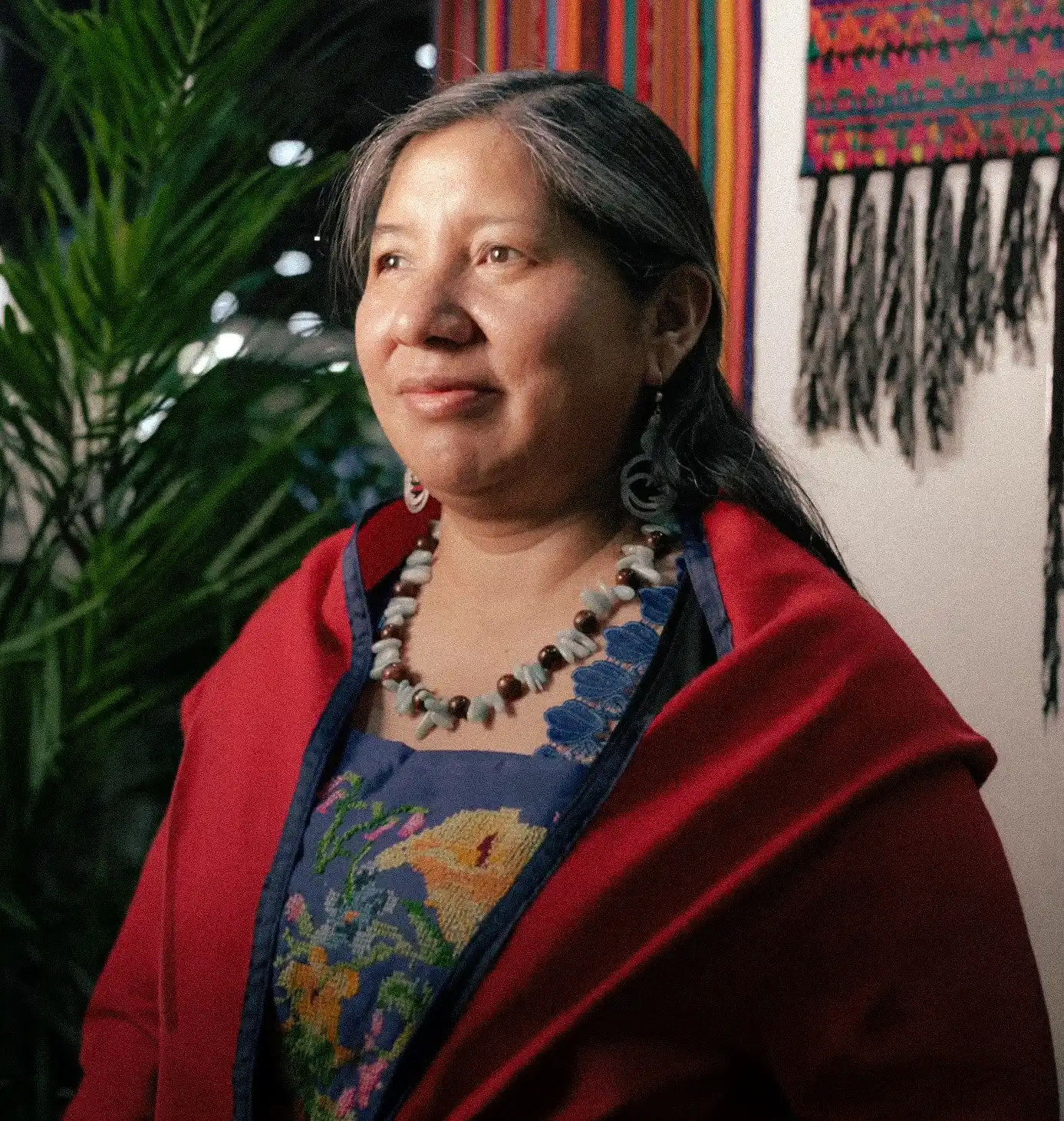
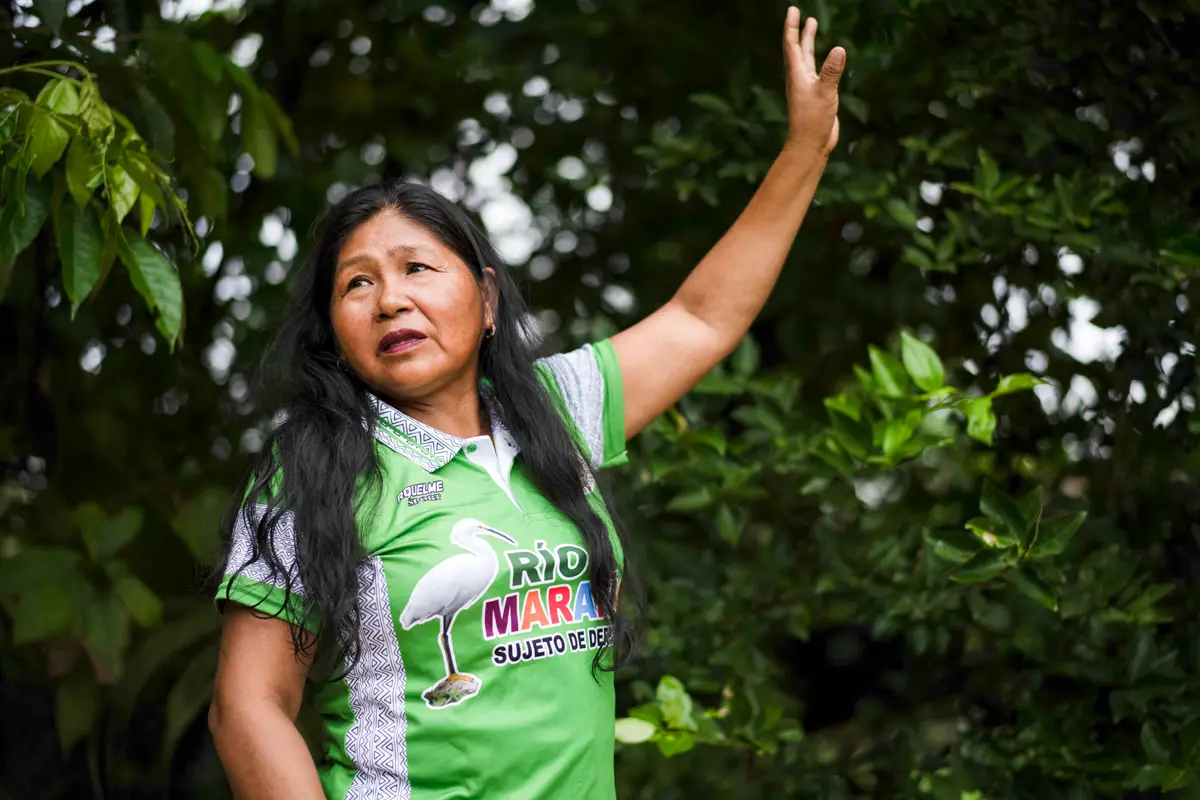
Mariluz Canaquiri Murayari, president of the Huaynakana Federation
In April 2025, Mariluz Canaquiri Murayari, president of the Huaynakana federation and a Kukama Kukamiria leader, received the Goldman Environmental Prize, considered the Nobel for environmental defenders. Canaquiri founded the Huaynakana women’s association in 2001, after years of spills. Even before the Marañón’s victory she had fought and won against the Amazon Waterway (Hidrovía Amazónica) project, which threatened the same river and had never been consulted with Indigenous peoples.
During the ceremony she sent a direct message against the government of Dina Boluarte, which she called “authoritarian” for the way it treats Indigenous peoples. “When someone raises their voice and fights, the government criminalizes them, kills them, and that isn’t right. Because of the collective struggles we’ve taken on, I myself have been criminalized,” she said.
How long will it take us to understand that if we don’t guarantee the rights of nature, ours aren’t guaranteed either?