
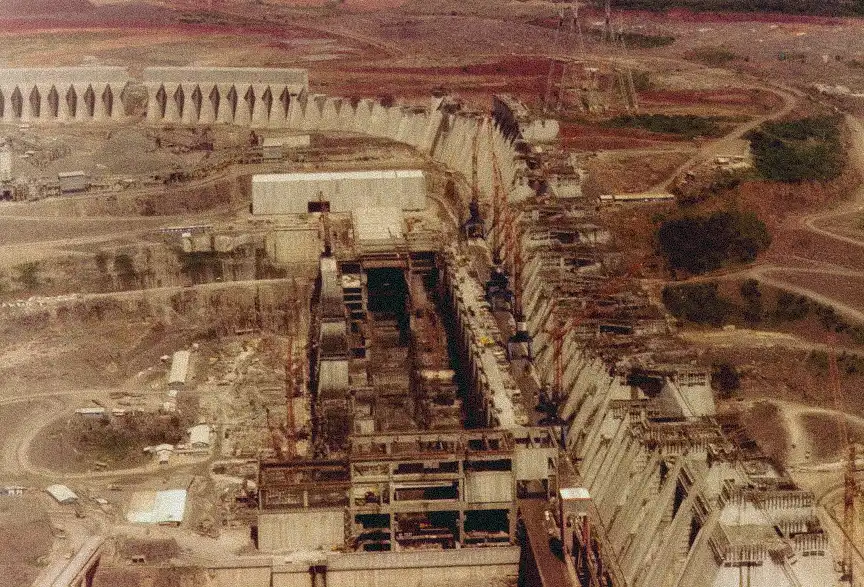
The Itaipú Binacional hydroelectric dam is presented to the world as one of the greatest achievements of clean energy. In November 2025, it was a sponsor of COP30, the summit where governments meet each year to negotiate the future of the climate, held that year in Belém do Pará, Brazil. Since it began operations in 1984, it has generated more energy than any other hydroelectric plant in history, a feat recognized by Guinness World Records. It was also built on indigenous territory. Territory it left almost entirely underwater.
Losing an Ancestral Territory
Forty-five years ago, the military governments of Brazil and Paraguay set in motion the construction of Itaipú on the Paraná River. In April 1973, Paraguayan dictator Alfredo Stroessner and General Emilio Garrastazú Médici, then president of Brazil, signed the Itaipú Treaty. Neither consulted the peoples living on that land. The message that reached the communities was simple. Leave, or drown with everything else. Between 1978 and 1981, hundreds of families lost their land. Fifty-five communities of the Avá Guaraní Paranaense people were forcibly displaced, 36 in Paraguay and 19 in Brazil. Of the 38 communities on the Paraguayan side, today barely two remain.
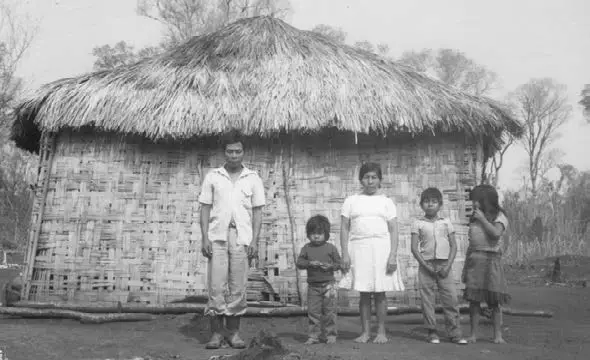
The waterfalls known as the Guairá Falls, at the time the largest in the world by water volume and twice the flow of Niagara Falls, were dynamited and flooded to ease navigation of the reservoir. They disappeared in 14 days. The water swallowed forests, homes, cemeteries, and sacred sites. The total territory taken from the Avá Guaraní Paranaense people is estimated at 165,000 hectares. More than 143,000 of them now lie buried underwater. Since then, the people have called themselves by a word in Guaraní: henda’ŷva. Those without a home.
The communities were scattered across unfamiliar land, with no conditions for farming, hunting, or fishing. Cut off from their ceremonial spaces. Surrounded, in many cases, by soy monocultures. In recent years, there have been armed attacks, death threats, and violent evictions against communities that tried to reclaim parts of their ancestral territory that had not been flooded.
Close to 80% of Avá Guaraní Paranaense communities have received no territorial or economic reparation of any kind.
A First Agreement
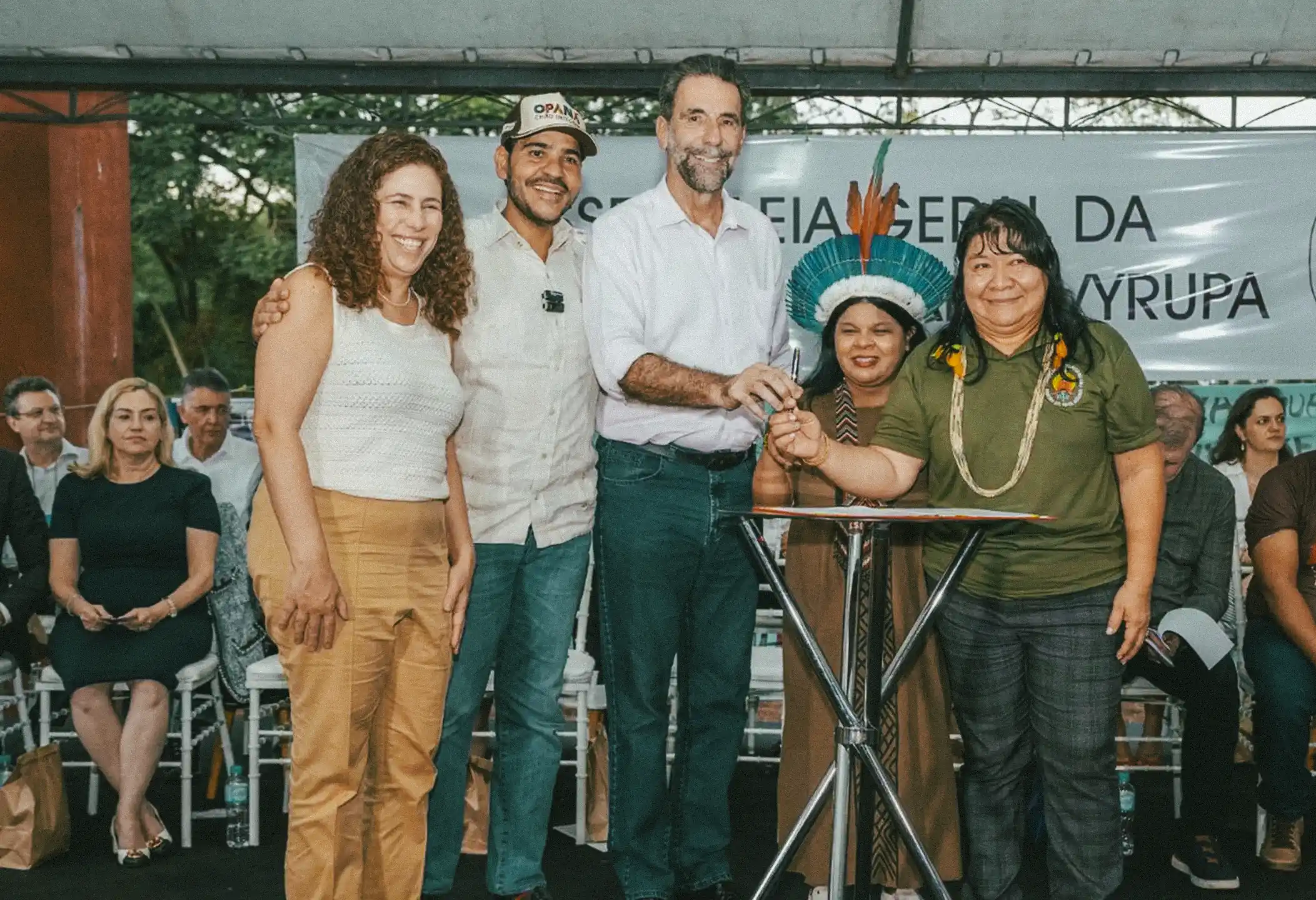
On March 24, 2025, Brazil’s Supreme Federal Court ratified a conciliation agreement obliging Itaipú Binacional to finance the purchase of 3,000 hectares of land for the affected Brazilian communities, more than 5,000 people across the municipalities of São Miguel do Iguaçu, Itaipulândia, Santa Helena, Terra Roxa, and Guaíra. The agreement also includes the publication of a formal public apology, with explicit acknowledgment of the company’s responsibility.
This covers only Brazil, and only 3,000 of the 50,000 hectares the Brazilian communities are claiming. In Paraguay, where around 78,000 hectares were flooded, Itaipú has neither acknowledged the harm nor initiated any reparation process.
For Amnesty International, which has followed the case for more than a decade, the agreement is the result of decades of resistance by the Avá Guaraní Paranaense people. But it does not settle what they are owed.
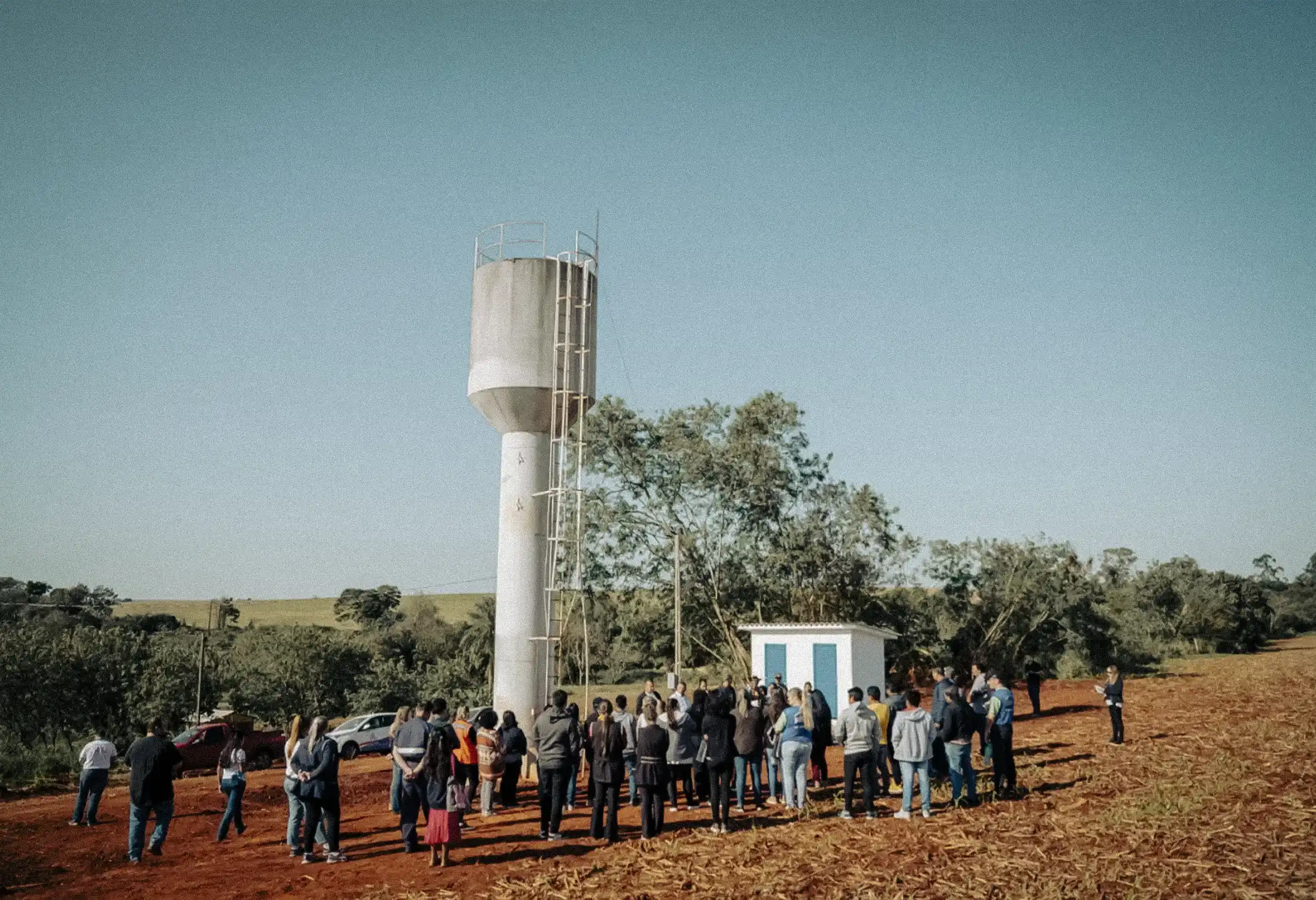
At COP30, Under Their Own Name
In November 2025, while Itaipú showcased its climate initiatives in Belém, representatives of the Avá Guaraní Paranaense people were also at COP30 with their own agenda. They demanded the restitution of their territory, recognition of the Itaipú case as an emblematic example of climate injustice, and the creation of a reparations fund for peoples affected by dams. They also called for a just energy transition, one that is not planned without the peoples who have paid its highest cost.
“Climate change did not begin for us with droughts or wildfires. It began when they expelled us from our lands and our river, when they destroyed our forests and diverted our rivers,” said representatives of the Avá Guaraní Paranaense people, who continue to seek justice and effective reparation for the human rights violations committed against them on both sides of the Paraná River.
The Itaipú Binacional dam supplies around 13% of Brazil’s national energy consumption and close to 90% of Paraguay’s energy demand. Its output is, on paper, clean energy. But the question the Avá Guaraní Paranaense people have been asking for 45 years remains unanswered: clean for whom?