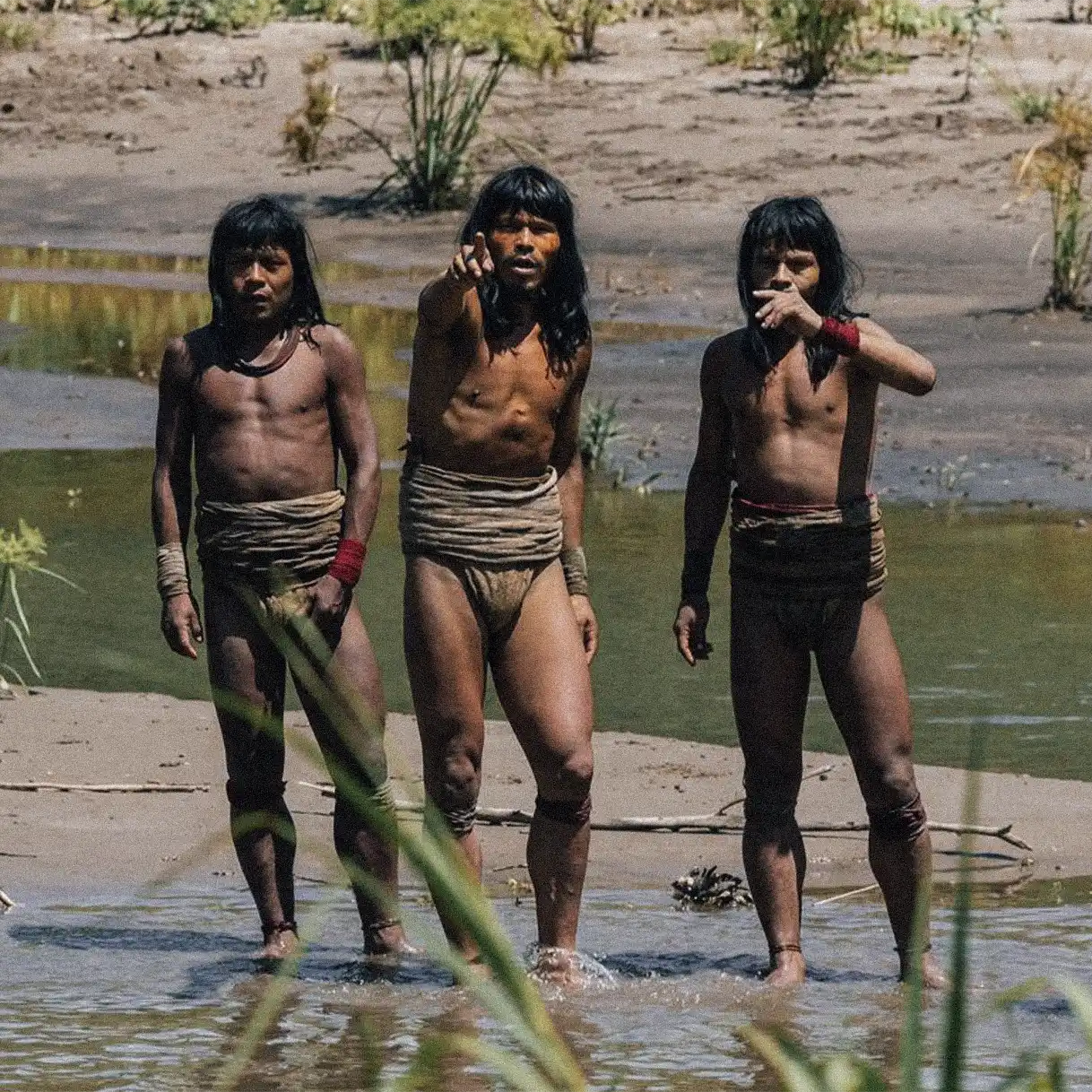

El pueblo Lenape vivía en aldeas repartidas a lo largo de los ríos Delaware, Hudson y Raritan, en un extenso territorio que ellos llamaban Lenapehoking y que se estiraba, a grandes rasgos, desde la actual Nueva York hasta Filadelfia. Se organizaban en clanes trazados por la línea materna, sus sistemas de gobierno eran locales, dependían del consenso y del consejo de los ancianos, y sus rutas comerciales atravesaban los ríos. Aunque para un Lenape tener piel de castor era de lo más común, pues sus bosques estaban llenos de ellos, en la Europa del siglo XVII esas mismas pieles eran la materia prima de los sombreros de fieltro más cotizados del momento. Esa moda europea, a miles de kilómetros de distancia, estaba a punto de poner sus bosques en la mira.
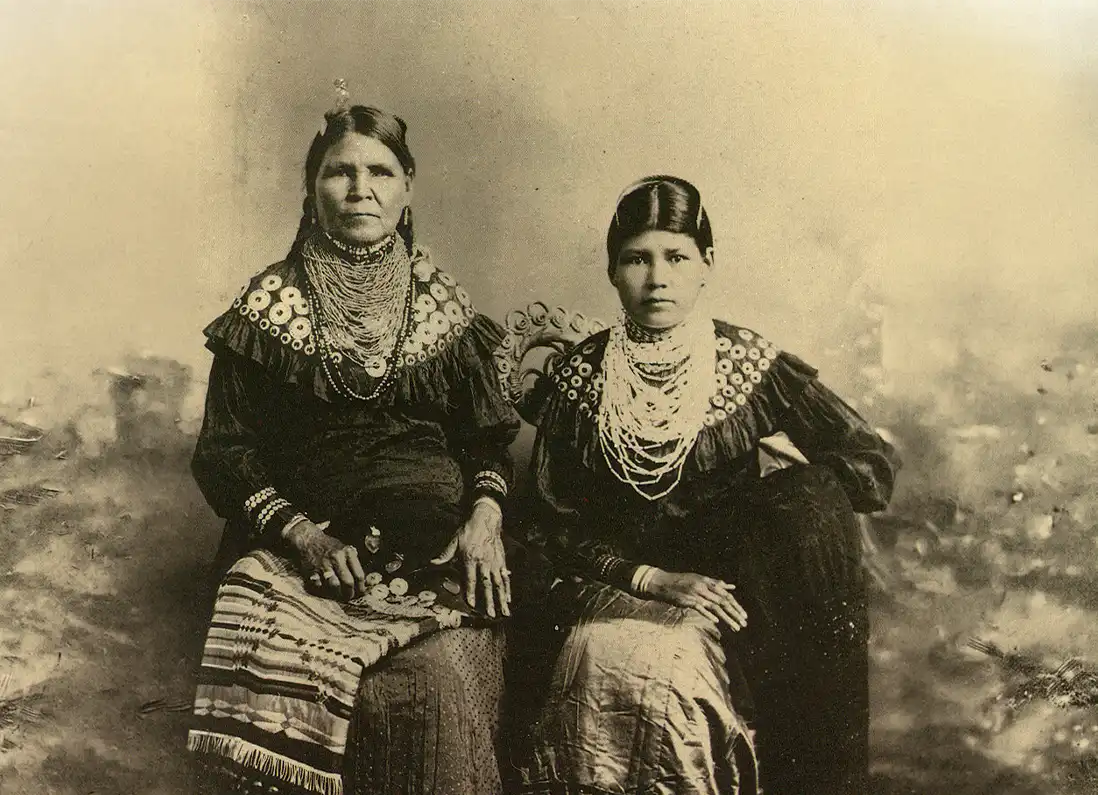
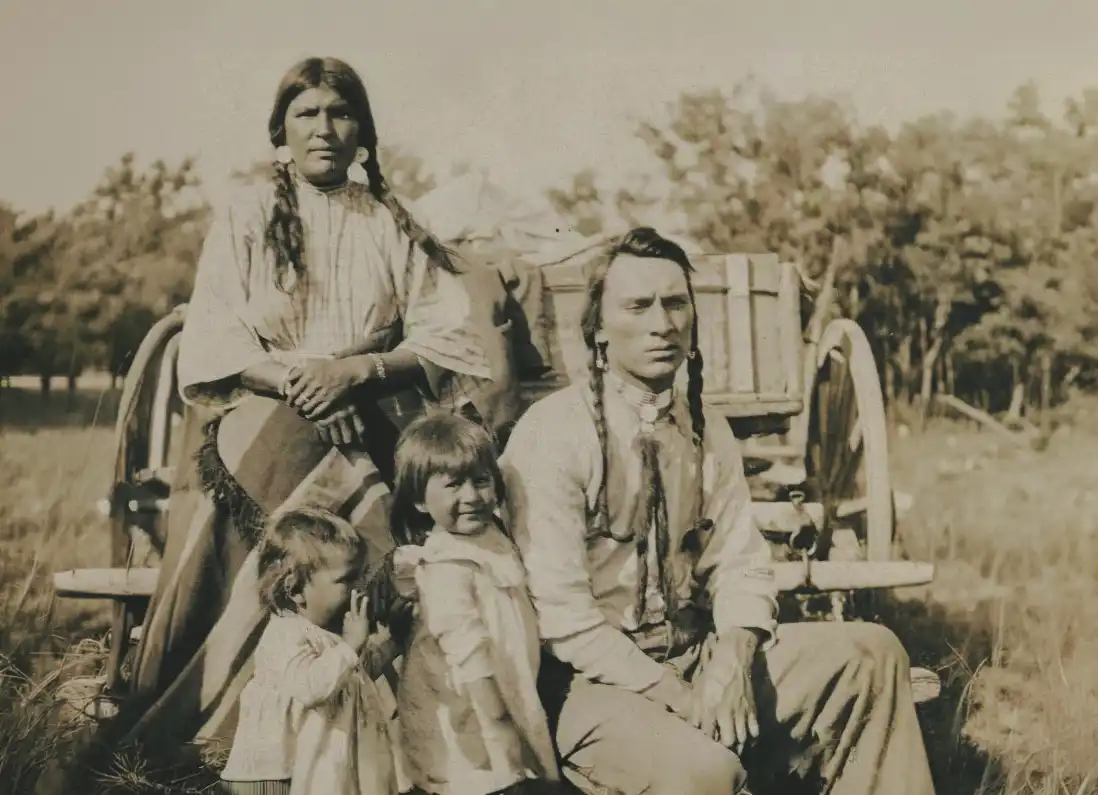
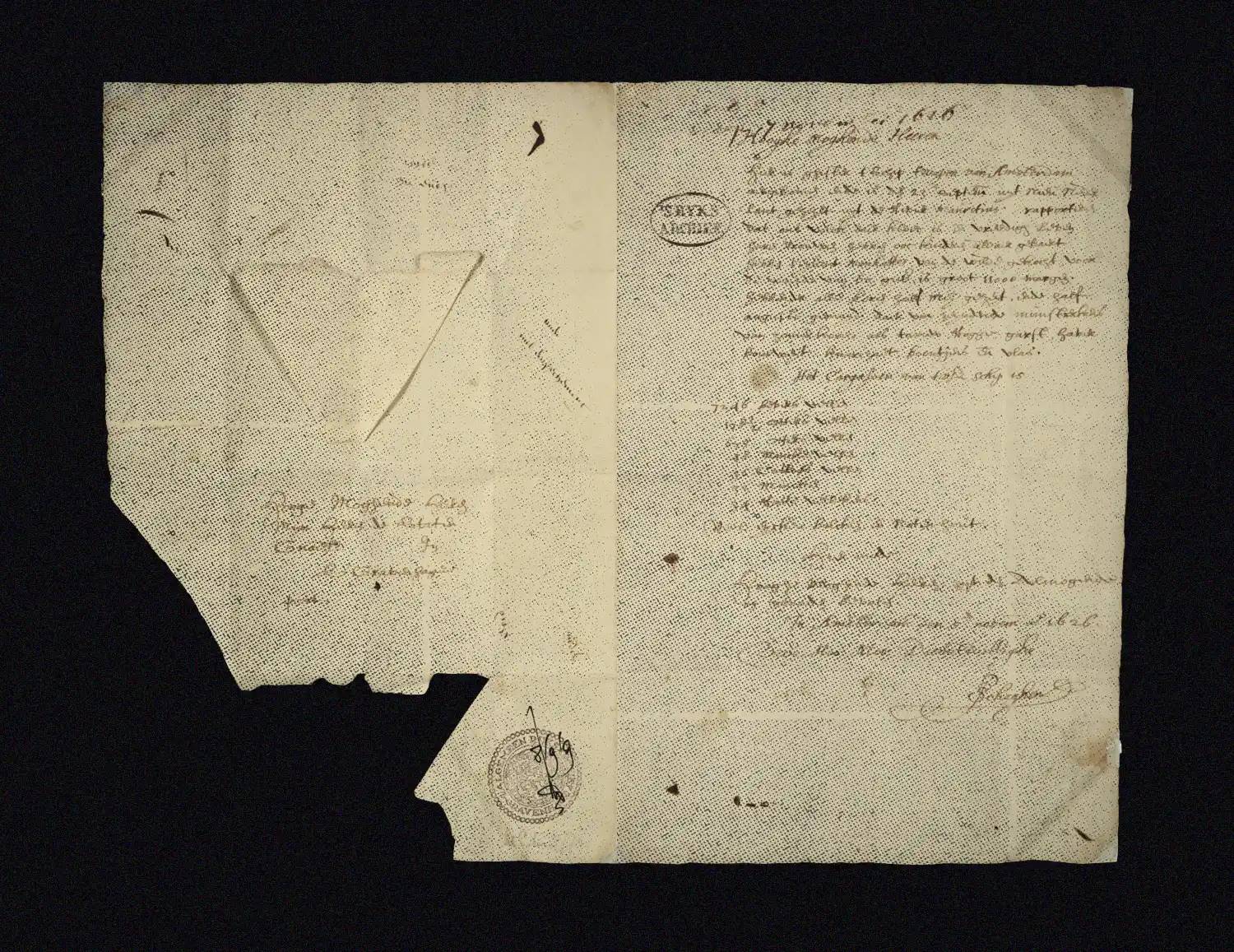
Carta oficial escrita por el comerciante Pieter Schaghen.
La compra del siglo
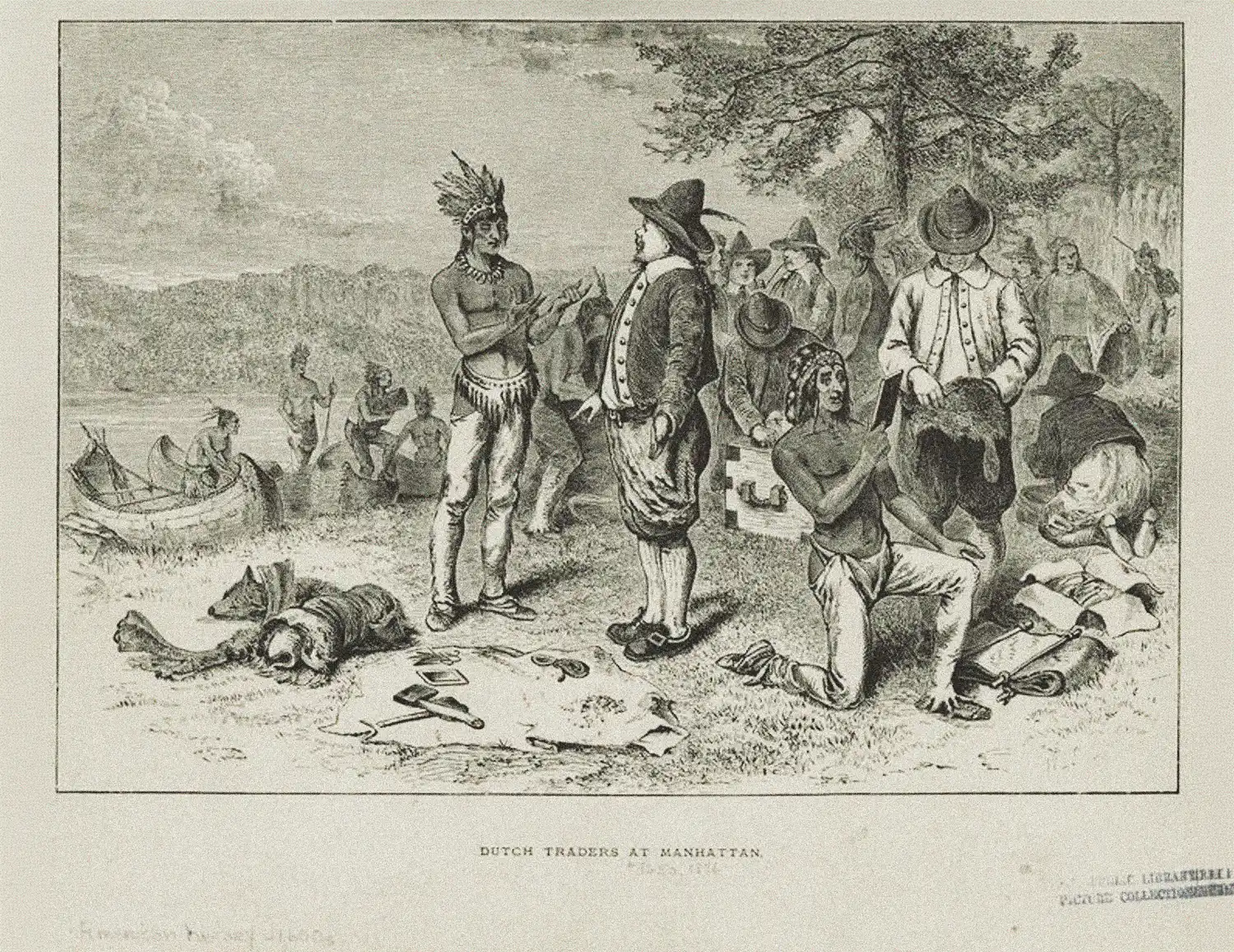
En 1609, una expedición holandesa que buscaba sin éxito una ruta hacia Asia llegó a sus tierras. Durante años, los comerciantes europeos volvieron una y otra vez a intercambiar con los Lenape pieles a cambio de ollas, hachas, cuchillos y telas. Mercancías que en Europa valían muy poco por pieles que allá valían una fortuna. No pasó mucho hasta que decidieron quedarse.
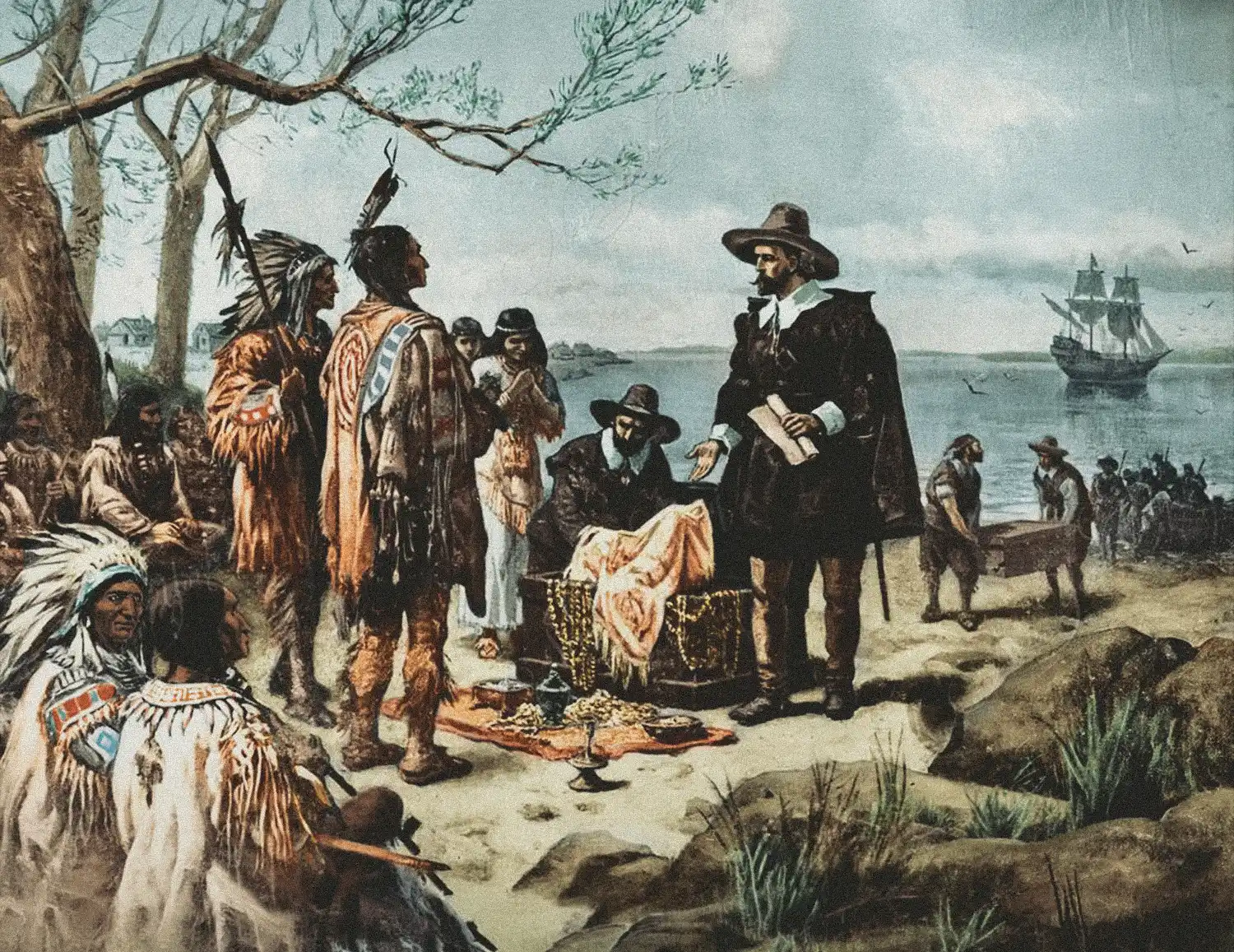
Para 1626, quien dirigía la colonia extranjera era Peter Minuit, y fue él quien les propuso a los Lenape un trato, toda la isla a cambio de mercancías valoradas en 60 florines holandeses, que algunos historiadores tradujeron mucho después a 24 dólares. La operación quedó anotada en una carta sencilla que el comerciante Pieter Schaghen mandó a sus superiores en Ámsterdam, entre noticias sobre las cosechas de trigo y cebada y el inventario del último cargamento. «Hemos comprado la isla de Manhattan a los salvajes por un valor de 60 florines», lee la carta.
Lo que la carta no explica es que los Lenape y los holandeses no compartían lengua. Ni siquiera compartían el concepto de propiedad. Para los Lenape, la tierra era de propiedad colectiva y no individual, un lugar común donde vivir, donde pescar, donde enterrar a los muertos. Lo que ellos entendieron como un acuerdo de uso compartido, los holandeses lo registraron como una compraventa definitiva.
Para 1638, un nuevo gobernador llamado Willem Kieft llegó a Nueva Ámsterdam con otra propuesta. Exigió a los Lenape que pagaran un tributo a cambio de protección. Protección contra ataques que él mismo podía desatar si se negaban a pagar. Los Lenape lo rechazaron. Y así empezó lo que la historia llama la Guerra de Kieft, aunque «guerra» es una palabra gentil para describir lo que ocurrió. Kieft lanzó expediciones punitivas. Ofreció recompensas por cada cabeza indígena entregada. Y fue escalando metódicamente hasta que ya no había vuelta atrás.
La noche de Pavonia
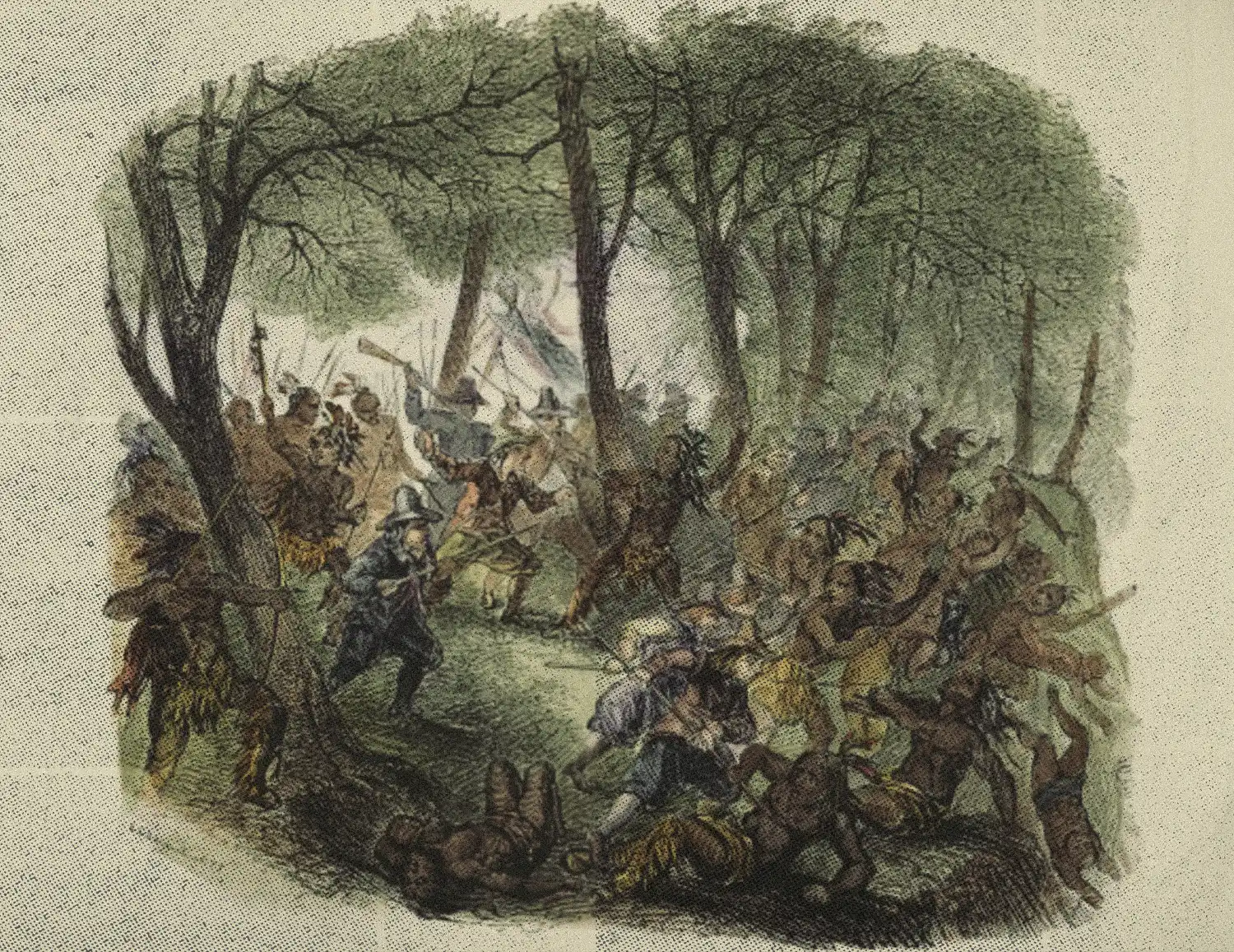
Ocurrió la madrugada del 25 de febrero de 1643, 129 soldados holandeses cruzaron el río Hudson y cayeron sobre los campamentos Lenape en Pavonia. Allí dormían las familias desplazadas que buscaban refugio.
Lo que vivieron esa noche fue descrito en el diario de David Pietersz de Vries, un colono holandés que observó los hechos con horror. Escribió que los bebés fueron arrancados de los brazos de sus madres, que algunas víctimas fueron arrojadas al río y cuando sus padres intentaron salvarlos, los soldados les impidieron llegar a la orilla y dejaron que tanto padres como hijos se ahogaran. Desde los muros del fuerte escuchó los gritos. Murieron alrededor de 120 personas esa noche. Otros 30 fueron masacrados al mismo tiempo en el extremo sur de Manhattan. Al día siguiente, Kieft felicitó a sus tropas.
Aunque varios clanes Lenape y otras naciones norteamericanas se aliaron y atacaron asentamientos holandeses, quemaron granjas y puestos comerciales, su desventaja era insalvable. Los holandeses contaban con armas de fuego, fortificaciones y flujo constante de suministros desde Europa.
El muro
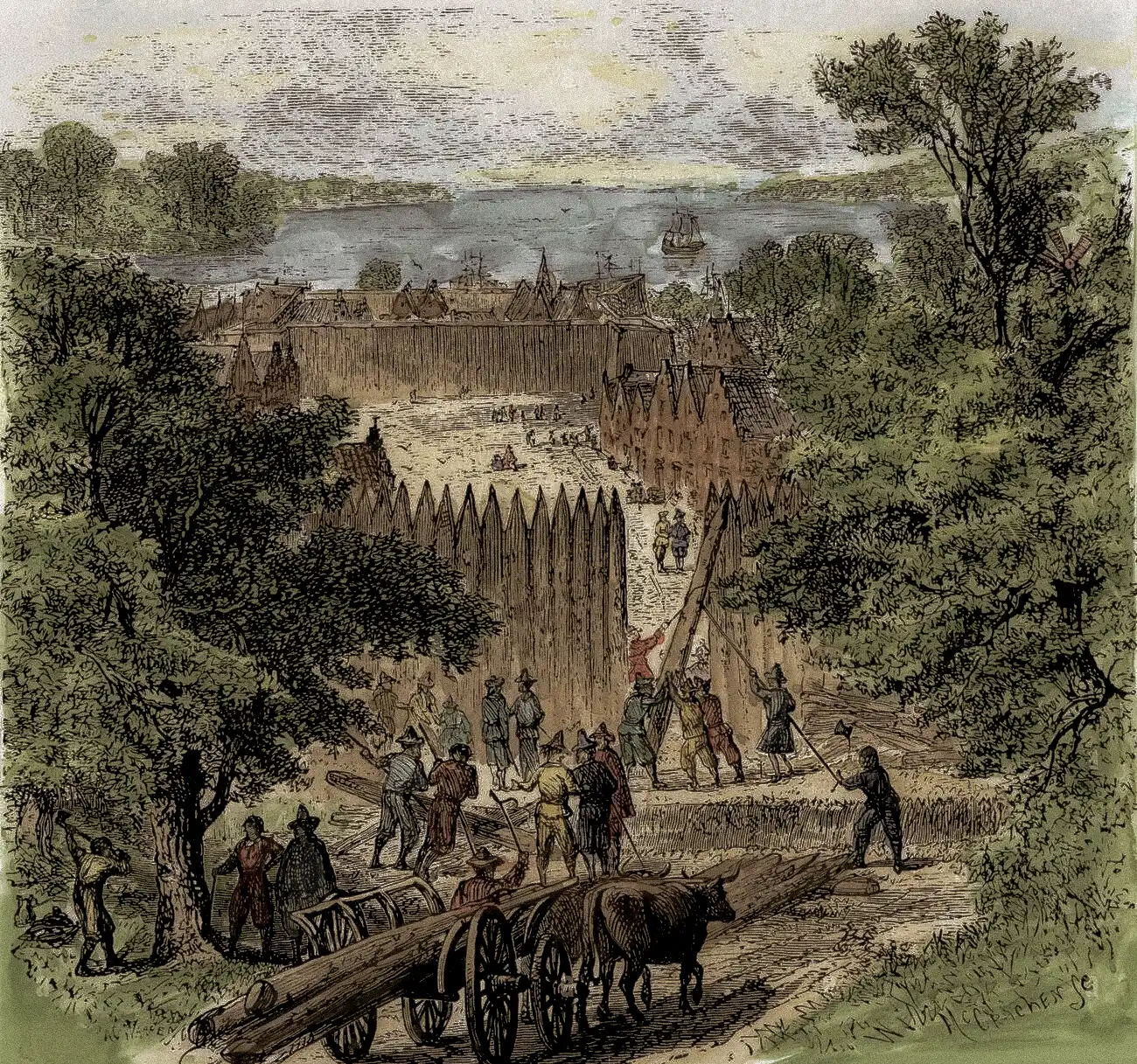
Después de la guerra, los colonos levantaron una empalizada de madera que atravesaba el extremo norte del asentamiento de Nueva Ámsterdam. La función del muro era marcar la frontera de la colonia y protegerla de posibles ataques, en una época de conflictos constantes con pueblos indígenas y rivalidades entre imperios europeos.
La barrera de 700 metros de longitud aparece en los mapas de la década de 1660. La calle que corría junto a ella fue conocida por los holandeses como «de Waal Straat». Con el tiempo, el nombre derivó en Wall Street. Uno de los símbolos más poderosos del capitalismo moderno nació como un muro anti-indígena.
Mientras holandeses e ingleses se disputaban el territorio, los Lenape fueron perdiendo cada vez más espacio hasta abandonar las tierras que habitaron por milenios. La ruta Lenape conocida como Wickquasgeck Trail se convirtió primero en Breede Weg, el «camino ancho» de los holandeses, y más tarde en Broadway.

“Matar al indio, salvar al hombre”
La expansión colonial había transformado los territorios indígenas en ciudades, calles y propiedades privadas. Pero a finales del siglo XIX el objetivo ya no era únicamente quedarse con el territorio, era transformar a las personas.
En 1879, el gobierno federal fundó la Escuela Industrial Indígena de Carlisle, en Pensilvania. Su director, el coronel Richard Henry Pratt, resumió su misión en una frase que se volvería infame: «Kill the Indian, save the man». Matar al indio, salvar al hombre. Si los pueblos indígenas no desaparecían físicamente, podían desaparecer culturalmente.
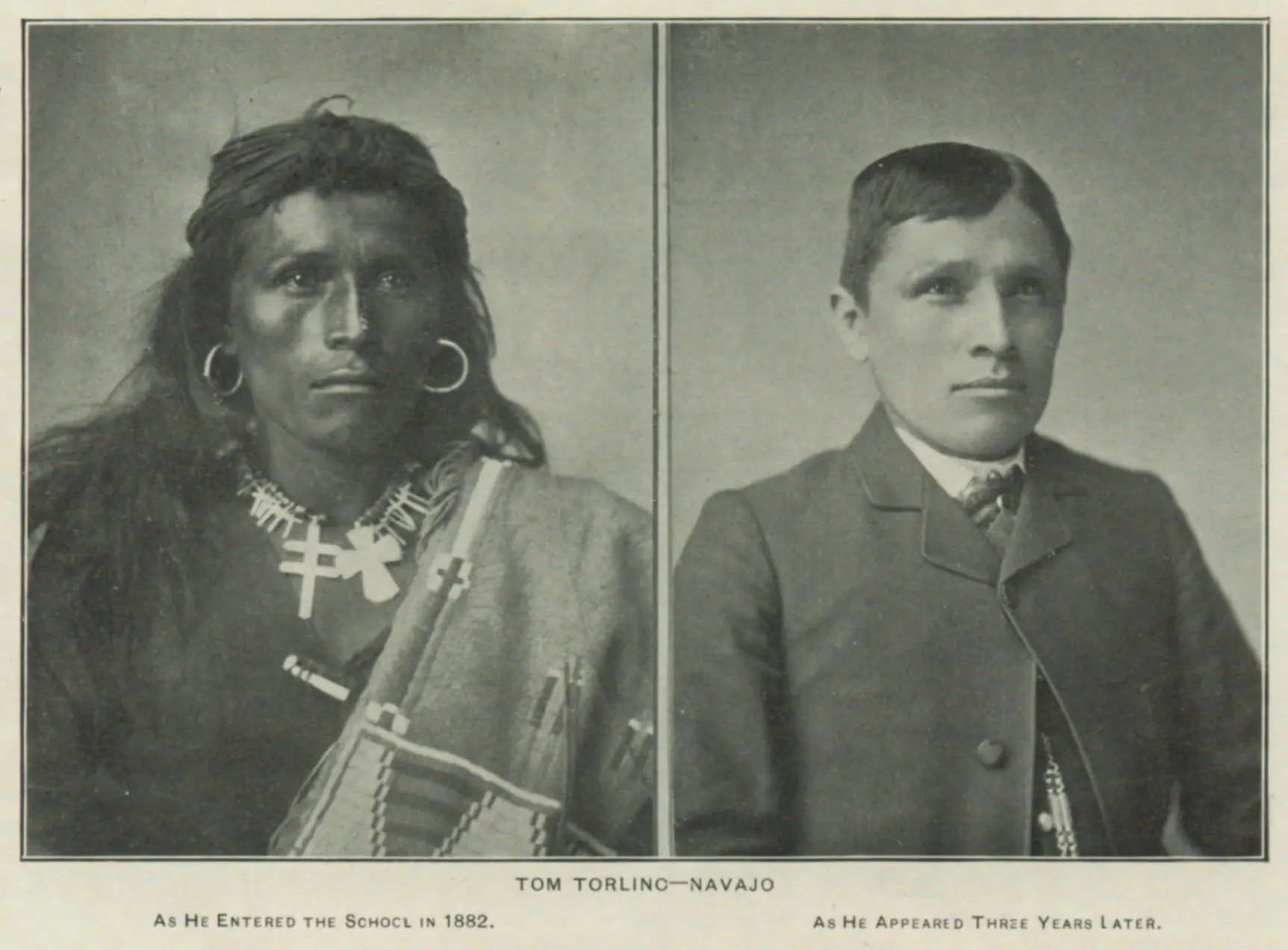
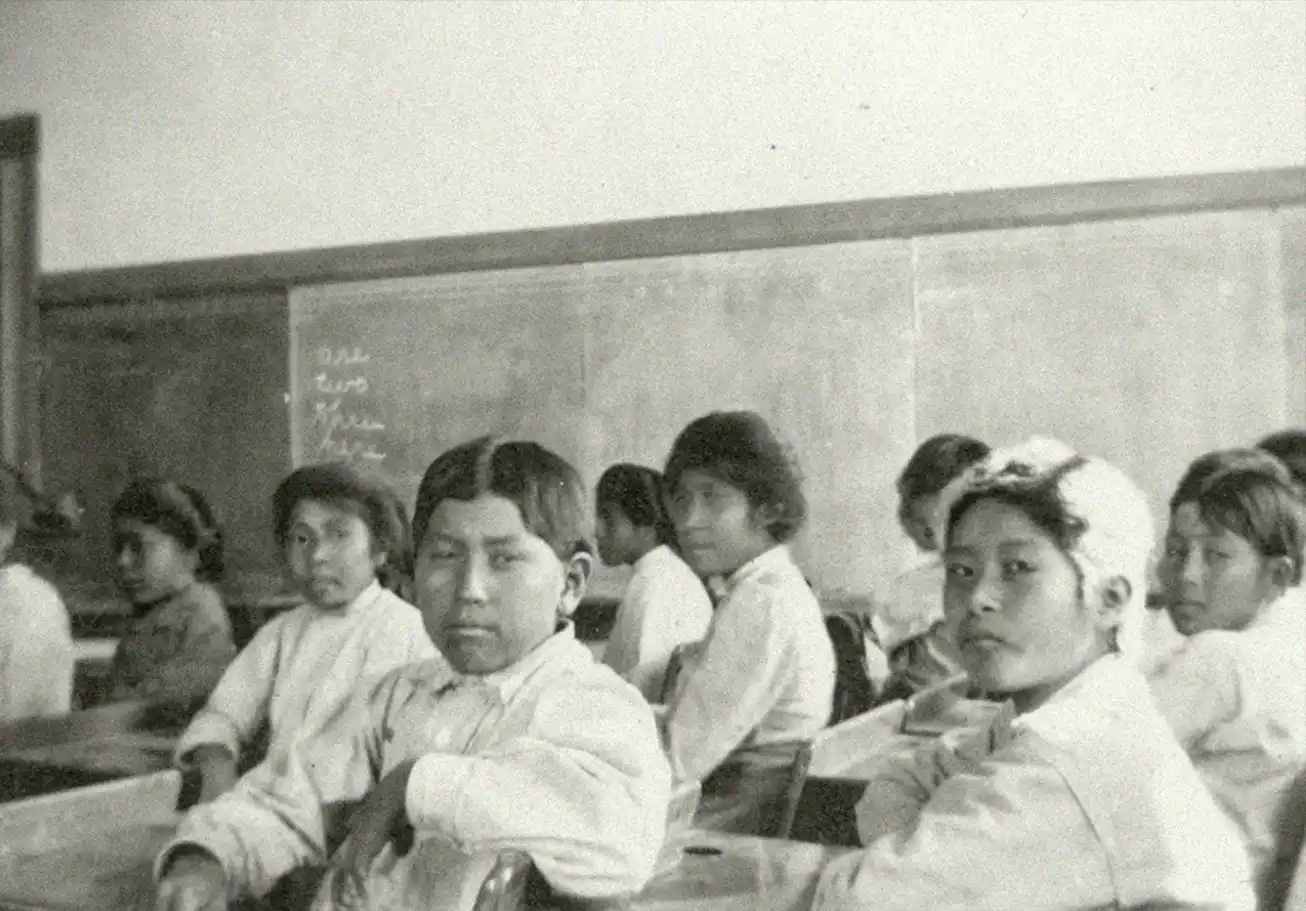
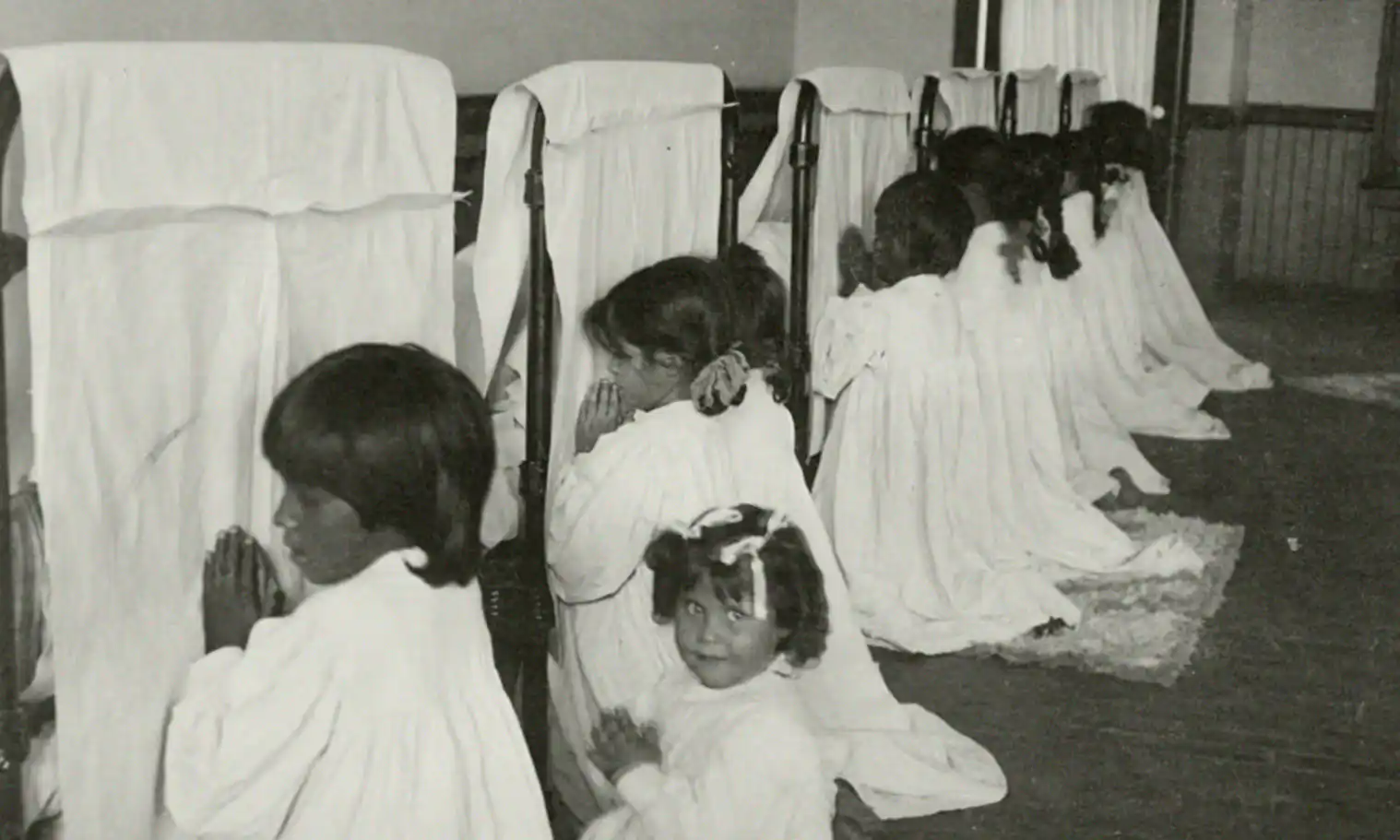
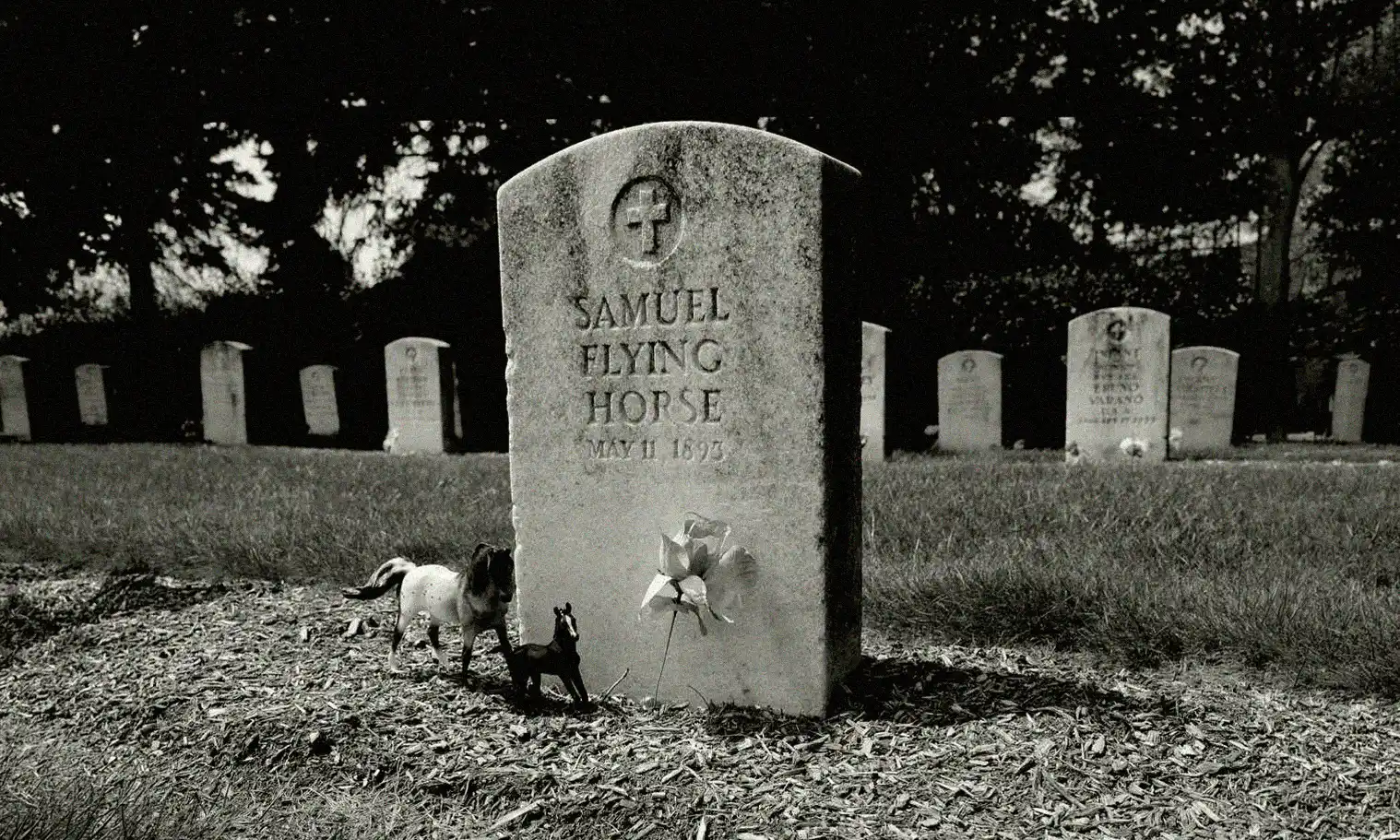
Carlisle se convirtió en el modelo para una red de 408 internados indígenas que el gobierno federal operó o financió entre 1819 y 1969. Miles de niños fueron separados de sus familias y enviados a escuelas ubicadas a cientos o incluso miles de kilómetros de sus comunidades. Al llegar, les cortaban el cabello, les asignaban nombres ingleses y les prohibían hablar sus idiomas o practicar sus tradiciones. El inglés era obligatorio. Las reglas se imponían mediante castigos físicos, aislamiento, privación de alimentos y una estricta disciplina inspirada en el entrenamiento militar. Los funcionarios federales creían que la identidad indígena debía ser borrada y reemplazada por los valores, la religión y las costumbres de la sociedad dominante estadounidense.
Las últimas escuelas del sistema federal cerraron en 1969. Más de medio siglo después, en 2022, un informe del Departamento del Interior de Estados Unidos confirmó la muerte de más de 500 niños en internados indígenas federales e identificó 53 sitios de enterramiento asociados a estas escuelas. Los investigadores advirtieron que la cifra real podría ser considerablemente mayor, pues muchos registros permanecen incompletos o se han perdido.
Casi ciudadanos
Los pueblos indígenas de Estados Unidos fueron reconocidos legalmente como ciudadanos de su propio país recién en 1924, cuando el Congreso aprobó la Ley de Ciudadanía India. Hasta entonces, cerca de 125.000 de los aproximadamente 300.000 indígenas que vivían en el país seguían excluidos de la ciudadanía estadounidense. Pero la ciudadanía no garantizaba el derecho al voto. Durante décadas, miles de indígenas fueron ciudadanos en el papel, pero no en las urnas. La situación comenzó a cambiar con la Ley de Derechos de Voto de 1965.
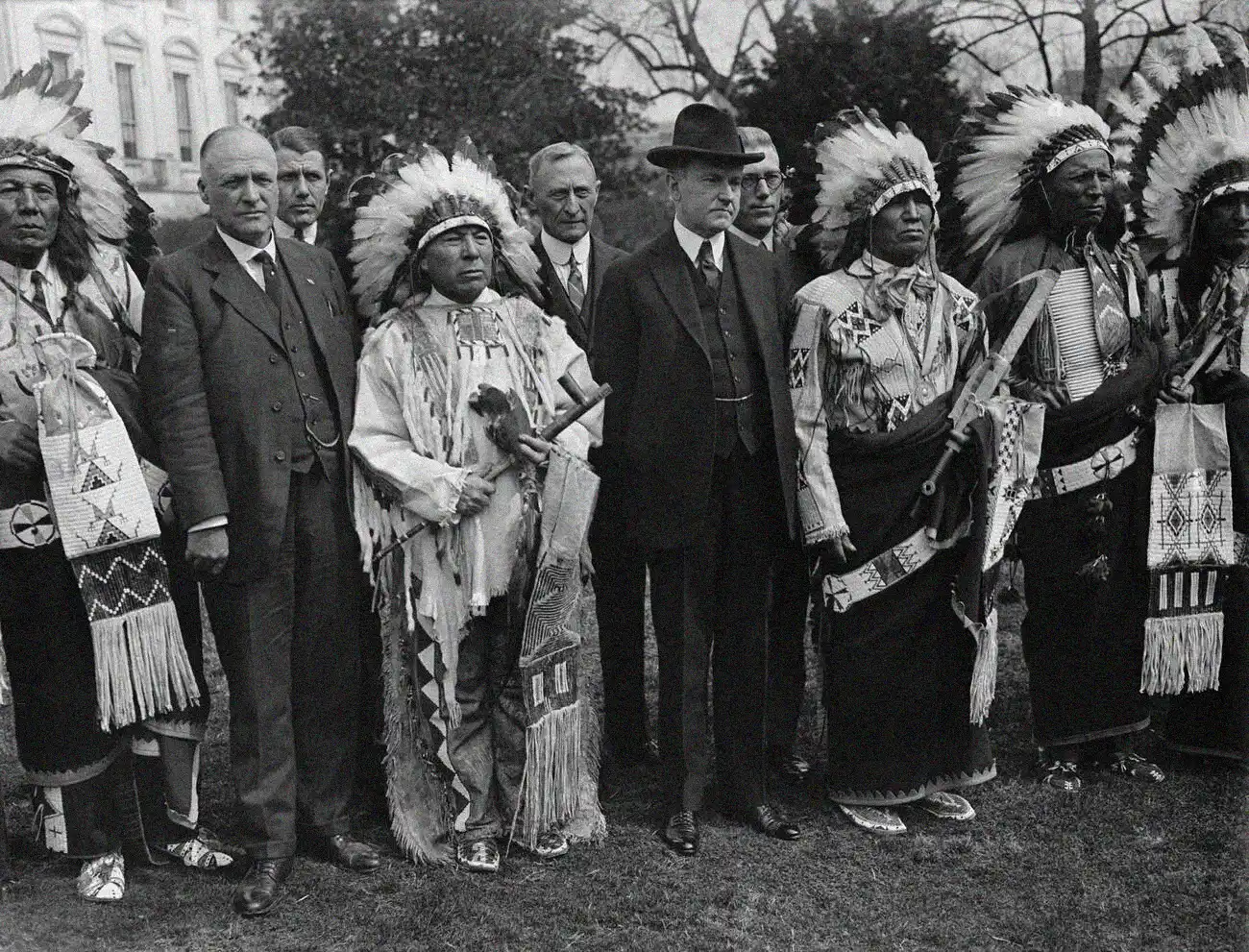
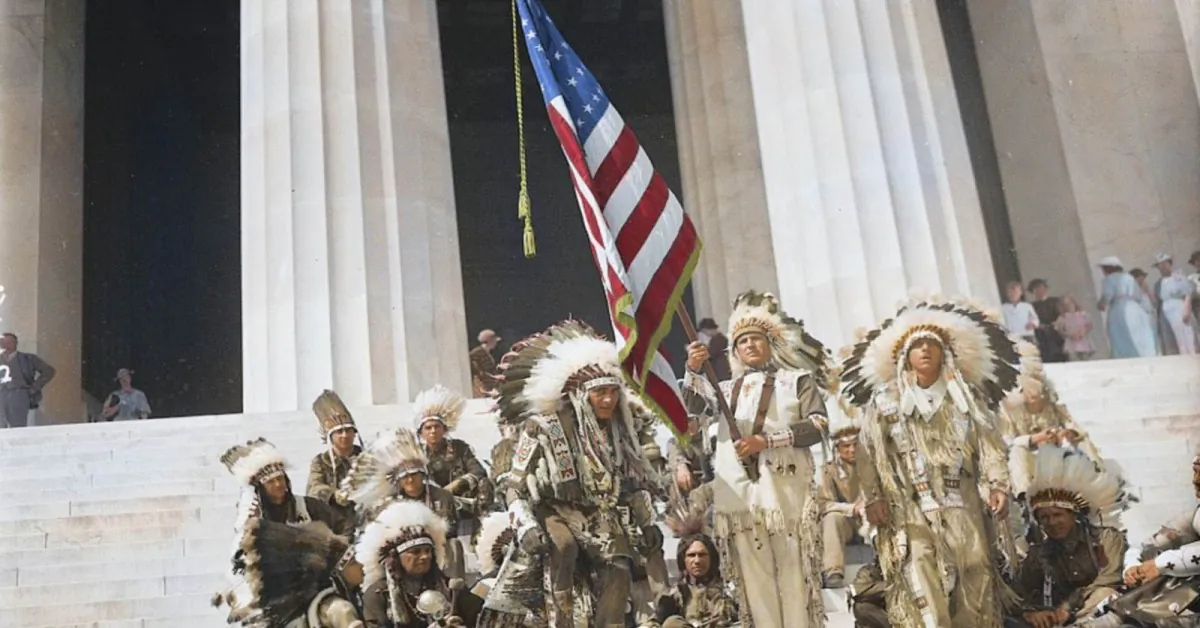
Hoy, según el Censo de 2020, alrededor de 9,7 millones de personas en Estados Unidos se identifican como nativos americanos o nativos de Alaska, cerca del 3% de la población del país. Su esperanza de vida y sus niveles de pobreza continúan reflejando profundas desigualdades históricas. Es una paradoja difícil de ignorar. La historia de Estados Unidos suele contarse como una historia de conquista, expansión y progreso, pero también es la historia de pueblos que sobrevivieron a todo ello. Los pueblos indígenas de Norteamérica siguen aquí.